
Gold futures experienced their seventh consecutive daily decline, falling to Rs 1.5 lakh per 10 grams, driven by escalating military exchanges between the US and Iran which have pushed oil prices higher and intensified concerns over inflation and potential interest rate hikes.

US-Israel air attacks intensified on the seventh day of war, striking Tehran and other Iranian cities.

Iran's Islamic Revolutionary Guard Corps (IRGC) claims to have captured a US unmanned submersible near the Strait of Hormuz and launched ballistic missile strikes against a US airbase in Jordan and two US Navy destroyers. These actions are stated as retaliation for recent US attacks on Iranian oil tankers. The US Central Command (CENTCOM) had previously reported destroying Iranian crude oil carriers after IRGC missile attacks on US warships. The escalating tensions have led to regional air defence activations and warnings to tanker crews.

The United States and Iran have reached an agreement in principle to immediately and permanently halt all military operations, lift sanctions, and work towards a comprehensive final agreement within 60 days, including a significant reconstruction package for Iran.

Fighting in Yemen has intensified as Houthi rebels advance on strategic government-held areas like Marib and Taiz, putting pressure on Saudi Arabia to respond. The conflict is also linked to wider US-Iran tensions affecting shipping in the Strait of Hormuz, with former US President Trump commenting on the situation.

US President Donald Trump on Friday (local time) said the United States could "hit" Iran's heavily fortified underground nuclear site known as Pickaxe Mountain "very soon", days after Washington targeted Iranian military targets.
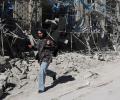
India has relocated the majority of its students from Tehran due to the escalating conflict in West Asia. The Indian embassy has arranged for their transportation, food, and accommodation outside of Tehran. An advisory remains in place for other Indian nationals in Iran to stay indoors and exercise caution.

US President Donald Trump has claimed that a significant number of Iranian military officials were killed during a "massive strike" conducted in Tehran.

US President Donald Trump on Tuesday claimed that Iran is in a "state of collapse" and has requested the United States to help "open" the Strait of Hormuz.

US President Donald Trump on Tuesday said that Washington has launched a fresh wave of strikes against Iranian targets near the Strait of Hormuz. They come after what Trump claimed was in retaliation for Iran attempting to add sea mines to the Strait.

US President Donald Trump on Wednesday (local time) claimed that Iran has asked US for a ceasefire. He said that Washington would consider it once the Strait of Hormuz is open.

Indian benchmark indices Sensex and Nifty experienced declines in early trade, influenced by the escalating US-Iran standoff and persistently high crude oil prices, with experts predicting increased volatility.

US Secretary of State Marco Rubio stated he does not believe India and Iran are pursuing a trade deal, despite a recent meeting between their leaders. He acknowledged that many countries engage with the Iranian regime but reiterated President Trump's warning against helping Iran evade sanctions, threatening penalties for nations that do so.

Indian benchmark equity indices, Sensex and Nifty, closed lower due to persistent geopolitical tensions in the Middle East and elevated crude oil prices, with investors remaining cautious ahead of fresh US sanctions on Iran.

The BRICS grouping adopted a consensus joint declaration in New Delhi, successfully navigating differences on the West Asia conflict but notably omitting any direct mention of US strikes on Iran or Iranian military attacks on Gulf Arab nations. The declaration also criticised Israel's actions in Gaza and called for a concerted approach against terrorism.

The successful hosting of the 18th BRICS summit in New Delhi has provided a significant boost to the BJP, offering a timely opportunity to strengthen its narrative against the opposition ahead of crucial assembly elections next year. BJP sources highlight the BRICS grouping's strong condemnation of the Pahalgam terror attack and the consensus declaration as major diplomatic victories for the Modi government, countering criticisms of its foreign policy. The party plans to leverage these outcomes during its month-long Seva Sankalp campaign to connect with various sections of society.

Supreme Leader Mojtaba Khamenei has reshuffled Iran's political and national-security establishment, appointing former SNSC Secretary Mohammad Bagher Zolghadr as his political adviser and veteran IRGC commander Mohsen Rezaei as his representative on the Supreme National Security Council, consolidating power amid the West Asia crisis and Strait of Hormuz tensions.

Iranian President Masoud Pezeshkian urged BRICS nations to expand trade in national currencies and build an inclusive global economic framework. He criticised "unilateral sanctions" by Western powers, stating they make emerging economies vulnerable and impact global food security. Pezeshkian emphasised BRICS' role in creating a balanced world order and highlighted Iran's geopolitical and energy capacities for cooperation.

New Delhi was told it had given something up; in reality it had stopped talking about it, notes Dr Abhishek Puri.

The Israeli Air Force has destroyed an aircraft used by Iranian leadership at Mehrabad International Airport in Tehran, along with striking over 200 targets across western and central Iran, significantly impacting Iran's strategic capabilities.

The United States Central Command (CENTCOM) has announced that American forces are maintaining a strict maritime restrictive operation in the region, continuing to enforce a blockade against Iranian ports.

The US forces conducted strikes against Iran, on Friday, as a powerful response to Thursday's attack on a commercial ship that was transiting the Strait of Hormuz, said Central Command (CENTCOM) in a statement.
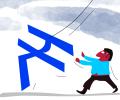
The Indian rupee experienced its sharpest single-day decline in eight weeks, settling at 94.83 per dollar, primarily due to escalating crude oil prices and persistent risk-off sentiment driven by heightened geopolitical tensions and limited foreign inflows.

Iranian President Masoud Pezeshkian concluded his visit to India for the 18th BRICS Summit, announcing that Iran and the UAE agreed to move past previous tensions. This diplomatic breakthrough occurred during talks with Abu Dhabi's Crown Prince on the summit sidelines. Pezeshkian also met with PM Modi to discuss bilateral ties and West Asia developments, with Modi emphasising dialogue for regional peace. The BRICS summit adopted the New Delhi Declaration 2026, calling for global governance reforms and de-escalation in West Asia.

A proposed deal between Iran and Oman could grant Tehran control over vessels entering the Gulf through the Strait of Hormuz, according to a senior Iranian source and two regional officials who spoke to Reuters on Wednesday, in what represents one of the most significant concessions made to Iran to date.

US President Donald Trump has indicated that 'a lot of progress' has been made regarding Iran, suggesting that Tehran has reached out for talks and that developments could become clearer within 48 hours.

Iranian Foreign Minister Abbas Araghchi has revealed the intense psychological pressure faced by Tehran's diplomatic delegation during peace negotiations with the United States, recalling a direct exchange with US President Donald Trump's Middle East envoy, Steve Witkoff, where he questioned the envoy about the constant military threats.

Prime Minister Narendra Modi cautioned against the 'weaponisation' of technology and critical minerals at the BRICS summit, advocating for cooperation to foster shared prosperity. Concurrently, Chinese President Xi Jinping announced plans for an open-source AI ecosystem for BRICS nations, positioning Beijing as a key technology partner amid global AI competition.

Iran's Islamic Revolutionary Guard Corps (IRGC) Aerospace Force claimed to have fired several ballistic missiles at a US aircraft carrier and a destroyer, alleging the warships were harassing Iranian ships and participating in a naval blockade.

Glimpses of Iran's farewell to Ayatollah Ali Khamenei as mourners gathered in huge numbers for his funeral procession in Tehran.

For India, the goal is not simply to host another grand diplomatic gathering. It is to prove that a diverse coalition of emerging powers can still deliver.

US President Donald Trump on Monday confirmed that his administration has received a proposal from Iran aimed at ending the ongoing conflict in West Asia, but described the offer as insufficient.

The United States Central Command announced strikes against Iranian military targets, including air defence and communication sites, in retaliation for alleged attacks on commercial shipping and US personnel. However, Iran's Foreign Ministry claims these strikes caused over 50 civilian casualties at a wedding and vowed a firm response. Iran's state media also reported retaliatory ballistic missile and drone attacks on US bases in Jordan and Bahrain, claims which were partially corroborated by Kuwait and Jordan reporting intercepted drones and missiles.

US President Donald Trump stated that the United States is taking a "low-key" approach towards Iran, focusing on economic pressure rather than military action, amidst ongoing tensions over the Strait of Hormuz. Trump highlighted Iran's worsening economic situation and the impact of the US naval blockade, while negotiations for reopening the Strait remain stalled due to new conditions from Tehran.

US President Donald Trump on Sunday expressed confidence that Tehran would eventually concede to American demands, while simultaneously issuing a stern warning regarding the potential for total military devastation.

As Qatari negotiators travel to Iran in an effort to ease tensions and create conditions for the resumption of US-Iran talks following the recent military escalation between them, US President Donald Trump on Friday said that Washington has agreed to continue talks with the Islamic Republic following Tehran's request but reiterated that the US still considers the ceasefire between the two sides to be "over".

The American military's air-defence missile inventories, including Patriot and THAAD interceptors, are significantly depleted due to the ongoing five-month confrontation with Iran. A CSIS assessment reveals a steep drop in reserve stocks, raising concerns about the US's capacity to maintain Middle East operations and address other global security challenges. This depletion could force the US and its allies to take higher operational risks.
US President Donald Trump has announced the cancellation of a planned attack on Iran, contingent on Tehran agreeing to rapidly open the Strait of Hormuz and end its nuclear programme. This decision follows appeals from Middle Eastern countries and includes Israel's commitment, though Iran had previously warned against any "adventurous action" from the US.

Prime Minister Narendra Modi has highlighted the risks posed by the 'weaponisation' of resources and strategic sea routes, urging India to achieve greater self-reliance in energy to mitigate vulnerabilities to overseas supplies and geopolitical tensions.

Iran launched retaliatory military strikes targeting Israel and American military bases across the region, including in Qatar, the United Arab Emirates, Kuwait, Bahrain and Jordan.
