
Shah is scheduled to meet the families of twin terror attack victims in Rajouri district, officials said.

He said the search operation was launched after police received information about the movement of terrorists in the area.

His elder brother Om Prakash Chettri, who recently retired from the Army, said Siddhant was passionate only about serving the nation.
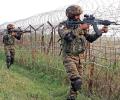
Pakistan troops have violated the ceasefire agreement for the 11th consecutive night, firing on Indian posts along the Line of Control (LoC) in Jammu and Kashmir. The firing began in Kupwara and Baramulla districts and spread to other sectors, including Poonch, Rajouri, Mendhar, Naushera, Sunderbani, and Akhnoor. The Indian Army responded promptly and proportionately. The ceasefire violation comes despite a recent phone call between the Directors General of Military Operations (DGMOs) of India and Pakistan on April 29. This marks the latest escalation of tensions between the two countries, following a terror attack in Pahalgam in April.

An NIA team has arrived to track down the terrorists who murdered four men and laid an IED in a village in Rajouri.
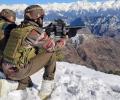
Pakistan's troops have engaged in unprovoked firing along the Line of Control (LoC) and International Border (IB) in five districts of Jammu and Kashmir, prompting retaliation from the Indian Army. This marks the eighth consecutive night of such incidents, following heightened tensions stemming from a recent terror attack in Pahalgam. Civilians residing along the LoC and IB are preparing their bunkers in anticipation of potential escalation.

Incessant rains and flooding have caused widespread disruption in northern India, with states like Himachal Pradesh, Delhi, Punjab, and Jammu and Kashmir facing landslides, road closures, and displacement. Rescue efforts are underway as authorities grapple with the aftermath of the deluge.

The officials identified the deceased as Ashwani Sharma (24), his brother Dwarka Nath (55), niece Virta Devi (26) and their guest Om Raj (38), a resident of Banshara in Rajgarh. The rescuers are searching for Sharma's sister-in-law, Bidya Devi (55).

The reopening brought a sense of relief to students, teachers, and parents across the region.

Suspected drones were observed along the International Border in Samba district of Jammu region on Monday, while armed forces downed a 'surveillance drone' in Punjab's Jalandhar district.

Pakistan military spokesperson Lieutenant General Ahmad Sharif Chaudhry told a hurriedly called press conference in Islamabad at around 4 am that th Pakistan air force's Nur Khan (Chaklala, Rawalpindi), Murid (Chakwal) and Rafiqui (Shorkot in Jhang district) airbases were targeted.
A five-member team of experts from AIIMS Delhi, including specialists in toxicology, is investigating a mysterious illness that has claimed 17 lives in Jammu and Kashmir's Rajouri district. The team has spoken to 11 patients undergoing treatment and will collect samples from affected homes and surrounding areas to determine the cause of toxicity. Meanwhile, no new cases have been reported in the past nine days, and the village has been declared a containment zone with strict measures in place to prevent further spread.
This marked the sixth consecutive night of ceasefire violations by Pakistan along the LoC, amidst heightened tensions between New Delhi and Islamabad following a recent terror attack in Pahalgam on April 22.
Pakistani troops continued unprovoked small arms firing in different sectors along the Line of Control (LoC) in Jammu and Kashmir for the 10th consecutive night, prompting effective retaliation by the Indian army. The ceasefire violations, which started after the April 22 terror attack in Pahalgam, were reported from eight places across five districts in the Union Territory during the intervening night of Saturday and Sunday. Indian Army responded promptly and proportionately to the unprovoked firing, a defence spokesperson said.

The Pakistanis were so fearful of Brigadier Mohammad Usman, the 'Lion of Naushera', that they announced a Rs 50,000 bounty on his head.

Rescue operations continue in Kishtwar, J&K, following a devastating cloudburst. Anxious relatives cling to fading hope as the search for the missing enters its third day.

In view of the 'unidentified illness' in Rajouri's Badhal village, the village has been declared a containment zone, and the affected families' homes sealed; a few patients brought to Government Medical College (GMC) in Rajouri on Thursday.

Glimpses from around the world that will make you smile and cry.

Though Shah intended to meet the families in person in Dhangri village, the inclement weather forced him to changes his plans and he talked to them on the phone.
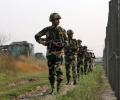
Army troops could not open fire on the terrorists due to the presence of Pakistani posts nearby, they said. Drone footage of the area showed a blood trail, indicating that the terrorists had suffered injuries due to the fall.

Relentless heavy rain led to a landslide on the route to the Mata Vaishno Devi shrine atop the Trikuta hill on Tuesday afternoon, killing at least five people and injuring 14, officials said.

An official said that multiple schools in the national capital received these bomb threats. This is the fourth such day this week when schools in the capital received bomb threats.

People along the Line of Control and International Border in the Jammu region continue to live under the shadow of death, with unexploded mortar shells fired by Pakistani troops still embedded in farmlands and residential areas even though hostilities have stopped for nearly a week. IMAGE: Kindly note that this image has been posted for representational purposes only. Photograph: / Rediff.com Despite the May 10 understanding between India and Pakistan, locals describe the border areas as a 'death trap'. Sixty-two-year-old Balvinder Singh, who returned to his home in Pargwal sector on May 14, recounted a narrow escape. "Two shells exploded in our compound, damaging our house. Three more landed on our farmland. We were terrified and told our family to stay away from the fields until the Army could help," Singh told PTI. Army engineers later came to the village and safely defused the unexploded shells, bringing a temporary sense of relief. "Fear is writ large on the faces of people to these death traps in border hamlets", he said. Scenes of destruction are evident rooftops torn apart, broken houses, windows punctured by shrapnel, and carcasses of cattle lying in pools of blood. The acrid smell of gunpowder still lingers in the air. Sardar Gurmeet Singh faced a similar ordeal. His family could not re-enter their home as a live mortar shell had sunk into the compound in a village close to the International Border. "The army's bomb disposal squad removed it after four days, allowing us to finally enter, back home," he said. Indian Army engineers have launched a sweeping clearance operation across border districts, defusing over 80 unexploded shells in the past five days -- including 6 in Pargwal, 19 in Rajouri, 42 in Poonch, and 12 along the IB. "These shells, mostly 120 mm calibre, have a range of 15 to 30 km and pose a serious threat to both civilian and military targets," an Army officer said. "Many of them were fired by Pakistan during recent hostilities." On May 7, the Indian Army launched Operation Sindoor, conducting precision strikes on nine terror hubs in Pakistan and Pakistan-occupied Jammu and Kashmir (PoJK) in response to the April 22 terror attack in Pahalgam that killed 26 people, most of them tourists. The subsequent retaliation by Pakistan pushed the region to the brink of war. From 7 to 10 of May, 27 civilians were killed and over 70 injured in Pakistani shelling in the Jammu region. Farid Din Gujjar, a resident near the border, expressed fear about returning to his fields. "Several shells created deep craters in our paddy land. We cannot resume work until all unexploded ordnance is cleared. It's a death trap," he said. Army units, in coordination with Jammu and Kashmir Police, have evacuated high-risk zones and issued stern warnings to residents not to touch any suspicious objects or unexploded shells. In one major operation, 42 live shells were safely destroyed in the Poonch villages of Jhullas, Salotri, Dharati and Salani. "All safety protocols were followed. The shells posed a serious danger to local lives," an Army spokesperson said, calling the effort a 'continued commitment to protect civilians and restore normalcy'. Poonch saw the vast majority of deaths due to shelling. Security officials said that Pakistan used a mix of mortar shells, armed drones, and missiles during the shelling spree, specifically targeting civilian habitations and border towns in Jammu, Samba, Kathua, Rajouri, and Poonch. As clearance operations continue, the border residents are slowly returning to their homes, but with caution, fear, and lingering uncertainty about shelling that may yet happen in the future.

Pakistani troops violated the ceasefire along the Line of Control (LoC) in Poonch district of Jammu and Kashmir, prompting a strong response from the Indian Army. The incident, which occurred in the Krishna Ghati sector, comes a day after two Indian Army personnel were killed in an IED blast near the LoC. The ceasefire violation is the fourth cross-border incident in five days and the first this year.

A cloudburst in a remote village in Kathua district, Jammu and Kashmir, resulted in four fatalities and six injuries. Rescue operations are underway, and the district administration is monitoring the situation.

In a post on X, the additional directorate general of public information posted: "Pakistan again violates the Ceasefire Agreement by firing artillery in Bhimber Gali in the Poonch-Rajouri area. Indian Army is responding appropriately in a calibrated manner."
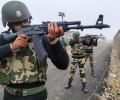
While the Indian Army made no mention of any casualty on the Pakistan side, official sources said five enemy soldiers were injured in the explosion and the subsequent firing between the two sides.
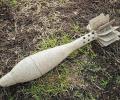
Two Indian Army personnel, including a captain, were killed and another was injured when suspected terrorists set off an improvised explosive device (IED) near the Line of Control (LoC) in the Akhnoor sector of Jammu on Tuesday. This was the third incident of cross-border action by terrorists in the Jammu region in four days, highlighting the ongoing security challenges in the area. The blast occurred while the troops were on patrolling duty near a forward post, underscoring the risks faced by security personnel in the region. Following the incident, the Army launched search operations in the area and expressed condolences for the loss of its personnel.

A police officer and his eight siblings, including five sisters, were deported to Pakistan on Wednesday despite a court order granting them temporary relief. The nine members of the extended family, who have been living in Jammu and Kashmir for generations, were among more than two dozen people, mostly from Pakistan-occupied Kashmir (PoK), who were served deportation notices following the April 22 Pahalgam terror attack. The deportation has sparked outrage, with protests and appeals for intervention from the home minister and lieutenant governor. The family members claim they are not Pakistani nationals and have been living in the region for generations, presenting revenue records to support their claims. The court has ordered a detailed report on the case within two weeks and will hear it again on May 20.
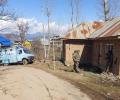
Security agencies are concerned about the increasing use of drones by terror groups in Jammu and Kashmir for surveillance and logistics, replacing human networks.

Security forces on Tuesday continued the cordon and search operation in the Dhangri village area for the third consecutive day to trace the attackers.

On August 11, two terrorists had attacked an army camp in Rajouri killing four soldiers in a pre-dawn suicide strike that marked the return of 'fidayeen' to Jammu and Kashmir after more than three years.

Emotional scenes were witnessed across the country as the last rites of those killed in shelling by Pakistan during the recent military conflict with India were performed on Sunday.

Two civilians were killed and another was injured in firing outside an army camp in Jammu and Kashmir's Rajouri district on Friday, leading to massive protests and demands for a fair probe.
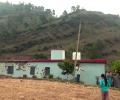
Heavy Pakistani shelling in the border district of Poonch in Jammu and Kashmir left nine people dead and 28 injured. The shelling, described by residents and officials as "barbaric and cowardly", started around 2 am, damaging dozens of residential houses, shops, vehicles, and heritage sites. The incident comes after India launched "Operation Sindoor" in retaliation to the April 22 Pahalgam terror attack. India condemned the act, calling it a cowardly attack on civilians, and reaffirmed that civilian safety remains its top priority.
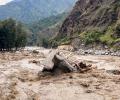
While two bodies were recovered on Wednesday, the death toll climbed to four on Thursday after the recovery of two more bodies from the Indira Priyadarshini Hydroelectric project site in Kangra district.

The Delhi Assembly elections saw BJP's Karnail Singh emerge as the richest winner with assets worth Rs 259 crore, Umang Bajaj at 31 as the youngest winner, Tilak Ram Gupta as the oldest contestant at 73, and AAP's Amanatullah Khan the candidate with the highest, 19, criminal cases. Several winning candidates have pending criminal cases, according to a report by the Association for Democratic Reforms.

To counter the threat and thwart the attempts of Pakistan-based handlers to spread terror in the peaceful areas of the region, officials said the Army, in close synergy with the police and the central armed police forces, has launched relentless operations in the vulnerable regions, especially in the dense forests.

Villagers living near the International Border and Line of Control in Jammu are on high alert following the recent terror attack in Pahalgam, preparing underground bunkers and accelerating crop harvesting. The incident has heightened security concerns despite a renewed ceasefire agreement between India and Pakistan in 2021. Residents are demanding swift action against the perpetrators and their handlers.
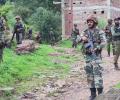
The Indian Army has increased its operational footprint in the Jammu region, including the strategic occupation of the upper reaches of the Pir Panjal range, a senior officer said. The army is playing a pivotal role in military-civilian coordination in creating a stable environment in the region, the officer said, adding that the force will continue its efforts to promote peace, security, and development in the area.
