
A fresh exchange of fire took place on Thursday between terrorists and security personnel in Jammu and Kashmir's Rajouri district, where four Army personnel were killed and two others were injured in an encounter, officials said.

With 19 border polling stations along the Line of Control in Rajouri and Poonch, a contingency plan has been worked out to deal with cross-border shelling though chances are negligible given the ongoing ceasefire between India and Pakistan that came into effect in February 2021, officials said.
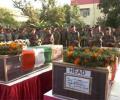
Speaking to media-persons after paying his last tributes to five soldiers, including two Army captains, who lost their lives in the Rajouri firefight, Lt Gen Dwivedi said, "While we lost five of our brave soldiers in the encounter, we also eliminated two dreaded terrorists. Our boys went after the well-trained and equipped foreign terrorists without giving any thought to their personal safety. This (taking out the dreaded terrorists) has dealt a major blow to the terror ecosystem and Pakistan. As per our estimation, 20-25 terrorists could still be operating in the area. We should be able to control the situation in a year's time with the help of locals."
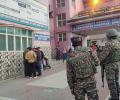
Jammu and Kashmir Lieutenant Governor Manoj Sinha dismissed two government employees, both teachers, for their alleged links with terrorists. The action is part of Sinha's zero-tolerance policy against terrorism and a broader crackdown on the terror ecosystem within Jammu and Kashmir.
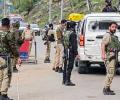
Jammu and Kashmir Police have intensified their crackdown on terror operatives and overground workers (OGWs) across the Jammu region, conducting extensive search operations in multiple districts.
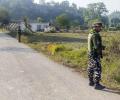
Two terrorists, including a top Lashkar-e-Tayiba (LeT) commander trained in Afghanistan, were killed in a gunfight with security forces on Thursday in Jammu and Kashmir's Rajouri district, officials said.

The Army on Friday said the search operation in the forest area of Jammu and Kashmir's Rajouri to flush out any hiding terrorists was still underway, a day after two foreign terrorists of proscribed Lashkar-e-Taiba (LeT) outfit including the mastermind behind various attacks were eliminated.

The fierce gunfight was going on in the area with the induction of more troops to neutralise two terrorists trapped at the spot, they said.

A terrorist was killed and another was most likely injured on Saturday in an ongoing operation in the densely forested area of Rajouri district in Jammu and Kashmir, Army said.

Five Army personnel and a terrorist, who is said to be part of the group that carried out an attack on civilians in Dhangri village of Rajouri early this year, were killed, while a major-rank officer was injured in the operation so far.

The final report against a juvenile who was also apprehended in the case will be submitted to the Juvenile Justice Board in Rajouri, a spokesperson of the federal agency said.

Official sources said mobile Internet services were suspended both in Poonch and Rajouri districts as a precautionary measure to check rumour-mongering and prevent miscreants from creating any law and order problem.

Poonch district alone accounted for 13 civilian deaths among 28 fatalities in the Pakistani shelling and drone attacks in Jammu and Kashmir after the Indian armed forces carried out missile strikes on terror infrastructure across the border under Operation Sindoor in May in retaliation to the April 22 Pahalgam terror attack that left 26 persons, mostly tourists, dead.

Security and defence experts have called for immediate strengthening of the security management and intelligence network along the Line of Control (LoC) in Jammu region, which witnessed the killing of 59 people, including 24 security personnel and 28 terrorists, in terror incidents this year.

The Centre and state governments have shied away from highlighting the ISI's attempts to displace Hindus and create corridors of sympathetic demography to further their designs especially along the communication arteries from Jammu to the Kashmir Valley.
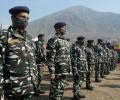
The development comes in view of twin terror attacks in Jammu and Kashmir's Rajouri district in which six people of a minority community including two children were killed and 11 others were injured.

A statement from the Army's Northern Command said its personnel have been conducting 'relentless intelligence-based operations to flush out a group of terrorists involved in an ambush on an Army truck in the Tota Gali area of Bhata Dhurian in Jammu region last month'.
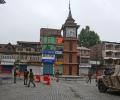
Raj Kumar Thapa, additional district development commissioner, Rajouri, and his two staff members were seriously injured when an artillery shell hit his official residence in Rajouri town, the officials said.
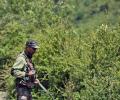
A few persons were questioned about the suspected movements of terrorists. However, security forces are yet to establish any fresh contact with the ultras, they said.

The drive, carried out by various police districts and units, including the crime branch and AATS teams, aligns with the Supreme Court's directions and the Delhi government's blanket ban on the sale, storage, and use of firecrackers to curb pollution during Diwali.

Land sinking in a village in Jammu and Kashmir's Poonch district has damaged about 50 structures, mostly residential houses. A minister has assured relief and rehabilitation.
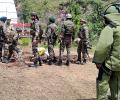
The officials said dozens of unexploded explosives were destroyed by the experts along the Line of Control in Rajouri and Poonch districts and along the International Border in Jammu and Samba which witnessed intense cross-border shelling and drone attacks from May 7 to May 10.

Former Chief Minister Omar Abdullah expresses dwindling hope for the restoration of statehood to Jammu and Kashmir, citing delays and governance challenges in the Union Territory setup.

This was the first such attack in the past many years in the otherwise peaceful Jammu region and coincided with the first day of the New Year.

Heavy rains battered Jammu and Kashmir, triggering floods, damaging infrastructure, and disrupting normal life. Authorities issued advisories and rescue operations were conducted.
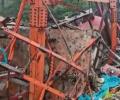
Six people died after a cable wire snapped on a cargo ropeway at Pavagadh Hill in Gujarat. The victims included ropeway operators and others transporting materials to the hilltop Mahakalika Temple.

A second terrorist was killed in an encounter with security forces on Wednesday, raising the death toll during the ongoing three-day search operation in a remote village in Jammu and Kashmir's Rajouri district to three, officials said.
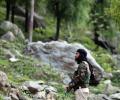
A total of 26 Army personnel, including three officers and five paratroopers, and seven civilians have been killed in eight terror attacks since October 11, 2021 in the twin districts.
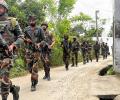
Security forces in the Jammu region are maintaining a strong vigil and conducting operations to track down 40 to 50 terrorists active in the area. Multi-tier security measures, including anti-drone strategies and intensified night operations, are in place.

Majid's family lives in the Ajot hamlet located between zero-line and border fencing along the LoC.
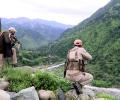
Thinning out of the counter infiltration and counter terrorism grid is fraught with the danger of revival of terrorism in the Poonch-Rajouri area, cautions Brigadier Narender Kumar (retd), the counter-insurgency expert.
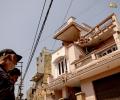
The casualties were reported hours before India and Pakistan agreed to end hostilities, which soared after the Indian Armed Forces hit terror launchpads in Pakistan and Pakistan-occupied Kashmir earlier this week in response to the Pahalgam attack.
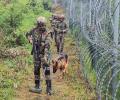
The Indian Army has enhanced security along the Line of Control (LoC) in Jammu and Kashmir's Rajouri district by deploying state-of-the-art equipment, including smart fence systems, robotic mules, and all-terrain vehicles. These upgrades aim to counter infiltration and ensure peaceful Independence Day celebrations.

The deceased identified as Prince undergoing treatment died at Government Medical College and Hospital Jammu.

The worst-hit in the Pakistani shelling was Poonch district which accounted for all the civilian deaths, the officials said, adding 28 persons were also injured and the condition of some of them was stated to be critical.
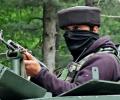
The firing exchanges are taking places in five districts out of seven border districts of Jammu and Kashmir. So far, there has been no firing reports along International Border in Samba and Kathua districts.

Additional Director General of Police, Jammu zone, Mukesh Singh said two 'armed men' opened fire on civilians at upper Dangri village, about eight kilometres from Rajouri town.

Images from Tuesday's security operations to eliminate terrorists in Shopian and Rajouri districts in Jammu and Kashmir.

Over 5,000 people have been evacuated from flooded areas in the Jammu region following heavy rains and flash floods. Rescue and relief operations are underway to restore essential services and provide assistance to those affected.

Qadri Javed Azad and Makwana Kumar are on a 2,000 km expedition from Porbandar to Pahalgam to spread the message of peace, unity and Operation Sindoor.
