
Pakistan on Friday said that the X account of its ministry of economic affairs was hacked and an appeal was posted on it for more international loans to meet the 'heavy losses' caused by the current tensions with India.

Pakistan's Ministry of Economic Affairs X account was hacked and a fake appeal was posted, calling for more international loans to help defuse tensions with India following the Pahalgam terror attack. The post urged the international community to help de-escalate the situation and requested more loans to address "heavy losses" caused by the tensions. The hacking incident occurred during a crucial meeting of the IMF executive board to decide on the next installment of a USD 7 billion loan for Pakistan.

A woman was killed and two of her family members injured after Pakistani troops resorted to heavy shelling in areas near the Line of Control (LoC) in Uri sector of Jammu and Kashmir. The Indian Army retaliated to the Pakistani aggression. Pakistani troops violated the ceasefire along the LoC and targeted civilian areas in Uri sector of north Kashmir's Baramulla district, causing damage to structures and forcing people to flee. The injured were rushed to a hospital where a woman, identified as Nargis Begum, succumbed to injuries.
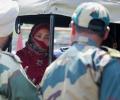
Pakistan's Defence Minister Khawaja Asif on Wednesday said that the chances of conflict with India were increasing with the passage of time despite efforts by different countries to defuse the tensions between the two neighbours.

India will oppose the World Bank funding to Pakistan next month, arguing that Islamabad has used such funds in the past to procure arms and ammunitions. India previously lobbied against the IMF extending a USD 2.3 billion assistance to Pakistan earlier this month, presenting evidence of Pakistan's misuse of funds for military purposes. India feels that Pakistan has failed to act on terror emanating from its territory and has been diverting funds from multilateral agencies to buy arms and ammunition.

Family members of a Kargil war veteran in Pune allege harassment and demands for citizenship proof by a Hindutva group, accusing them of being Bangladeshis. Police deny a large group barged into the house, but confirm document verification.

From the Sensex firms, Eternal, Mahindra & Mahindra, Maruti, Bajaj Finance, Tata Steel, Bharti Airtel, Bajaj Finserv, Asian Paints, Power Grid and State Bank of India were among the laggards. Kotak Mahindra Bank, Axis Bank, Titan, HCL Tech, Tata Motors, Infosys and Tata Consultancy Services were the gainers.
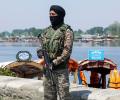
The United Nations Secretary-General, Antonio Guterres, has called for de-escalation between India and Pakistan, expressing deep concern over rising tensions following a terrorist attack in Jammu and Kashmir. Guterres reiterated his condemnation of the attack and urged both sides to avoid a confrontation, which he described as catastrophic. The Secretary-General has also offered his good offices to support de-escalation efforts. The President of the UN General Assembly, Philemon Yang, has also expressed concern over the escalating violence and called for a resolution through diplomatic means. Meanwhile, Pakistan has denied any involvement in the attack and reiterated its commitment to fighting terrorism.

Zende along with a group of traders met joint commissioner of Police Ranjan Kumar Sharma and apprised him about the calls.

India on Wednesday dismissed claims on Pakistan social media about 'Operation Sindoor', saying the neighbouring country has unleashed a 'full-blown disinformation offensive' with 'lies' and digital theatrics to control the narrative.

The worst-hit in the Pakistani shelling was Poonch district which accounted for all the civilian deaths, the officials said, adding 28 persons were also injured and the condition of some of them was stated to be critical.
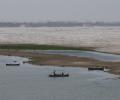
Weeks after India placed the 1960 Indus Waters Treaty (IWT) in abeyance following the April 22 Pahalgam terror attack, Pakistan has signalled its willingness to discuss New Delhi's long-standing concerns about the treaty, sources said.

Malhotra, behind bars on suspicion of espionage, had been in touch with Ehsan-ur-Rahim alias Danish, the Pakistani staffer at the Pakistani High Commission, since November 2023, a source said.
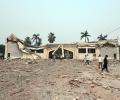
A former Pentagon official, Michael Rubin has said that India targeted terror infrastructure with precision, and it was able to blunt Pakistan's response following the recent strikes.
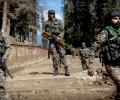
China hopes both sides will remain restrained, move toward each other, and work together to de-escalate the situation.
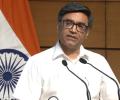
India carried out missile strikes on terror targets in Pakistan and Pakistan-Occupied Kashmir, including the Jaish-e-Mohammad stronghold of Bahawalpur and Lashkar-e-Taiba's base in Muridke, after the Pahalgam attack that killed 26 civilians. The Foreign Secretary said the actions were measured, non-escalatory, proportionate and responsible.

India's trade relations with Turkey and Azerbaijan are expected to come under strain due to Ankara and Baku backing Islamabad and condemning India's recent strikes on terror camps in Pakistan. Following their support to Pakistan, calls for boycotting Turkish goods and tourism have surfaced across the country, with online travel platforms such as EaseMyTrip and Ixigo issuing advisories against visiting these nations.
The MoU was inked on February 3 for a period of three years.
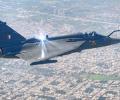
India's military expenditure in 2024 was nearly nine times that of Pakistan's, according to a study released by the Stockholm International Peace Research Institute (SIPRI). India's spending reached USD 86.1 billion, while Pakistan spent USD 10.2 billion. China's military spending continued to rise, reaching USD 314 billion, accounting for 50% of all spending in Asia and Oceania.

"As long as PoK exists, terrorist activities will continue. I request Prime Minister Narendra Modi that if Pakistan does not hand over PoK, we must declare war against them," Athawale said, calling for another surgical strike against the neighbouring country.

Abdullah, who visited the shelling-affected areas of Uri, including Salamabad, Lagama, Bandi and Gingal in north Kashmir's Baramulla district, also said that he would take up the demand for building individual bunkers in these areas with the Centre.

Citing "cross-border linkages" to the horrific attack, India has promised severe punishment to those involved in the strike that triggered wide-spread outrage within India and abroad.
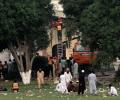
Pakistan on Wednesday summoned the Indian charg d'affaires and lodged a strong protest against the Indian military strikes.
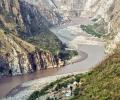
Pakistan may face a significant water shortage during the Kharif season due to reduced water supplies from India.

Besides, the carrier is having a technical stop in Kolkata for some of the North America flights from Delhi, they added.

The country comes first for us. Asia Cup is happening in India, and whatever the government advises us, we will abide by tha
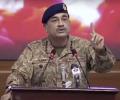
Pakistan's army chief, General Asim Munir, has warned that the country will respond with "full force" to preserve its "national prestige" and the wellbeing of its people if its sovereignty and territorial integrity are violated. He made the comments during a workshop on Balochistan, emphasizing that Pakistan seeks peace but will not tolerate threats to its security. General Munir also highlighted foreign-sponsored terrorism as a major threat to Balochistan's security and development, vowing to counter it with unwavering national unity.

Iranian Foreign Minister Abbas Araghchi visited Pakistan and called on both India and Pakistan to "exercise restraint" amid rising tensions between the two countries following the Pahalgam terror attack. Araghchi, who is scheduled to travel to India on Thursday, emphasized the importance of easing tensions and preventing further escalation. During his talks with Pakistani officials, Araghchi and Pakistani Foreign Minister Bilawal Bhutto Zardari reaffirmed their commitment to strong Pakistan-Iran ties and agreed to boost cooperation in trade, energy, and connectivity. Both sides also exchanged views on the situation in South Asia and the US-Iran talks, while agreeing that complex regional issues could be resolved through diplomacy and negotiations.

Of these only 150 attacks were successful, officials said on Monday.

Pakistan's ambassador to Russia, Muhammad Khalid Jamali, has warned that Pakistan will respond with "full spectrum of force", including nuclear, if it is attacked or its vital water flow is disrupted. The warning comes amid heightened tensions between Pakistan and India following a terrorist attack in Jammu and Kashmir. Jamali also reiterated Pakistan's stance on the Indus Water Treaty, saying any attempt to stop or divert water flow would be considered an act of war. He urged de-escalation, emphasizing the potential danger given both countries possess nuclear weapons. Jamali further called for a neutral investigation into the Kashmir attack, suggesting the involvement of China and Russia. He also highlighted the need to address the root causes of the conflict, pointing to the unresolved Kashmir issue and its potential for resentment.
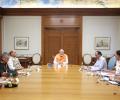
Defence Secretary Rajesh Kumar Singh met Prime Minister Narendra Modi on Monday amid escalating tensions between India and Pakistan following the Pahalgam terror attack. The meeting comes a day after the Chief of Air Staff met with Prime Minister Modi to discuss the security situation. Last Tuesday, Prime Minister Modi gave the armed forces "complete operational freedom" to respond to the Pahalgam terror attack, which killed 26 people.

Villagers living near the International Border and Line of Control in Jammu are on high alert following the recent terror attack in Pahalgam, preparing underground bunkers and accelerating crop harvesting. The incident has heightened security concerns despite a renewed ceasefire agreement between India and Pakistan in 2021. Residents are demanding swift action against the perpetrators and their handlers.

A 30-minute blackout rehearsal was conducted in the Ferozepur Cantonment area in Punjab on Sunday evening amid heightened tension between India and Pakistan following the April 22 terror attack in Pahalgam. The drill, which took place from 9 pm to 9:30 pm, involved turning off all lights in the area after a siren went off. The exercise was part of a routine preparedness exercise to ensure the effectiveness of blackout procedures during potential war threats. Police and security forces have also increased vigilance in the area, with checkpoints set up at strategic locations and social media activities under surveillance.

Tamil Nadu Chief Minister and Dravida Munnetra Kazhagam president MK Stalin on Saturday said the INDIA bloc will deliver a "sweet victory" on June 4.
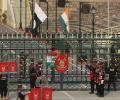
The Army further made it clear that the continuation of a break in hostilities, as decided in the DGMOs interaction of May 12, has no expiry date to it.
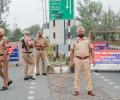
In a significant breakthrough, the Malerkotla Police apprehended two individuals for alleged involvement in espionage activities linked to a Pakistani official posted at the High Commission in New Delhi, said Punjab Director General of Police (DGP) on Sunday.

The International Monetary Fund (IMF) has slapped 11 new conditions on Pakistan for the release of the next tranche of its bailout programme and warned that tensions with India could heighten risks to the scheme's fiscal, external, and reform goals, according to a media report on Sunday.

This came after Pakistan People's Party chairman Bilawal Bhutto Zardari on Saturday stated that Pakistan's Prime Minister Shehbaz Sharif had tasked him to lead a delegation to present Pakistan's case on the recent escalations of tensions between the two nations.

India has accused Pakistan of violating the spirit of the Indus Waters Treaty by engaging in acts of terrorism and refusing to modify the treaty. India's Permanent Representative to the UN, Ambassador Parvathaneni Harish, addressed the UN Security Council, highlighting Pakistan's disinformation regarding the treaty and its continued support for cross-border terrorism. He stated that India has always acted responsibly as an upper riparian state and that Pakistan's actions have jeopardized civilian lives, religious harmony, and economic prosperity. India has suspended the treaty until Pakistan ends its support for terrorism.

He added, "You can never trust Pakistan as long as the Pakistani deep state, Pakistani ISI, Pakistani military's objective is to destabilise Bharat."
