
He added, "You can never trust Pakistan as long as the Pakistani deep state, Pakistani ISI, Pakistani military's objective is to destabilise Bharat."
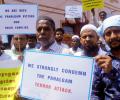
Pakistan Prime Minister Shehbaz Sharif has called on "brotherly" countries, including Saudi Arabia, to urge India to de-escalate tensions after the Pahalgam terror attack that killed 26 people. Sharif met with ambassadors from Saudi Arabia, the UAE, and Kuwait, reiterating Pakistan's commitment to peace in South Asia. He rejected India's accusations linking Pakistan to the attack, emphasizing Pakistan's own history as a victim of terrorism. The meeting comes amidst heightened tensions between the two countries.
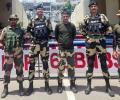
Purnam Kumar Shaw, a BSF jawan who was held captive in Pakistan for nearly three weeks, returned to his home in West Bengal's Hooghly district on Friday evening. Shaw was greeted by his family and well-wishers at Howrah station and was escorted to his hometown Rishra, where he was welcomed by people and a band playing patriotic tunes. Shaw had been taken into custody by Pakistan Rangers on April 23, after he inadvertently crossed the international border in Punjab's Ferozepur district.
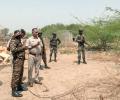
The western Rajasthan experienced a complete blackout and sirens were sounded multiple times, particularly in Barmer, to alert residents.

The Indus system of rivers comprises the main river -- the Indus -- along with its five left bank tributaries, namely, the Ravi, the Beas, the Sutlej, the Jhelum and the Chenab. The right bank tributary, the Kabul, does not flow through India.
The UN Security Council could meet soon to discuss the situation between India and Pakistan, with the UNSC President expressing concern over rising tensions between the nuclear-armed neighbors. The President, Ambassador Evangelos Sekeris of Greece, said a meeting would provide an opportunity to express views and help diffuse tensions. Sekeris also condemned terrorism in all its forms, including the recent attack in Pahalgam, and called for de-escalation and dialogue between India and Pakistan.

The Indian government has assured citizens that the country has ample food stocks to meet domestic demand, despite escalating tensions with Pakistan. The government has also warned traders against hoarding essential food items and creating artificial shortages, emphasizing that there is no need for panic buying. The food ministry detailed the country's current stock levels, showcasing a surplus over required buffer norms for rice, wheat, and pulses. Additionally, India holds substantial edible oil and sugar stocks, ensuring a strong food security position.
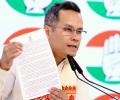
Newly appointed Assam Congress chief Gaurav Gogoi has denied allegations of having links to the Pakistani establishment, calling the claims made by the BJP a "C-grade Bollywood movie" that will "flop miserably." Gogoi said he had only visited Pakistan once 12 years ago with his wife, who was working on an international project focused on climate change. He questioned why the BJP government had not acted on the allegations in the past 11 years if there was any wrongdoing. Assam Chief Minister Himanta Biswa Sarma, who made the initial allegations, said he would release further evidence on September 10 after a Special Investigation Team (SIT) completes its inquiry.

In the letter issued, considering the last night attacks by Pakistani forces in Jammu and Jaisalmer regions, the provision also authorises the use of local authority funds for such emergency measures, giving them precedence over other financial obligations.
The United States on Thursday said it supports India's right to defend itself and its fight against terrorism as US Defence Secretary Pete Hegseth dialled Defence Minister Rajnath Singh amid rising tensions between India and Pakistan over the Pahalgam terror attack.
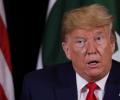
Pakistan's Ambassador to the US, Rizwan Saeed Sheikh, has urged President Donald Trump to help ease tensions with India, highlighting the Kashmir issue as a "flash point" in nuclear terms. He believes that the US should take a more comprehensive and sustained approach to address the situation rather than just immediate de-escalatory measures.
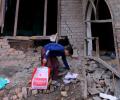
Amid escalating tensions between India and Pakistan, the US has said it will not get involved in the conflict, stressing that it is "fundamentally none of our business." While acknowledging concerns about a potential nuclear war, Vice President J D Vance emphasized that the US cannot control India and Pakistan, but can encourage them to de-escalate. The US has also reiterated its support for direct dialogue between the two countries and encouraged efforts to improve communications.
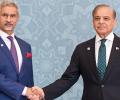
Shehbaz made the comments during a visit to the Kamra air base in the country's Punjab province where he interacted with officers and soldiers involved in the recent military confrontation with India.
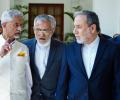
India has no intention to escalate tensions with Pakistan, but any military attacks on its soil will be met with a "very" firm response, External Affairs Minister S Jaishankar said on Thursday. Jaishankar made the remarks at a meeting with Iranian Foreign Minister Abbas Araghchi, emphasizing that the "barbaric" Pahalgam terror attack compelled India to carry out strikes on "cross-border" terror infrastructure on Wednesday. He reiterated that India's response was targeted and measured, but stressed that any further military attacks would be met with a firm response. The Iranian foreign minister, who landed in New Delhi amidst escalating tensions between India and Pakistan, called for de-escalation of the situation and stressed the need for regional cooperation to eradicate terrorism. The meeting also focused on boosting ties in areas of trade and investment, including the Chabahar port project.
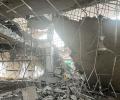
Indian Air Force S-400 Sudarshan Chakra air defence missile systems were fired last night against targets moving towards India. The targets were successfully neutralised in the operation multiple domain experts told ANI.
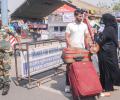
United States Charge d'Affaires Natalie Baker on Wednesday met Deputy Prime Minister and Foreign Minister Ishaq Dar as part of efforts to de-escalate tensions with India following the Pahalgam terror attack on April 22 in which 26 people were killed.
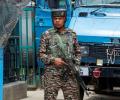
S&P Global Ratings on Thursday said the hostilities between India and Pakistan heighten risks to the credit metrics of both countries, and any escalation in clashes would put downward pressure on sovereign credit support.
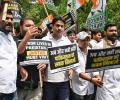
A video showing a mob surrounding a schoolboy and forcing him to urinate on a Pakistani flag in Aligarh, Uttar Pradesh, has prompted police to launch a probe and book three people. The incident has been condemned by the Samajwadi Party, which sees it as an attempt to incite communal discord. Police are investigating both this incident and a separate report of a fruit juice vendor's shop being ransacked.

US President Donald Trump has called for an end to the escalating tensions between India and Pakistan, expressing concern over the situation and offering to help resolve the conflict. Trump said he wants to see the two countries "stop" and work it out, adding that he has "good relationships" with both nations. He said he hopes the hostilities will end "very quickly", expressing sadness over the situation.
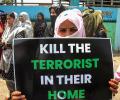
Amid rising tensions between India and Pakistan, the US has called on both countries "not to escalate" the conflict. Secretary of State Marco Rubio is expected to speak with the foreign ministers of Pakistan and India as early as today or tomorrow. The US State Department said Washington is reaching out to both India and Pakistan "regarding the Kashmir situation" and telling them "not to escalate the situation."
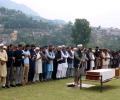
The Pakistan Army and members of the banned Jamaat-ud-Dawah (JuD) of Hafiz Saeed attended the funeral of three persons killed in the Indian military strikes on the terror group's headquarters in Muridke, some 40 kms from Lahore. The funeral prayer was held amid high security, with members of the civil bureaucracy also present. Qayyum, a JuD spokesperson, said the three persons were sleeping in a room adjacent to the mosque when the Indian attack occurred and the mosque was destroyed. He said Malik, Khalid, and Mudassir, believed to be members of the JuD, served as the mosque's prayer leaders and caretakers.

The disbursement of the second tranche comes on a day when the International Monetary Fund is holding virtual discussions on Pakistan's upcoming budget, as the visit of its mission to Islamabad was delayed due to security concerns in the region.
Since the Pahalgam terrorist attack, China, Pakistan's "ironclad ally", while condemning it, has called for restraint, besides a fair and swift investigation into the attack.
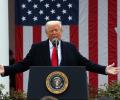
'We heard about it just as we were walking in the doors of the Oval (Office). I guess people knew something was going to happen based on a little bit of the past'
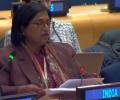
India has accused Pakistan of being a "rogue state" fueling global terrorism, following a confession by Pakistan's Defence Minister Khawaja Asif admitting to his country's history of supporting and funding terrorist organisations. India's Deputy Permanent Representative to the UN, Ambassador Yojna Patel, delivered a strong Right of Reply at a UN event, highlighting Asif's admission and condemning Pakistan's actions. Patel asserted that the world can no longer turn a blind eye to Pakistan's role in supporting terrorism.
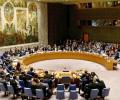
The United Nations Security Council held closed-door consultations on rising tensions between India and Pakistan, with envoys calling for restraint and dialogue. The consultations, requested by Pakistan, lasted for about an hour and a half. UN Secretary-General Antonio Guterres expressed concern over the tensions, urging both countries to avoid a military confrontation. India's former Permanent Representative to the UN, Syed Akbaruddin, said that no consequential outcome could be expected from the discussion.

The firing exchanges are taking places in five districts out of seven border districts of Jammu and Kashmir. So far, there has been no firing reports along International Border in Samba and Kathua districts.
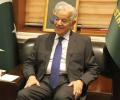
Last week, Information Minister Atta Tarar had said that 24-36 hours were important, fearing a possible strike by India. However, the time passed and there was no action by India.

A large number of Indian community and diaspora representatives gathered outside the Indian High Commission in London to counter a Pakistani demonstration protesting against what they called "Indian propaganda" in the wake of the Pahalgam terror attack. The pro-Indian demonstrators outnumbered the smaller group of British Pakistanis and chanted slogans like "Bharat Mata ki Jai" and "Vande Mataram". The Metropolitan Police was present to keep the groups separate as they exchanged insults. Later, a candlelight vigil was held at Piccadilly Circus by the British Indian groups to commemorate the victims of the April 22 terror attack. Similar protests and vigils have been organized by Indian diaspora groups across the UK to condemn Pakistan's alleged support for terror outfits.
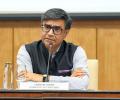
Foreign Secretary Vikram Misri, who faced trolling on social media in the wake of India and Pakistan reaching an understanding on May 10 to halt all military actions, has received support from veteran diplomat Nirupama Menon Rao, a body of Indian diplomats and a host of politicians from several parties.
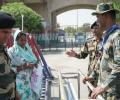
A Meerut woman, married to a Pakistani national, was denied entry to Pakistan at the Wagah border after she presented her Indian passport. She was accompanied by her two children who hold Pakistani citizenship. The authorities permitted the children to cross but Sana refused to separate from them, resulting in her return to India.
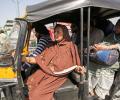
The exit deadline for Pakistani nationals visiting India on SAARC visas ended on April 26, while for the rest, except those on medical visas, it is set to close on Sunday, April 27 amid escalating tensions between the two countries over the Pahalgam terror attack that killed 26 people.
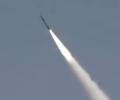
Pakistan successfully conducted a training launch of the 'Fatah series' surface-to-surface missile with a range of 120 kilometers. The launch comes amid heightened tensions with India following a terror attack in Jammu and Kashmir. The Inter-Services Public Relations (ISPR) said the test was part of the ongoing exercise 'INDUS' and was aimed at ensuring the operational readiness of troops and validating key technical parameters, including the missile's advanced navigation system and enhanced accuracy.
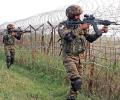
Pakistan troops have violated the ceasefire agreement for the 11th consecutive night, firing on Indian posts along the Line of Control (LoC) in Jammu and Kashmir. The firing began in Kupwara and Baramulla districts and spread to other sectors, including Poonch, Rajouri, Mendhar, Naushera, Sunderbani, and Akhnoor. The Indian Army responded promptly and proportionately. The ceasefire violation comes despite a recent phone call between the Directors General of Military Operations (DGMOs) of India and Pakistan on April 29. This marks the latest escalation of tensions between the two countries, following a terror attack in Pahalgam in April.

Defence Minister Rajnath Singh stated India's readiness to assist Pakistan in combating terrorism if it cannot act on its own, highlighting Operation Sindoor as a demonstration of India's capabilities. He also criticized Pakistan's appointment to a UN counter-terrorism committee.
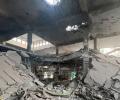
Pakistan claims it was a mosque and an educational complex that were hit in the strikes at Muridke, located at about 40 km from Lahore.
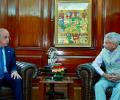
As tensions escalated between India and Pakistan following the deadly Pahalgam terror attack, Iran reached out to both countries, urging de-escalation. Saudi Arabia also expressed concern, with its foreign minister engaging in phone conversations with his Indian and Pakistani counterparts. Iran's foreign minister, Seyed Abbas Araghchi, emphasized the importance of bilateral relations, stating Tehran's willingness to "forge greater understanding" at this critical time. Saudi Arabia's foreign minister, Faisal bin Farhan Al Saud, spoke with both India's External Affairs Minister S Jaishankar and Pakistan's Foreign Minister Mohammad Ishaq Dar. Amidst heightened tensions, India has taken a series of punitive measures against Pakistan, including suspending the Indus Waters Treaty and downgrading diplomatic ties. Pakistan responded by shutting its airspace to Indian airliners and suspending all trade. Both countries exchanged warnings, with Pakistan emphasizing its commitment to "respond firmly to any aggression."

Tensions between India and Pakistan are escalating following last week's dastardly terror attack in Pahalgam that claimed 26 lives.

The Minister for Housing, Waqf, and Minority Affairs in the Siddaramaiah-led government claimed that if Prime Minister Narendra Modi and Union Home Minister Amit Shah were to give him a suicide bomb, he would tie it to himself and go to Pakistan to fight.

With national security as the top priority, the BCCI, in coordination with local authorities, decided to abandon the match as a precautionary measure.
