
Pakistan has significantly increased the price of high-octane fuel, impacting luxury vehicle owners, while also seeing increases in petrol, diesel, and airline fares due to rising global oil prices.

'On behalf of the Islamic Republic of Iran, I express gratitude and appreciation for my dear brothers HE Prime Minister of Pakistan Sharif and HE Field Marshal Munir for their tireless efforts to end the war in the region.'
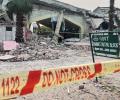
Pakistan has closed its airspace for all commercial flights at Lahore and Islamabad airports after India carried out military strikes on terror targets in Pakistan and Pakistan-occupied Kashmir. The country's airspace was closed for all air traffic after India launched a 48-hour closure following the strikes. The Pakistan Airports Authority (PAA) has formally conveyed its concerns to the International Civil Aviation Organisation (ICAO) regarding the serious risks posed to civil aviation safety by India's reckless and provocative actions.

The two policemen were injured by "hard and blunt instruments", while "two protesters with firearm injuries" were also brought to JPMC, the surgeon told Dawn.

Indian pacer Harshit Rana is expected to miss a significant portion of the IPL 2026 season due to a knee injury, impacting Kolkata Knight Riders' campaign. The article also discusses other changes in the KKR squad.

At Border Pillar 609 at Babliyan near Jaisalmer, the one thing that dominates the landscape is something entirely different, something central to our identity -- the Tiranga -- flying boldly above the blazing desert.

Pakistan launched a military operation targeting terrorist hideouts in Afghanistan following a series of attacks, including a suicide bombing that killed Pakistani soldiers. The action comes after repeated calls for the Afghan Taliban to prevent terrorists from using Afghan soil to launch attacks against Pakistan.

'We need to give Pakistan something serious to think about on its eastern front -- that is the only way to actually help Afghanistan right now.'

As he settled down to his job as army chief, General Qamar Javed Bajwa -- who died last week; his passing did not merit even an obituary in major print or electronic media in Pakistan! -- developed a vision of reducing his country's and his institution, the army's traditional hostility toward India, points out Rana Banerji, who headed the Pakistan desk at RA&W.

The LPG squeeze on India's restaurant sector is the quotidian face of a deeper crisis.

India has strongly condemned Pakistan's airstrike on a drug treatment centre in Kabul, Afghanistan, calling it a blatant assault on Afghanistan's sovereignty and a threat to regional peace and stability.

A devastating airstrike on a Kabul drug rehabilitation centre has killed hundreds, escalating tensions between Afghanistan and Pakistan and prompting international calls for de-escalation and investigation.

India has strongly condemned Pakistan's airstrike on a drug treatment centre in Kabul, calling it a barbaric act and a threat to regional peace and stability.

Steve Smith becomes the most expensive player in Pakistan Super League history after being signed by Sialkot Stallions for PKR 14 crore.

He said that TEA will also conduct a meeting to raise awareness among exporters and domestic manufacturers to verify the identity of workers.

India strongly condemns Pakistan's airstrikes in Afghanistan, decrying the civilian casualties and reaffirming its support for Afghan sovereignty amidst rising tensions.
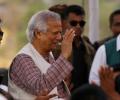
It was a meeting at the official level, not at the political level, Hossain said, adding that there was no element of formation of any alliance.

Several Afghanistan cricketers, including Rashid Khan and Mohammad Nabi, condemned Pakistan's military airstrike at a drug rehabilitation centre in Kabulinvestigation.

A close aide to Pakistan's Prime Minister Shehbaz Sharif claims that Pakistan has achieved its targets in the recent military operation against Afghanistan, following attacks by Afghan Taliban forces along the border.

Delhi should keep all its options open in what is essentially a transitional period in the geopolitics of energy rather than remain a gatekeeper serving Trump's 'America First', suggests Ambasssador M K Bhadrakumar.

Saudi Arabia and the UAE are actively pushing Trump to take the war to its bitter finish and 'erase' Iran's presence in the geopolitics of the region. Simply put, the two most powerful Sunni Arab oligarchies are on the same page as Israel. Such interference increases the risk of a breakdown in dialogue between the US and Iran, points out Ambassador M K Bhadrakumar.

'If this region destabilises, then we are not far away. This region should not destabilise.'

According to a United Nations Environment Program 2022 report, these nine cities are known for particularly high sound levels.

Amidst escalating tensions in West Asia, Pakistan's defence chief visited Saudi Arabia to discuss regional security and the mutual defence pact between the two nations, focusing on de-escalation strategies.

Pakistan has reported its first case of poliovirus infection this year in a four-year-old child from Sindh province, raising concerns about the ongoing threat of the crippling disease despite eradication efforts.

'TTP has vowed to take revenge for the attacks that Pakistan is carrying out against Afghanistan.' 'To diminish this threat, Pakistan is hitting Afghanistan hard.'
Pakistan's Foreign Minister Ishaq Dar has been actively involved in mediating between Saudi Arabia and Iran following the outbreak of war, ensuring the safety of Pakistani citizens in affected regions.

Pakistan has announced a temporary pause in its ongoing operation against the Afghan Taliban in response to requests from Islamic countries and in view of the upcoming Eid festival, following accusations from Afghanistan regarding an attack on a rehabilitation hospital in Kabul.

An anti-terrorism court in Pakistan has sentenced 47 Pakistan Tehreek-e-Insaf (PTI) leaders and supporters to 10 years in prison for their involvement in vandalism and violence during a protest in May 2023.

India's handling of the Iran crisis reflects a growing strain between strategic autonomy and geopolitical alignment, observes Ambassador M K Bhadrakumar.

Faf du Plessis called upon KKR to prepare spin-friendly pitches for their home games at Eden Gardens, which will bring their spin duo Sunil Narine and Varun Chakaravarthy into contention.

Pakistan's former captain Shahid Afridi has said he is not averse to joining politics in the future after he moved his residence from his hometown Karachi to capital Islamabad.

The alert comes in the backdrop of the deadly car explosion near the historic Red Fort on November 10, 2025, which killed at least 13 people.

Bangladesh has expressed a potential interest in procuring JF-17 Thunder fighter aircraft from Pakistan, according to a statement from the Pakistan military. The development came during a meeting between the air chiefs of both countries, focusing on strengthening operational cooperation and institutional synergy.

By appearing to privilege ideological affinity over strategic balance, India risks eroding the trust painstakingly built across West Asia. Once the perception takes hold that India's friendship is conditional and transactional, rebuilding credibility will be difficult, warns Amberish K Diwanji.

At least 17 Pakistani security personnel and 145 militants were killed in multiple counter-terrorism operations carried out by Pakistani security forces in Balochistan province.

Pakistan declared an 'open war' with Afghanistan following airstrikes targeting Taliban fighters in response to alleged cross-border attacks. The situation has drawn international concern, with calls for de-escalation and diplomatic resolution.

India and Pakistan exchanged lists of nuclear installations and prisoners, continuing a long-standing practice despite strained relations.

India's Permanent Representative to the UN, Ambassador Parvathaneni Harish, delivered a sharp response to comments made by Pakistan's Ambassador to the UN, Asim Iftikhar Ahmad.

The Army chief said the situation along the Line of Actual Control with China has been stable, but it needs constant vigil.
