
India's Indo-Pacific approach has traditionally emphasised strategic autonomy, ASEAN centrality, freedom of navigation, respect for international law and an inclusive regional order. Its growing defence and maritime partnerships with Australia, Japan, Indonesia, Vietnam and other Southeast Asian countries provide additional depth to this approach, point out Dr Kumar and Dr Jasmeet Kaur.

In their first summit, the leaders of Quad countries on Friday decided to launch a mega vaccine initiative under which coronavirus vaccines will be produced in India for the Indo-Pacific region with financial assistance from the United States and Japan while Australia will contribute in logistical aspects.

The Indian armed forces, especially the Navy, are building partnerships in the Indo-Pacific region for peace and security, as well as humanitarian assistance and disaster relief, he said.

Asserting that "maritime muscle flexing" by some countries and other factors have made the Indo-Pacific region "more contested and more volatile," naval chief Admiral Sunil Lanba on Tuesday said that the Indian Navy has its task cut out as it has been a major security provider in the region.

Prime Minister Narendra Modi addressed the Indonesian parliament, emphasising India's commitment to development over expansionism and advocating for a free, open, and inclusive Indo-Pacific. He highlighted the strong historical ties between India and Indonesia, calling for enhanced cooperation in various sectors, including defence, technology, and counter-terrorism, amidst growing concerns over regional security.

The economic fallout of the West Asia crisis, the prevailing security situation in the Indo-Pacific and ways to boost cooperation in critical minerals and technology are expected to top the agenda at a crucial meeting of the Quad foreign ministers on Tuesday.

The Quad has come of age and its agenda covering areas like vaccines, climate change and emerging technologies makes it a force for global good, Prime Minister Narendra Modi said at the first summit of the coalition. In his opening remarks, he also talked about shared values and promoting a secure, stable and prosperous Indo-Pacific.

Admiral Samuel J Paparo, Commander of the US Indo-Pacific Command, lauded India's military restraint during Operation Sindoor and emphasized the growing India-US defence partnership aimed at maintaining peace and security in the Indo-Pacific region.

Top Quad leaders announced new initiatives including a maritime surveillance system, military exercise, cable connectivity, and cybersecurity partnership to strengthen cooperation in the Indo-Pacific. They also opposed destabilising actions and economic coercion, reaffirming their commitment to a free and open region.

The Quad grouping has expanded cooperation in critical minerals and energy, while unveiling new measures to boost maritime surveillance and port infrastructure across the Indo-Pacific. This move comes against the backdrop of China's growing military posturing in the region, with ministers reiterating strong opposition to destabilising actions and expressing serious concerns over militarisation of disputed features.

The US Department of Defence has restored the name of the US Indo-Pacific Command to the US Pacific Command, reversing an eight-year-old decision. This change honours the command's deep historical roots, established in 1947, while its vast area of responsibility, extending to India's western border, and its mission remain unchanged.

A senior US official has emphasised India's crucial role in maintaining peace and stability in the Indo-Pacific region and ensuring a balanced power dynamic in Asia, advocating for stronger defence ties between the two nations.

Prime Minister Narendra Modi addressed the ASEAN-India summit, advocating for a free, inclusive, and rules-based Indo-Pacific based on cooperation. He proposed nine initiatives, including a long-term maritime plan, free e-visas, and cooperation in civil nuclear energy, emphasizing India's commitment to ASEAN's unity and centrality amidst global uncertainties.

'We condemn recent illicit missile launches in the region that violate UN Security Council resolutions. We express serious concern over recent dangerous and aggressive actions in the maritime domain. We seek a region where no country dominates and no country is dominated one where all countries are free from coercion, and can exercise their agency to determine their futures,' the declaration said.

Prime Minister Narendra Modi's visit to New Zealand culminated in the elevation of bilateral ties to a strategic partnership, with a focus on doubling trade and enhancing cooperation in sports and the Indo-Pacific region. Modi and his counterpart Christopher Luxon attended a sports showcase, acknowledging a century of sporting ties and discussing future collaborations, including India's preparations for the Commonwealth Games 2030. The visit also saw 18 concrete outcomes and 10 agreements signed, alongside discussions with business leaders.

The Indian Air Force conducted a large-scale multinational Humanitarian Assistance and Disaster Relief (HADR) exercise, 'Sahayata Setu 2026', in Jamnagar, Gujarat. The drill showcased India's growing air power and disaster-response capabilities, involving various Indian agencies and representatives from 24 friendly foreign countries. Chief of Defence Staff General N S Raja Subramani highlighted India's commitment to human security and its role as a first responder in the Indian Ocean Region.

India and Japan have signed a Memorandum of Arrangement on maritime security cooperation, committing to deepen defence ties and oppose unilateral actions that impede freedom of navigation in the Indo-Pacific, a move seen as directed at China's increasing military presence.

India and Australia have signed significant agreements covering civil nuclear energy, maritime security, and critical minerals, reinforcing their partnership's role in ensuring a peaceful Indo-Pacific. The pacts facilitate uranium supply from Australia to India and enhance cooperation in defence, cyber, and critical technologies.

US Special Representative Sergio Gor met with Sri Lankan President Anura Kumara Dissanayake to discuss strengthening bilateral relations and Sri Lanka's stance on the Middle East crisis. The visit occurs amidst regional tensions and US efforts to secure trade routes in the Indo-Pacific.

The Japanese PM's visit to Assam comes amid festering uneasiness in Tokyo about Beijing's assertiveness in the Indo-Pacific region.
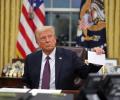
US President Donald Trump signed the National Defence Authorisation Act for Fiscal Year 2026 into law, highlighting broadened engagement with India and addressing the challenge posed by China in the Indo-Pacific region.

In the Indo-Pacific's new era -- where perception shapes reality faster than treaties -- the real entrapment is not of China or the United States. It is the test Japan has set for itself -- and whether partners like India, acting as balancers rather than accelerants, can help ensure that the story ends in stability, points out Varun Arya.

A collaborative study by Indian and South Korean scientists has provided new genetic, anatomical, and ecological insights into the wide-ridged Indo-Pacific finless porpoise. The research, based on a stranded specimen in Kerala, revealed distinct genetic differences from Pacific populations and highlighted significant conservation challenges, including limited protected habitats and anthropogenic pressures.

Prime Minister Narendra Modi and Indonesian President Prabowo Subianto have significantly advanced the India-Indonesia Comprehensive Strategic Partnership, securing crucial agreements on defence, critical minerals, and maritime security, including BrahMos missile supply and Sabang port development.
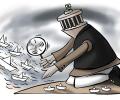
New Zealand Prime Minister Christopher Luxon stated that the historic Free Trade Agreement with India, now in effect, will help grow both economies, allowing Kiwi businesses to reach over a billion more customers with significantly reduced tariffs, leading to 'more jobs and higher wages for Kiwis'.

Vietnam is an emerging regional power and a closer relationship with Hanoi is closely aligned with Prime Minister Narendra Modi's Act East Policy, points out Dr Rajaram Panda.
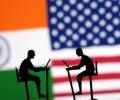
David Perdue said in a post on X that the US-India relationship delivers real results through close cooperation in diverse areas, including defence, energy and through Quad engagement.

India has accumulated experience organically and in public, through blood, sweat and toil -- one commissioning and one agreement at a time -- and is called a regional power. China has accumulated hulls, by misdirecting its industrial capacity, and is mistakenly called a superpower. The Indo-Japan defence agreement pushes this theory to its limits without ever naming the dragon in the room, points out Dr Abhishek Puri.

The objective should be clear: Energy security without abandoning environmental responsibility; water security without ignoring local concerns; and strategic resilience without sacrificing public confidence, notes Varun Arya.

Although the pact would focus mainly on the Pacific and the South China Sea region, any action designed to deter China with or without New Delhi's active participation is a welcome move, notes Commodore Venugopal Menon (retd).

US Secretary of State Marco Rubio kick-started a three-day visit to India on Tuesday to advance bilateral ties in energy, trade and investment, defence, critical technologies, and exchange views on the West Asia crisis.

Singh emphasised that the Indo-Pacific is no more a maritime construct, but a full-fledged geo-strategic issue, and that the region is facing "a complex web" of security challenges, including boundary disputes and piracy.

The political confidence required to place high-end Japanese aircraft and personnel on Indian soil is itself a data point.
It indicates a level of trust that would have been difficult to imagine when India-Japan defence ties were largely symbolic, explains Varun Arya.
Prime Minister Narendra Modi concluded his three-nation tour in New Zealand, where he and his counterpart Christopher Luxon elevated bilateral ties to a strategic partnership. The visit focused on doubling trade by 2030 and expanding cooperation in the Indo-Pacific region, marking the first visit by an Indian PM in 40 years.

This includes over $15 billion of proposed investment in the infrastructure sector in the Indo-Pacific and $9 billion for shoring up American defence in the region.
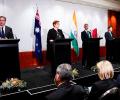
The meeting to be presided over by External Affairs Minister S Jaishankar will be attended by US Secretary of State Antony Blinken, Japanese Foreign Minister Yoshimasa Hayashi and Australia's Penny Wong.

A new report indicates India has become the world's fifth most digitalised economy and ranks fourth globally in AI performance, driven by increasing AI adoption and a strong digital infrastructure.

Prime Minister Narendra Modi and US Secretary of State Marco Rubio discussed various aspects of India-US bilateral ties, focusing on defence, trade, energy, and technology. Rubio extended an invitation from President Donald Trump for PM Modi to visit the US.

With over 75 per cent indigenous content, the frigate is among the most self-reliant frontline warships built in India.

Experts' worries intensified after Pakistan commissioned its first Chinese-built Hangor-class submarine, PNS Hangor, last month.
