
India has issued an advisory for its nationals in Saudi Arabia to remain vigilant and stay indoors due to an escalating security situation involving Houthi attacks on civilian infrastructure, including airports. The advisory also cautions against circulating related news and confirms the normal functioning of Indian diplomatic missions. Flight services from India to Riyadh have been cancelled by Air India and Air India Express until October 10 following the attacks.

The Saudi-led coalition issued a stern warning to Yemen's Houthi rebels after intercepting a drone targeting Mecca, Islam's holiest city. Describing it as a "hostile and terrorist act," the coalition declared the security of holy sites a "red line" and vowed deterrent measures. This incident marks a significant escalation in the ongoing conflict, with both sides exchanging accusations of military operations and civilian targeting.

India has issued a fresh advisory for its nationals in Saudi Arabia, urging them to take precautions due to heightened security concerns following drone and missile attacks by Yemen's Houthi rebels. The advisory includes instructions on what to do during an aerial attack and notes flight disruptions, with Indian carriers suspending services until late October.

Pakistan and Turkiye have agreed to deploy military forces in Saudi Arabia as part of the Makkah Alliance for Defence. This decision follows recent attacks by Houthi rebels and aims to strengthen collective deterrence against threats to Saudi Arabia. The alliance, formed in August, considers an attack on one member as an attack on all.

India has expressed serious concern over Houthi attacks on Saudi Arabia's civilian infrastructure and economic assets, stating that such actions threaten regional stability and freedom of navigation through the Bab-el-Mandeb strait. External Affairs Minister S Jaishankar discussed the issue with his Saudi counterpart. India also condemned the targeting of commercial shipping after an Indian national went missing following an attack on a Panama-flagged ship off Oman.

Fighting in Yemen has intensified as Houthi rebels advance on strategic government-held areas like Marib and Taiz, putting pressure on Saudi Arabia to respond. The conflict is also linked to wider US-Iran tensions affecting shipping in the Strait of Hormuz, with former US President Trump commenting on the situation.

Top defence officials from Saudi Arabia, Pakistan, and Turkiye have affirmed their commitment to the Makkah Defence Alliance, a trilateral pact aimed at collective security against threats, particularly from Yemen's Houthi rebels. The alliance, formed last month, considers an attack on one as an attack on all, and its members met in Riyadh to discuss intelligence sharing, military coordination, and capability integration to defend Saudi Arabia's security, sovereignty, and territorial integrity.

Air India has extended the cancellation of flights to Saudi Arabia until October 20, 2026, due to escalating tensions and Houthi attacks in the region. IndiGo and Akasa Air have also extended their flight suspensions to Saudi cities, with passengers offered full refunds.

India has strongly condemned the recent Houthi militant attacks on two Saudi Arabian airports, asserting that the targeting of civilian infrastructure is completely unacceptable.

A senior Pakistan Army general has confirmed the presence of Pakistani troops in Saudi Arabia, operating in "multiple capabilities" and "domains" amidst escalating Houthi attacks. This deployment is linked to the Makkah defence pact, a trilateral agreement with Turkiye and Saudi Arabia for collective deterrence, though specific details remain classified. Both Pakistan and Turkiye emphasise the defensive nature of their involvement.

Air India Express, Air India, Akasa Air, and IndiGo have cancelled flights to Riyadh, Saudi Arabia, following reported attacks by Houthi militants on Riyadh and Abha airports, with cancellations extended until at least October 9-10.

An Indian national was killed and ten others injured in an attack at King Khalid International Airport in Riyadh, Saudi Arabia. The Indian Embassy confirmed the death and ongoing medical care for the injured. India has strongly condemned the repeated attacks, which Saudi Arabia blames on Yemen's Houthis, and called for an immediate cessation of violence.

India has strongly condemned a major attack on Saudi Arabia's King Khalid International Airport in Riyadh, which resulted in 12 deaths and over 300 injuries. New Delhi called the repeated targeting of civilians and infrastructure "completely unacceptable" and expressed solidarity with Saudi Arabia.

India has issued an advisory for its nationals in Saudi Arabia, urging them to stay indoors during aerial attacks and follow local instructions, amidst ongoing tensions and drone/missile attacks by Houthi rebels. The advisory follows an attack on Riyadh airport that killed one Indian national and injured several others, leading to flight suspensions by Indian carriers.
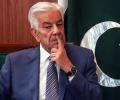
Pakistan's Defence Minister Khawaja Asif has reiterated the nation's unwavering commitment to the Makkah Joint Defence Agreement, underscoring its role in regional security following an attempted drone attack near the holy city of Mecca. The pact, signed by Pakistan, Turkiye, and Saudi Arabia, establishes a framework for collective deterrence against armed attacks.

India has once again raised alarms over the escalation in the security situation in the Red Sea area and strongly condemned Houthi strikes targeting Saudi Arabian territory, "including on civilians and economic assets."

Pakistan's Defence Minister Khawaja Asif has issued a stern warning that the Makkah Defence Alliance, a newly formed pact between Pakistan, Saudi Arabia, and Turkiye, stands ready to activate its collective defence provisions in response to escalating Houthi attacks on Saudi Arabia.
India has advised its nationals in Saudi Arabia to 'remain calm and vigilant' due to an evolving security situation, including drone and missile attacks by Yemen's Iran-backed Houthi rebels, which recently resulted in the death of an Indian national and injuries to several others.

Cristiano Ronaldo scored Al-Nassr's second goal in their 3-1 victory over Uzbekistan's Neftchi in the AFC Champions League Elite, a match that was delayed by an hour due to a security warning in Riyadh.

The US announced a 60-day pause on sanctions against Russia and tariffs on other countries, including India, to analyse the global economic impact. This decision, made via an executive order by Trump, has drawn significant criticism from both Republicans and Democrats, who had previously passed the Lindsey O. Graham Sanctioning Russia and Iran Act. US officials stated the waiver allows for assessment of global energy pressures and European allies' refusal to impose secondary sanctions on Russian oil buyers.
India has issued a new advisory for its citizens in Saudi Arabia, urging them to follow local instructions, stay indoors during aerial attacks, and be aware of ongoing flight disruptions. The advisory follows an October 10 attack on Riyadh airport that injured several Indians, with some still hospitalised. Major Indian airlines have cancelled flights to Saudi cities until late October, impacting travellers and Umrah pilgrims.

Former US National Security Adviser John Bolton has stated that China is not prepared to back India's bid for a permanent seat on the UN Security Council. He highlighted that any expansion of permanent membership would require a UN Charter amendment, which China could veto. Bolton also discussed the broader institutional challenges facing the UN and suggested that regime change in Iran is crucial for long-term stability in West Asia, linking Houthi attacks to Iran's "ring of fire" strategy.

'Elevated crude prices and unchanged domestic fuel prices would put pressure on the profitability and cash flows of OMCs.'

New Delhi was told it had given something up; in reality it had stopped talking about it, notes Dr Abhishek Puri.

Saudi Arabia's East-West pipeline shutdown could make crude costlier for India as refiners face fewer supply routes and rising freight and insurance costs.

Iran's Khatam al-Anbiya Central Headquarters has threatened "continuous, effective and painful" attacks on US bases and interests across the region if Washington resumes military action against Tehran, amid escalating tensions and a US naval blockade on Iranian ports.

A proposed deal between Iran and Oman could grant Tehran control over vessels entering the Gulf through the Strait of Hormuz, according to a senior Iranian source and two regional officials who spoke to Reuters on Wednesday, in what represents one of the most significant concessions made to Iran to date.

Iran has conveyed seven conditions to the United States through Qatari mediators for starting negotiations to end the ongoing war, while warning that Tehran is prepared for a "decisive war" if Washington rejects its demands.

Indian benchmark indices Sensex and Nifty experienced significant declines in early trade, driven by soaring crude oil prices amidst escalating tensions in West Asia, coupled with weak global market trends and foreign fund outflows.

Shailesh Chandra, MD and CEO of Tata Motors Passenger Vehicles (TMPV), stated that the uncertainty surrounding how long commodity costs will remain elevated is a greater concern for the company than the actual price increases. He noted that commodity prices have risen significantly over the past five to six months, impacting margins and necessitating faster cost-reduction efforts, though no major production or supply-side issues are currently foreseen.

Indian stock markets, including the Sensex and Nifty, experienced a significant tumble in early trade, driven by escalating tensions in West Asia that pushed crude oil prices close to the USD 100-per-barrel mark, alongside selling in IT stocks and fresh foreign fund outflows.

The Indian rupee experienced its sharpest single-day decline in eight weeks, settling at 94.83 per dollar, primarily due to escalating crude oil prices and persistent risk-off sentiment driven by heightened geopolitical tensions and limited foreign inflows.

Indian benchmark indices, Sensex and Nifty, experienced declines in early trade due to a significant surge in crude oil prices, exacerbated by escalating tensions in the West Asia. Track how Sensex, Nifty fared on July 23.

Indian benchmark indices Sensex and Nifty experienced a significant decline in early trade, with the Sensex falling over 500 points and the Nifty over 150 points, as Brent crude oil prices surged past USD 100 per barrel due to escalating geopolitical tensions in the West Asia. track sensex, Nifty on July 24.

Crude oil futures surged over 3 per cent, snapping a three-session losing streak, as renewed military escalation in West Asia revived fears of supply disruptions, driving prices higher on both domestic and international exchanges.

An Indian-flagged merchant vessel, MSV Faize Noore Oliya, with 13 Indian nationals aboard, was attacked off the coast of Yemen in the Red Sea. All 13 Indian crew members have been successfully rescued, and India has condemned the attack, calling for an end to targeting commercial shipping in the region.

Pakistan, Saudi Arabia and Turkiye on Friday signed a key joint defence agreement under which an attack against one of them will be treated as an attack against all of them, amid increasing security concerns in the wake of escalating tensions in West Asia.

Prime Minister Narendra Modi on Thursday discussed with a group of senior ministers the prevailing global security situation and how to maintain supply chain uninterrupted despite conflicts in different zones, including the Strait of Hormuz, the Black Sea, the Red Sea, and the Gulf of Aden.

Marine war-risk premiums for West Asian shipping routes, particularly the Red Sea corridor, have surged by as much as 200 per cent due to renewed geopolitical tensions, with some high-risk transits seeing increases of over 1,000 per cent, according to industry brokers.

India has successfully evacuated 59 vessels, including 23 Indian-flagged and 36 foreign-flagged ships carrying cargo for India, from the Strait of Hormuz since March 1, 2026, amid fresh attacks and declining shipping traffic, Shipping Minister Sarbananda Sonowal informed the Rajya Sabha.
