
The Election Commission of India has commenced preparations for the upcoming assembly elections in five states, with senior officers visiting Uttarakhand and scheduled to visit Manipur and Punjab soon.

The Eknath Shinde faction on Wednesday defended the Election Commission's decision to recognise it as the real Shiv Sena and allot it the bow-and-arrow symbol in the Supreme Court. Senior advocate N K Kaul argued that no subsequent Shiv Sena constitution was submitted to the EC after 2011 and emphasised the importance of inner-party democracy. The hearing, which also touched upon the timing of the EC's decision and the pendency of disqualification petitions, remained inconclusive and will continue on Thursday.

The Election Commission of India clarified its position after INDIA bloc MPs marched to its office, stating that no formal appointment was sought until late afternoon. The EC later declined a request to meet 240 MPs at the Parliament House Annexe, citing protocol that meetings must be held at the EC premises. The incident involved a protest march led by Rahul Gandhi and a standoff with police.
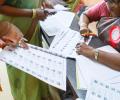
The Election Commission has announced a Special Summary Revision of electoral rolls in 17 states and Union territories, including those facing assembly polls next year. This initiative aims to enrol new voters, correct existing entries, and enhance the accuracy of voter lists, with January 1, 2027, set as the qualifying date.
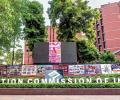
The Election Commission has clarified that its ECINet platform is decentralised, with statutory functions performed only by designated officials, not headquarters staff. This comes after concerns were raised about the centralisation of electoral roll databases. The EC also defended the legality of an additional declaration sought from new voters during the Special Intensive Revision, citing unanimous commission approval and a Supreme Court judgment.
The Calcutta High Court criticised the Election Commission for reassigning the 'envelope' symbol to the Democratic Trinamool Congress, previously used by the ISF, for the Nandigram by-election. Justice Krishna Rao questioned the EC's fairness, especially when 183 free symbols were available, and adjourned the hearing until Friday.

The Supreme Court stated it has not approved any modifications to Form 6, used for electoral roll inclusion, during the Special Intensive Revision. This observation came during the hearing of a Public Interest Litigation (PIL) challenging alleged unilateral decisions by the Chief Election Commissioner regarding changes to Form 6 and electoral roll revisions in states like Goa and West Bengal, without the concurrence of his colleagues. The court issued notice on the plea, highlighting concerns over collective decision-making within the Election Commission.

The Supreme Court has agreed to hear a plea challenging Section 16 of the 2023 election law, which grants immunity to the Chief Election Commissioner and Election Commissioners from civil and criminal proceedings for actions taken in their official capacity. This provision is being contested as unconstitutional, with petitioners arguing it provides "unprecedented, unbridled power" and blanket immunity for life.

India's Election Commission's centralised voter database systems, ERONET and ECINet, are under scrutiny following concerns raised by Election Commissioners Sukhbir Singh Sandhu and Vivek Joshi regarding the centralisation of electoral rolls and control available to state election officials. The article explains how these systems work and why they are currently in the news.

The Election Commission of India has defended its Special Intensive Revision (SIR) of voters' lists, asserting that differing views among Commissioners are a normal part of deliberations and all orders carry full legal sanction, following reports of two Commissioners red-flagging issues.

The Cabinet Secretariat declined to act on complaints from two Election Commissioners regarding a Senior Deputy Election Commissioner's conduct, citing that the communications were in an "individual capacity" and not an official stance from the Election Commission as a whole. This decision was based on concerns about potential interference in the constitutional body's functioning.

A group of 124 former IAS, IFS, IPS, and allied services officers have issued an open letter defending the Election Commission (EC) and the Special Intensive Revision (SIR) process. They argue that the electoral system cannot be deemed rigged only when a party loses, citing instances where the ruling BJP lost elections under the same EC. The officers highlight the legitimacy and necessity of the SIR for cleaning voter rolls and underscore the robust safeguards within India's electoral system.
The Election Commission has launched a special drive to include eligible citizens who were omitted or deleted during the recent Special Investigative Review (SIR) exercise, as well as to register new and young voters. This initiative follows accusations from opposition parties regarding disenfranchisement and aims to ensure no eligible citizen is left out of the electoral process.

The Election Commission of India has addressed reports of internal dissent among its commissioners and clarified that all Special Intensive Revision (SIR) orders and Form 6 updates for voter enrolment received unanimous consent and were upheld by the Supreme Court. The EC also announced measures to ease the process for voters issued notices, including doorstep document collection and extended deadlines in Delhi and Maharashtra, while affirming its commitment to transparent decision-making and meticulous compliance with directives.
The Election Commission of India has announced decisions addressing concerns raised by two election commissioners, Sukhbir Singh Sandhu and Vivek Joshi, over the past 10 months. These issues included changes to voter registration forms, access to the electoral roll database, the handling of Goa's 97 voters, communications issued without full commission approval, oversight of the IT division, and appeals against voter restoration. The EC has provided responses and outlined steps to resolve these internal disputes and improve transparency and compliance.

The Supreme Court has directed the Election Commission to resolve the contentious dispute between the rival factions of the All India Trinamool Congress over its party name and crucial 'flowers and grass' election symbol within three months of the completion of pleadings.

The Trinamool Congress has submitted new names and symbols to the Election Commission for the upcoming West Bengal bypolls, following an interim order that temporarily barred the party from using its original name and "flowers and grass" symbol due to an ongoing internal dispute and split. The party submitted its choices under protest.

Election Commissioners Sukhbir Singh Sandhu and Vivek Joshi reportedly flagged multiple issues during the Special Intensive Revision (SIR) of voter rolls, including name deletions. Despite a media report suggesting 14 objections over 10 months, Election Commission officials assert that all decisions, including SIR, were unanimous and approved by all commissioners. The report also highlights opposition parties' criticism of the SIR, alleging it targets non-BJP aligned voters.

Shiv Sena (UBT) leader Priyanka Chaturvedi has highlighted a report indicating internal differences within the Election Commission of India, questioning why two Election Commissioners reportedly sought an appointment with the Cabinet Secretary. She alleged centralisation of power, lack of transparency in voter list processes, and raised concerns over the commissioners not signing a press release, demanding an investigation into these matters.

Former West Bengal Chief Minister Mamata Banerjee has filed a plea in the Supreme Court challenging the Election Commission's interim decision to freeze the Trinamool Congress' name and party symbol. The EC had allotted separate names and symbols to two rival TMC factions ahead of upcoming bypolls, a move Banerjee has strongly criticised as a "black day" for democracy.

The Election Commission replaced the inspector-in-charge of Nandigram police station, Ajay Kumar Mishra, with Debashis Sarkar a day before the bypoll, following complaints from opposition parties alleging Mishra's closeness to the ruling party. This move comes amidst heightened political scrutiny and concerns raised by opposition leaders regarding the fairness of the election process in Nandigram, a constituency with significant political history in West Bengal.
The Election Commission has removed an additional declaration related to the Special Intensive Revision (SIR) from the online voter enrolment Form 6 in states where the SIR process is complete. This decision follows internal objections from Election Commissioners Sukhbir Singh Sandhu and Vivek Joshi regarding changes to the form and the process. The EC maintains the declaration was SIR-specific and not an amendment to Form 6 itself.

The Supreme Court has questioned the Election Commission's decision to allot the Shiv Sena's bow-and-arrow symbol to the Eknath Shinde faction, asking if the possibility of denying the symbol to both factions was adequately considered. The court also raised concerns about using legislative majority as a test while disqualification proceedings against MLAs were pending. The Shinde faction argued for the validity of the legislative majority test, citing significant vote share and legal precedents.

The Election Commission has issued an interim order preventing rival factions of the All India Trinamool Congress (AITC), led by Mamata Banerjee and Arup Roy, from using the party name and its "Flowers and Grass" symbol during the upcoming West Bengal by-elections. Both groups have been directed to submit preferred names and symbols by Friday morning for recognition and allotment for the bypolls, as the EC undertakes a substantive determination of the party dispute.

The Election Commission of India has introduced new restrictions on the number of Form 7 applications an individual can submit, both online and offline. This move aims to prevent bulk or malicious attempts to remove legitimate voters from electoral rolls and streamline the objection process, especially after reports from states like Karnataka and Odisha.

'Election Commissioners are Constitutional authorities and they are not supposed to go to the Cabinet secretary. They are not supposed to write letters. And if they are aggrieved, they should straight go to the President of India.'

Trinamool Congress leader Saket Gokhale has accused the Election Commission of India (ECI) of withholding details about the software and algorithm used for the Special Intensive Revision (SIR) of electoral rolls. Citing an RTI response, Gokhale highlighted the ECI's claim that the information relates to "commercial confidence, trade secrets and intellectual property matters," raising concerns about transparency in the electoral process.

Former Rajya Sabha member Saket Gokhale has alleged that the Election Commission refused to disclose details of Chief Election Commissioner Gyanesh Kumar's official visits and the expenditure incurred from public funds, citing 'personal information' under the Right to Information Act.

Supreme Court Justice Dipankar Datta has strongly criticised the 2023 law for selecting the Chief Election Commissioner and election commissioners, arguing that the executive's dominant role in the selection committee creates a 'shadow of doubt' over the Election Commission's independence, even if appointments are meritorious.

The INDIA bloc has formulated a joint action plan to address the Special Intensive Revision (SIR) row and concerns over Electronic Voting Machines (EVMs). Following a meeting of key opposition leaders, the alliance announced a series of "save democracy" marches, demonstrations, and a march to the Election Commission, demanding a return to ballot papers for elections and alleging electoral malpractices by the ruling government.

Former Supreme Court judge Justice Rohinton Fali Nariman has voiced serious concerns regarding the Election Commission's functioning, stating that the right to vote is 'at great peril'. He called for the Supreme Court's intervention to address 'disturbing developments' within the poll panel, particularly citing issues like voter disenfranchisement during electoral roll revisions and the controversial appointment process of Election Commissioners.

The Election Commission of India has told the Delhi high court that two voters, whose names were deleted from the electoral rolls after they could not complete the enumeration process during the Special Intensive Revision in the national capital, can fill Form 6 for redressal of their grievance.
Former Chief Election Commissioners have voiced strong objections to reported 'illegal' changes in voter registration Form 6 and the centralisation of electoral roll control, raising serious concerns about the integrity of future elections.

The Maharashtra Navnirman Sena (MNS) and Shiv Sena (UBT), led by Raj and Uddhav Thackeray, are organising a mass protest march in Mumbai on October 4 against the Election Commission. They accuse the EC of acting as a "branch of the ruling party" and allege "gross deception" of voters, calling for broader political and public participation.

The Supreme Court resumed hearing pleas challenging the Maharashtra Speaker's decision regarding the Eknath Shinde-led Shiv Sena MLAs and the Election Commission's recognition of the Shinde faction as the "real" Shiv Sena. Senior advocate Neeraj Kishan Kaul, representing the Shinde camp, argued that the EC has jurisdiction under Article 324 to examine a party's democratic character and organisational structure, especially when the Thackeray faction's constitution was not registered with the poll panel. He emphasised that the Shinde faction's case is based on a split within the political party, not just its legislative wing, citing cadre discontent. The hearing remains inconclusive.

The Supreme Court has issued notices to the Election Commission and the Centre regarding pleas alleging that the poll body made several decisions without the approval of the two election commissioners. The court stated it would annul any decisions found not to be in accordance with the law, while also refusing an interim order to restrain CEC Gyanesh Kumar from making decisions.

The Cockroach Janta Party (CJP) and various student organisations have called for a united protest on October 10 against Chief Election Commissioner Gyanesh Kumar. They demand his resignation and an overhaul of the electoral system, describing the confrontation as a fight for democracy against the BJP. The groups are seeking to sustain street pressure, following a previous agitation that led to a minister's resignation.

The Uddhav Thackeray faction has told the Supreme Court that the Election Commission's decision to recognise the Eknath Shinde-led unit as the "real Shiv Sena" and grant it the 'bow-and-arrow' symbol was unlawful. Senior advocate Kapil Sibal argued that a split in a legislature party cannot, by itself, amount to a split in the political party, challenging the very basis of the poll panel's jurisdiction and its disregard for the party's 2018 constitution.
Election Commissioners Sukhbir Singh Sandhu and Vivek Joshi repeatedly recorded that they had not been consulted or informed about decisions taken in the Commission's name, revealed an Indian Express report on Wednesday morning.

High drama unfolded as INDIA bloc leaders, including Rahul Gandhi and Priyanka Gandhi Vadra, marched to the Election Commission headquarters in Delhi, demanding the resignation of Chief Election Commissioner Gyanesh Kumar over alleged irregularities in the Special Intensive Revision of electoral rolls and his misleading statements regarding Supreme Court observations on Form 6.
