
Occasionally, the silence of the night shift would be shattered by an ear-splitting alarm: 'ALERT, ALERT... This is a security warning.' We were drilled to move away from the windows and avoid the lifts, recalls Krishna Kumar NP, a veteran Dubai-based journalist.

An Iranian missile strike on Haifa has resulted in casualties and intensified conflict between Iran and Israel, prompting search operations and ceasefire discussions.

US President Donald Trump's proposed peace deal with Iran has drawn significant criticism from both Republican and Democrat senators, who express deep concerns that it would legitimise Tehran as a 'dominant force' and potentially allow it to retain control over the Strait of Hormuz and uranium enrichment capabilities.

Nobody takes Pakistan seriously and therefore Pakistan's sudden mediating with almost immediate results of a ceasefire seems more contrived than real, points out Vice Admiral Biswajit Dasgupta (retd).

President Trump has been briefed on potential military actions against Iran, including strikes on infrastructure and control of the Strait of Hormuz, even as negotiations continue. He maintains economic pressure is the primary strategy, while legal questions arise over war powers.

Indian benchmark indices, Sensex and Nifty, closed almost unchanged in a volatile session as investors reacted cautiously to mounting geopolitical headwinds and a significant jump in crude oil prices, with Brent crude surging to USD 94.68 per barrel.

The US military is considering a new wave of military operations in Iran, including potential strikes on infrastructure and securing Iran's stockpile of enriched uranium, amid a fragile ceasefire and stalled nuclear talks.

The clock on the ceasefire is running out. But everyone's already whispering about round two, possibly as soon as this weekend.

India has voiced its deep concern over reports of increasing civilian casualties in Lebanon due to Israeli strikes, emphasising the protection of civilians and the importance of international law.
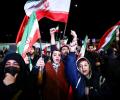
'American stature has been reduced because they have not been able to achieve their aims.'

Pakistani security forces killed a suspected militant driving an explosive-laden vehicle towards a check post in Khyber Pakhtunkhwa province, resulting in an explosion that injured seven civilians.

Prime Minister Narendra Modi has strongly condemned the attacks on the United Arab Emirates' port city of Fujairah, which resulted in injuries to three Indian nationals, and reiterated India's support for peaceful resolution through dialogue.

The naval command underlined recent regional developments, which have now established a new reality in which extra-regional powers, led by Washington, DC, can no longer dictate terms or project unchecked influence in Iran's immediate maritime environment.

Despite heightened tensions and Iran's rejection of a US-backed ceasefire, President Trump claims Iran is now 'begging' for a deal.
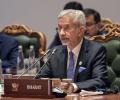
India has expressed serious concerns about the West Asia crisis and its potential impact on energy supplies and maritime stability, urging BRICS nations to find practical solutions to geopolitical challenges and unilateral sanctions.

The ministry of external affairs on Monday said that a joint statement could not be issued following the BRICS deputy foreign ministers and special envoys on the Middle East and North Africa (MENA) meeting, which took place on April 24 in the national capital, as member countries were unable to reach a general consensus concerning the conflict in West Asia.
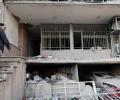
Trump said he is unwilling to make a deal with Tehran at this stage despite indications the country wants negotiations.
At least 15 security officials were killed and several injured in a suicide attack and ambush at a police post in Pakistan's Khyber Pakhtunkhwa province.

The statement comes even as Tehran links the issue to ongoing efforts to bring a complete end to hostilities in West Asia involving the United States and Israel.
A police constable was killed and a civilian injured in a militant attack on a police vehicle in northwest Pakistan. The incident occurred in Bannu district, Khyber Pakhtunkhwa province, when militants attacked the vehicle with a rocket.

Indian equity markets, including the Sensex and Nifty, experienced a significant downturn for the second consecutive day, driven by escalating geopolitical tensions in West Asia and persistent foreign fund outflows.

US President Donald Trump has rejected Iran's proposal to end the ongoing war, deeming it 'totally unacceptable'. This decision comes amid efforts to negotiate an end to hostilities that began on February 28 and have disrupted global oil supplies.

Israel has strongly condemned Pakistan Defence Minister Khawaja Asif's "outrageous" remarks calling for Israel's annihilation and labelling it "evil" and a "curse for humanity", raising doubts about Pakistan's role as a "neutral arbiter" for peace.

The US Navy seized an Iranian-flagged cargo ship in the Gulf of Oman, escalating tensions as ceasefire talks face uncertainty. The incident raises concerns about the fragile ceasefire and the ongoing blockade of the Strait of Hormuz.
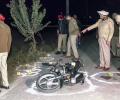
Five labourers from Pakistan's Punjab province were injured in a grenade attack in Balochistan. The attack occurred in the Chagai district when assailants targeted a building housing labourers. Security forces also responded to unprovoked firing from across the border in the Chaman area, destroying multiple Afghan Taliban posts.
At least 15 security officials were killed and several were injured in a suicide attack and ambush at a police post in Pakistan's Khyber Pakhtunkhwa province.

Indian markets on Dalal Street rallied sharply as easing tensions in the US-Iran conflict and stable oil prices boosted sentiment. Track Nifty 50 and BSE Sensex performance and key global triggers.

Despite a ceasefire agreement between Iran and the United States, the Strait of Hormuz remains blocked due to Iran's inability to locate and remove all the mines it laid during the conflict, hindering global oil and gas supplies.

External Affairs Minister S Jaishankar addresses the Indian Ocean Conference, expressing deep concern over the West Asia conflict and its economic repercussions on energy, trade, and food security. India calls for a swift return to peace and opposes targeting civilians and infrastructure.
Indian markets on Dalal Street rallied sharply as easing tensions in the US-Iran conflict and stable oil prices boosted sentiment. Track Nifty 50 and BSE Sensex performance and key global triggers.

Moody's Ratings has reduced India's GDP growth forecast for 2026 to 6 per cent, citing subdued private consumption, capital formation, and industrial activity due to higher energy costs and global uncertainties.

The ceasefire is still technically holding, to the extent that no overt hostilities have been reported yet, but the rhetoric has hardened dangerously. The week ahead will also clarify whether the Islamabad failure was a negotiating tactic or whether Washington has genuinely locked itself into a position from which the only exits are climb-down, escalation, or the slow bleed of a new status quo that nobody chose and nobody controls. Prem Panicker continues his must read blog on the Iran War.
India has called for a ceasefire, release of all hostages, and peaceful resolution of the Israel-Hamas conflict through dialogue and diplomacy. The Centre informed Parliament that India welcomed the agreement on the first phase of the Gaza Peace Plan. The article also covers India's energy sourcing strategy and the release of Indian fishermen by Pakistan.

The core issues to be settled -- access to Hormuz, Israel's aggression in Lebanon, the question of Iran's nuclear programme, sanctions relief and compensation -- are thorny enough to require weeks of patient negotiation. The most likely outcome of the opening sessions is that both sides take the measure of each other, establish what is and is not negotiable, and return home without having broken anything. That would count as progress.

Iran's state broadcaster denies sending a diplomatic delegation to Pakistan for talks with the US, despite reports suggesting otherwise. This denial comes amid escalating tensions and aggressive rhetoric from Washington, even as signs of potential diplomatic movement emerge.

Iran has put forward a comprehensive 10-point framework that it says forms the basis of a complete resolution.

The Indian rupee appreciated by 23 paise to settle at 92.91 against the US dollar, driven by a weakening American currency, retreating crude oil prices, and renewed foreign institutional investor (FII) inflows amid increasing hopes of easing geopolitical tensions.

A media report indicates the White House was directly involved in crafting a social media post by Pakistan's Prime Minister Shehbaz Sharif, requesting then-US President Donald Trump to extend the deadline on Iran.

The Indian rupee depreciated by 34 paise to close at 93.78 against the US dollar, marking its third consecutive session of decline. This fall is attributed to escalating crude oil prices driven by uncertainty surrounding US-Iran peace talks and fresh attacks in the Strait of Hormuz, alongside significant foreign institutional investor outflows from domestic equity markets.

Former President Donald Trump claims the United States has become the 'real United Nations' due to its role in resolving global conflicts, criticizing the UN's lack of involvement. He cites brokering a ceasefire between Thailand and Cambodia as an example.
