
The GSAT-31 is a 'high power' communication satellite going to serve and replace some of the satellites that are going to expire soon.

The new ISRO chief talks bout the road ahead in his first interview after taking charge.

Crossing a major milestone in the country's space history, ISRO's Mars Orbiter mission ventured out of Earth's sphere of influence for the first time in an attempt to reach the red planet's orbit
A day after suffering a glitch during the fourth orbit raising operation on its Mars Orbiter Mission, the Indian Space Research Organisation on Tuesday successfully completed the supplementary manoeuvre, raising the spacecraft's apogee (farthest distance from Earth) to over 1,18,000 km.

"We started it by 1.17 am and have successfully completed the first orbit raising manoeuvre of Mars Orbiter Spacecraft. Right now, the computation is going on," an ISRO spokesman told PTI.

"Since its injection into Earth's orbit yesterday, it has been functioning smoothly on the orbit. We are planning to perform orbit raising manoeuvres in the early hours of of Thursday," an Indian Space Research Organisation spokesman told PTI over phone.

India's successful launch of its Mars mission has been described by the mainstream American media as "technological leap" and "a symbolic coup" against China in this field.

The stage is set for the launch of India's satellite IRNSS-1D on Saturday from Sriharikota onboard workhorse PSLV-C27 that would pave the way for the country's own navigation system on par with the GPS of United States.

India's observatory will be the fourth in space, after the Hubble, Russia's Spektr R and Suzaku of Japan.

The Rs 978 crore mission, which has been rescheduled for Monday after scientists corrected the glitch in the rocket, will be launched at 2.43 p.m from the second launchpad at Satish Dhawan Space Centre, over 100 km from Chennai.

The 43.43 metre tall rocket lifted off at 5.28 pm from the second launch pad at the Satish Dhawan Space Centre in Sriharikota

Tanmaya Nanda provides a quick guide to questions about the Mars mission you always wanted to ask but were afraid to

He said India wanted growth, development and peace in the region and was keen to utilise technology to pursue this goal for the shared prosperity.

It was a euphoric moment for students of the College of Engineering in Pune as the academic satellite developed by them -- Swayam -- was on Wednesday successfully placed in orbit along with 19 others.

Contributors to Team Indus project will have names etched on an object going to space.

A clear aim, knowledge, hard work and perseverance spells success: President Dr A P J Abdul Kalam.
A S Kiran Kumar, chief of ISRO, said the mission was unsuccessful because the satellite housed within the heat sink could not be injected.

The successful orbiting of the satellites by the Polar Satellite Launch Vehicle PSLV C-40 comes four months after the Indian space Research Organisation's mission to launch backup navigation spacecraft IRNSS-1H onboard PSLV-39 ended in a rare failure.
'China pumps in a lot more money than what we do. China's space budget is close to $5 billion while it is hardly $1 billion for us.' 'We manage the programmes within the constraints of our budget. The main difference is we prioritise.'

The space agency launched 104 satellites, breaking the previous record of 37 by Russia.

Just over 22 minutes into the flight, the rocket put Astrosat into orbit at an altitude of 650 km above the earth

The satellite would provide a thrust to mobile communication through multi-beam coverage facility, the ISRO said.

It also carries equipment for meteorological data relay and satellite based search and rescue services being provided by earlier INSAT satellites.
The launch of a Geosynchronous Satellite Launch Vehicle was called off by the Indian Space Reasearch Organisation at the eleventh hour on Monday due to a fuel leak in its second stage -- in a setback to the mission to test its homegrown cryogenic engine -- after its failure three years ago.

In a textbook mission, ISRO's PSLV-C32 lifted off from Sriharikota and later injected the IRNSS-IF in sub-Geosynchronous Transfer Orbit.

They made history for India and the world.

After having successfully completed three orbit raising manoeuvres, ISRO's Mars Orbiter mission on Monday suffered a glitch as it failed to achieve the targeted apogee (farthest distance from Earth) of one lakh km during the fourth orbit raising operation in the early hours.
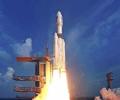
Taking its baby steps towards realising India's ambition to send humans into space, Indian Space Research Organisation on Thursday successfully tested the atmospheric re-entry of a crew module after its heaviest launch vehicle GSLV MK III blasted off from Sriharkota.

The feat is the second one for the Indian Space Research Organisation scientists in using the indigenously made cryogenic stage after the January 5, 2014 launch of GSLV-D5.

The first Trajectory Correction Manoeuvre of India's maiden mission to Mars was on Wednesday carried out successfully by Indian Space Research Organisation scientists on the spacecraft, which is presently travelling some 2.9 million km away from Earth.

The Indian Space Research Organisation successfully launched India's fifth navigation satellite IRNSS-1E from Sriharikota.

India is set to operationalise its own navigational system with the successful launch of IRNSS-1D, the fourth in the series of seven navigational satellites, onboard PSLV-C27 from Sriharikota on Saturday.
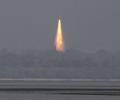
Enthused over its successful launch of GSLV D5 with GSAT-14 communication satellite from Satish Dhawan Space Centre in Sriharikota on Sunday, the Indian Space Research Organisation is planning a series of GSLV launches and an experimental launch of the advanced version GSLV Mark III soon from the spaceport.

The Indian Institute of Science topped the HRD ministry's 2017 national rankings. In 2016, the IISc was ranked among the world's top 15 universities in the Times Higher Education University Rankings. In his book The Creation of Wealth: The Tatas from the 19th to the 21st Century, R M Lala recounted how Jamsetji Tata's grand vision and immense personal contribution laid the edifice of arguably India's finest educational institution.
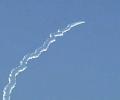
India on Monday successfully launched the first technology demonstrator of indigenously made Reusable Launch Vehicle, capable of launching satellites into orbit around earth and then re-enter the atmosphere, from Sriharikota in Andhra Pradesh.

This is ISRO's new record of launching 20 satellites, including those from the US, Germany, Canada and Indonesia.

We sorted through countless photographs taken around the world to come up with the top photos of 2019. Together these images tell the story of the year -- capturing moments of hope and heartbreak, triumph and tragedy.

With the launch of GSLV-MK III, slated for April, it will be able to cater to bigger satellites as well.

'What is the future of ISRO?' Professor Rao asked from his hospital bed. 'What we see now is the continuation of programmes we started long ago.' 'What are we planning in the space science arena?' 'What is our plan for human space flight?' Former ISRO chairman Madhavan Nair recalls his last meeting with Professor U R Rao, the pioneering Indian space scientist who passed away on Monday, July 24.

The success of the PSLV-C34 mission is a result of ISRO's professionalism and the hard work put in by their scientists over the last many decades., says Ajay Lele.
 © 2026 Rediff.com - Investor Information - Advertise with us - Disclaimer - Privacy Policy - Sitemap - Feedback - About us - Terms of use - Grievances