
Nearly 490 million people of working age are outside the bounds of India's unemployment assessments. A decrease in the unemployment rate could signal economic growth, but could just as well mean that people have given up looking for work. A revealing excerpt from Tata Sons Chairman N Chandrasekaran and Tata Chief Economist Roopa Purushothaman's Bridgital Nation: Solving Technology's People Problem.

Kavitha Kuruganti has been fighting for decades to ensure farmers are respected and get their due from the Indian nation. In order to ensure they don't struggle for a living, she works to ensure sustainable farm livelihoods and farmers' rights.

Here are various roles that a bigot can play, disproving that s/he is one-note and uni-dimensional, and is in fact a versatile, multitasking person.
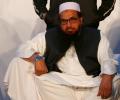
The perpetrators of the 2008 Mumbai attack, who shot dead 166 people, had confessed to details that should have been enough to hang him, but Pakistan enjoyed his anti-India rhetoric and let him spread his tentacles. A revealing excerpt from Khaled Ahmed's Pakistan's Terror Conundrum.

Zainub Priya Dala was hit in the face with a brick last week after she praised Rushdie's writing at a school in Durban, a city on the country's east coast.

Kuch banne ke nahi, kuch karne ke sapne dekho.

An excerpt from Fitness Secrets of the Stars.

Stacey Bendet's Alice + Olivia presentation at the New York Fashion Week was inspired by Salman Rushdie's The Enchantress of Florence.
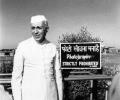
'His contributions in setting up transparent precedents of governance are still basically intact despite the cynicism of several of his successors,' notes Jamini Bhagwati.
For a PM who hasn't completed even one term yet, the ability to spark a publishing trend single-handed is a remarkable achievement, writes Kanika Datta.

You may eat great food, exercise enough and yet not lose fat because you are sleep-deprived. Most of the magic takes place when you sleep well.

'Constitutional narratives are forged both inside and outside courtrooms,' says Rohit De.

The deal did not include the FT Group's 50 per cent stake in The Economist magazine.

From Aurangzeb to Sangh Parivar, the year 2016 offers plenty of hope in historical and modern literature.
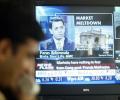
Soon after the BJP lost the 2004 election, the stockmarkets went into unprecedented free fall. Then SEBI Chairman G N Bajpai reveals how his firm handling of the situation restored confidence and soon the markets were back to doing what they do best -- make money. A revealing excerpt from his book, A Game Changer's Memoir.

Sridevi had updated her art to become more contemporary than current actors. She was new-age and yet vintage. By making the predictable so precious, she makes it a scene that could hold its head high anywhere in world cinema.

The attendee had to call into the conference call and say a few initial pleasantries to establish his/her presence, but could then leave the app to handle the rest once the Senior Company Bore began his monologue... A rib-tickling excerpt from Sanjeev Sanyal's Life Over Two Beers.

'New Delhi showed itself willing -- at least for a period -- to tolerate the risk of conflict and to withstand Beijing's implicit and explicit threats.' 'But it also continued to try to cut some kind of deal with China to reduce tensions.'

"A true nationalist must have a "sense of shame" for the crimes his government commits and accept that his country is not perfect," said the eminent historian.

Nearly 31 million Indians are unemployed and looking for jobs. While economic growth has been humming along, the pace of job creation has been poor. A revealing excerpt from Dev Kar's India: Still A Shackled Giant.

Iqbal wanted to land the smuggled goods by helicopter on the Andaman Islands. DK asked, 'Iqbal, a helicopter will bring the consignment to the island, drop it there and then return. Won't radars detect it?' 'No.' 'How?' 'Radars can't detect aircraft that fly at a low altitude. Our helicopter, after entering India's air space, will dive and fly at four feet above the sea level.' 'For that, I have a German pilot in mind. He was an ace aviator in the last world war.' An enthralling excerpt from Aabid Surti's Sufi: The Invisible Man Of The Underground.
Former RBI Governor Subbarao blamed Chidambaram for undermining the autonomy of RBI and putting pressure on him to cut interest rates.

At a time when the Kashmir valley has been shut down, it is perhaps appropriate that we remember Lal Ded, Kashmir's best known spiritual and literary figure, someone remembered with divine adoration both by Hindus and Muslims in Kashmir. A fascinating excerpt from Sandhya Mulchandani's For The Love Of God: Women Poet Saints Of The Bhakti Movement.
'Any conventional conflict could trigger a nuclear war with results that neither India nor Pakistan could survive easily.' >A revealing excerpt from Shuja Nawaz's The Battle For Pakistan: The Bitter US Friendship And A Tough Neighbourhood.
Kamal Nath argued that Modi had 'overexposed himself': By constantly pushing his own image on social media and on TV, attaching his name to multiple promises, Modi had become the face rivals could easily blame for India's chronic dysfunction.
'This proved that whatever was growing in the mosquito's gut was a parasite -- it was almost certainly the malarial parasite.'

'He totally gets the Gandhis...' 'If anything, he pays too much attention to the Gandhis.' 'I feel that in places like UP, where the Congress doesn't matter, he often spends time blasting the Gandhis.'

Sir Mark Tully on the magic of Indian elections. A fascinating excerpt from The Great March of Democracy: Seven Decades of India's Elections.

Long before he launched Paytm, Vijay Shankar Sharma, a 32 year old from Aligarh, embarked on his ambitious entrepreneurial journey.
Generations of Indians don't quite grasp that there would barely be an India had it not been for the Sardar whose steadfastness and guile stitched together that which had been united only in philosophy and spirituality and sometimes not even then -- for thousands of years. A fascinating excerpt from Hindol Sengupta's The Man Who Saved India, Sardar Patel and His Idea of India.
Two Nobel Laureates, four listed writers of this year's Man Booker Prize, Pulitzer Prize winners and finalists, winners of Commonwealth Writers' Prize, Crossword Prize and film stars will be the attraction at the most sought after literary event in India -- the Jaipur Literature Festival.

'Captain Haneef-ud-din, pulling his sinewy body forward, crawled, rifle in hand, in the snow on 6 June 1999. He died on this craggy mountainside exactly two years after he had passed out of the IMA...'
With her various overtures and right noises at the right time, Mamata is once again trying to reshape her image from being a regional leader to one with national appeal and acceptability. After all, the charge of building a Federal Front may also bring to the fore Mamata's chances to become prime minister in 2019.

Intrapreneurs are more diverse in their skill sets and backgrounds, more digitally native, more networked and connected, and more ambitious to do bigger things. A fascinating excerpt from Simone Ahuja's Jugaad 3.0: Hacking The Corporation To Make It Fast, Fluid And Frugal.

Love has made me a poet, Rahul thought. He could think about her all day long. Sometimes, she entertained his dreams. He did not wish to wait until after Ganesh Visarjan to see her again.

As Raazi hit theatres, Harinder Sikka -- author of Calling Sehmat, the book on which the film is based -- reveals the thrilling real life story of an Indian spy named Sehmat.

Shehla doesn't and has never shied away from talking the tough talk and walking the tough walk, says Gurmehar Kaur.

'I have grown up in an environment where the dominant narrative of Indian sporting achievement was -- We can't.' 'These achievers have fought hard, built on each other's body of work and knowledge, and have today changed the script to -- We can,' notes Rahul Dravid,cricketing legend.

'It was the Mughals who first established standard units of measurement and maintained offices of meticulous record keepers and auditors, departing from the more haphazard methods of earlier regimes.' 'By the end of the 16th century, their revenue and judicial administrations exhibited an obsessive preoccupation with order, the efficient management of time, and a spirit of rational self-control -- all of them characteristics of early modernity,' point out Sheldon Pollock and Benjamin Ellman.

Mallya understood, astutely, that the Dhingras were very keen to acquire Berger Paints. He upped his asking price. The figure Vijay asked for was found to be much more than what Kuldip and Gurbachan had anticipated. A fascinating excerpt from Sonu Bhasin's Unstoppable: Kuldip Singh Dhingra And The Rise Of Berger Paints.
