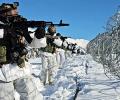
Pakistani forces allegedly violated the ceasefire along the Line of Control (LoC) in the Nowgam sector of Kupwara district, Jammu and Kashmir, on Friday, according to officials.

Protests erupted in Jammu and Kashmir following events in Iran, leading to heightened security measures and appeals for peace.

North Kashmir took a significant step in promoting fitness and inclusive recreational activities with the inauguration of its first Pickleball courts at SSM College, Parihaspora, in Baramulla district.
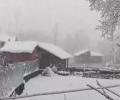
Fresh snowfall in Kashmir, including Srinagar, leads to flight cancellations and highway closures, disrupting normal life.

Heavy snowfall in the Kashmir Valley and Jammu region disrupted traffic and air services, leading to the closure of the Jammu-Srinagar highway and cancellation of flights. Rescue and road clearing operations are underway.

A severe cold wave has intensified across North India, with Delhi recording its lowest temperature of the season. Rajasthan experienced sub-zero temperatures, and several states have issued alerts and closed schools due to the extreme conditions.

Delhi recorded its coldest January morning in three years with the minimum temperature dropping to 3 degrees Celsius. Cold wave conditions are expected to persist, and air quality has deteriorated to the 'very poor' category.

'Kashmir needs to be divided and we need the land of Panun Kashmir in Kashmir.'

The national capital was in the grip of a cold wave, with the sun largely obscured by clouds and pollutants lingering in the atmosphere, leading to reduced visibility. At least 129 flights were cancelled at the Delhi airport on Saturday due to dense fog, according to an official.

Police intensified the crackdown on the terror ecosystem in Kashmir, carrying out raids at more than 300 locations linked to persons affiliated with the banned Jamaat-e-Islami (JeI) in the valley.

The Border Security Force (BSF) has increased its vigilance along the Line of Control (LoC) in Kashmir due to intelligence reports suggesting increased infiltration attempts from across the border ahead of the winter season.

They said troops foiled the infiltration bid in Churunda area of Uri in Baramulla district of north Kashmir.
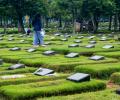
As many as 2,493 graves were identified as belonging to foreign terrorists who were killed in counter-insurgency operations.
These individuals often lacked identification to conceal their networks and maintain Pakistan's plausible deniability.

Heavy rains battered Jammu and Kashmir, triggering floods, damaging infrastructure, and disrupting normal life. Authorities issued advisories and rescue operations were conducted.

On Saturday, May 24, 2025, Indian Army soldiers carried out a military drill with heavy artillery at an undisclosed location along the Line of Control between India and Pakistan in north Kashmir.

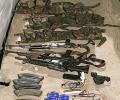
Two terrorists were killed on Wednesday as an infiltration bid was foiled along the Line of Control in Jammu and Kashmir's Baramulla district, officials said. The Army said the infiltration bid was foiled in Uri Nala of the north Kashmir district. The troops on the LoC challenged and intercepted the infiltrators, resulting in a "heavy" firefight, the army said. Large quantity of weapons, ammunition and other war-like stores have been recovered from the terrorists, it said, adding, the operation is in progress.
Security agencies have gathered evidence, including Pakistani government documents and biometric data, confirming that the terrorists involved in the Pahalgam attack were Pakistani nationals.
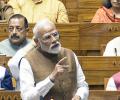
What was the aim of Operation Sindoor? Why was the operation halted so soon? asks Lieutenant General Prakash Katoch (retd).
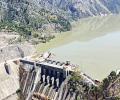
India has stopped releasing water from the Baglihar Dam on the Chenab River and is planning similar measures at the Kishanganga Dam on the Jhelum River, following a recent terror attack in Jammu and Kashmir. These hydroelectric dams offer India the ability to regulate water releases. This decision potentially affects the Indus Waters Treaty, a decades-old agreement between India and Pakistan governing the use of the Indus River and its tributaries. The Baglihar and Kishanganga dams have been points of contention between the two nations in the past.

A woman was killed and two of her family members injured after Pakistani troops resorted to heavy shelling in areas near the Line of Control (LoC) in Uri sector of Jammu and Kashmir. The Indian Army retaliated to the Pakistani aggression. Pakistani troops violated the ceasefire along the LoC and targeted civilian areas in Uri sector of north Kashmir's Baramulla district, causing damage to structures and forcing people to flee. The injured were rushed to a hospital where a woman, identified as Nargis Begum, succumbed to injuries.

Jammu and Kashmir Chief Minister Omar Abdullah has stated that the conversation regarding the restoration of statehood to Jammu and Kashmir has not been stalled. He claims the issue was raised at the recent NITI Aayog governing council meeting, and the formal speech distributed at the meeting includes a mention of the return of statehood. Abdullah also addressed concerns about the impact of the Pahalgam terror attack on tourism, emphasizing the importance of local Kashmiris visiting tourist spots first to revive the industry and ensure a sense of security.

The Indian Army responded in a measured and effective manner to the provocation.
In a post on X, the additional directorate general of public information posted: "Pakistan again violates the Ceasefire Agreement by firing artillery in Bhimber Gali in the Poonch-Rajouri area. Indian Army is responding appropriately in a calibrated manner."

On Wednesday, April 9, 2025, the Indian Army's Chinar Warriors and the Jammu and Kashmir police recovered and destroyed an IED on the Wadder-Haphruda road at Haphruda village in Kupwara, north Kashmir.

The Indus Waters Treaty, brokered by the World Bank, has governed the use of the Indus River and its tributaries between India and Pakistan since 1960.
Pakistani troops continued unprovoked small arms firing in different sectors along the Line of Control (LoC) in Jammu and Kashmir for the 10th consecutive night, prompting effective retaliation by the Indian army. The ceasefire violations, which started after the April 22 terror attack in Pahalgam, were reported from eight places across five districts in the Union Territory during the intervening night of Saturday and Sunday. Indian Army responded promptly and proportionately to the unprovoked firing, a defence spokesperson said.

Modi will start his visit on June 6 by dedicating to public the Chenab rail bridge, which is a key part of the 272-km Udhampur-Srinagar-Baramulla railway link (USBRL) that will provide direct train connectivity to the valley.

Pakistani wives of former militants rehabilitated in Kashmir have pleaded with the government to allow them to stay, stating they would rather die than return to their native country. The women, who came to Kashmir under a 2010 rehabilitation policy for former militants, have been asked to leave by the police. They say they have built lives in Kashmir and fear for the future of their children if they are forced to return.
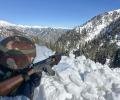
The exchange of fire occurred even though the directors general of military operations of India and Pakistan spoke over the hotline on Tuesday amid rising tensions between the two countries over the Pahalgam terror attack on April 22.

A series of blasts took place in Srinagar city as the security agencies brought down a drone that was seen hovering over Batwara area of the city, close to an army installation, officials said.
For the ninth consecutive night, Indian and Pakistani troops engaged in small arms fire along the Line of Control (LoC) in Jammu and Kashmir, continuing a pattern of heightened border tensions. The skirmishes, initiated by Pakistani troops in violation of the ceasefire agreement, have led to a tense situation along the LoC and International Border (IB). The incidents come in the wake of the April 22 terror attack in Pahalgam, which claimed the lives of 26 people, mostly tourists. Civilians residing near the border have begun preparing their bunkers, anticipating potential escalation. Despite a recent hotline conversation between the Directors General of Military Operations (DGMOs) of India and Pakistan, where India cautioned Pakistan, the ceasefire violations persist.
Pakistan troops have violated the ceasefire agreement for the 11th consecutive night, firing on Indian posts along the Line of Control (LoC) in Jammu and Kashmir. The firing began in Kupwara and Baramulla districts and spread to other sectors, including Poonch, Rajouri, Mendhar, Naushera, Sunderbani, and Akhnoor. The Indian Army responded promptly and proportionately. The ceasefire violation comes despite a recent phone call between the Directors General of Military Operations (DGMOs) of India and Pakistan on April 29. This marks the latest escalation of tensions between the two countries, following a terror attack in Pahalgam in April.

Abdullah, who visited the shelling-affected areas of Uri, including Salamabad, Lagama, Bandi and Gingal in north Kashmir's Baramulla district, also said that he would take up the demand for building individual bunkers in these areas with the Centre.
Pakistan's troops have engaged in unprovoked firing along the Line of Control (LoC) and International Border (IB) in five districts of Jammu and Kashmir, prompting retaliation from the Indian Army. This marks the eighth consecutive night of such incidents, following heightened tensions stemming from a recent terror attack in Pahalgam. Civilians residing along the LoC and IB are preparing their bunkers in anticipation of potential escalation.

In a significant shift, Kashmiris from villages once considered strongholds of militancy have joined the condemnation of the recent massacre of 26 people in Pahalgam, raising slogans against terrorism and expressing solidarity with the victims. This unprecedented display of public sentiment across the valley marks a possible turning point in the region's fight against violence.
The officials said dozens of unexploded explosives were destroyed by the experts along the Line of Control in Rajouri and Poonch districts and along the International Border in Jammu and Samba which witnessed intense cross-border shelling and drone attacks from May 7 to May 10.
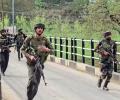
"More than 85,000 domiciles have been issued to non-locals, creating a pathway for demographic change in Jammu & Kashmir. These non-locals arrive posing as tourists, obtain domiciles, and then begin to act as if they own the land. Consequently, violence will be directed toward those attempting to settle illegally," TRF said in a statement which could not be independently verified by Rediff.

Days after the Pahalgam terror attack, Jammu and Kashmir authorities have deported 59 Pakistani nationals, including the mother of Shaurya Chakra awardee Constable Mudasir Ahmad Sheikh. The Pakistani nationals were living in the valley for decades and were transported to Punjab for repatriation. However, the mother of the deceased soldier was later allowed to stay back. The deportation comes after the Indian government announced a slew of measures against Pakistan in the wake of the Pahalgam attack, including the suspension of the Indus Waters Treaty and the downgrading of diplomatic relations.
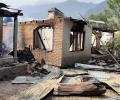
Hundreds of residents along the Line of Control (LoC) and the International Border (IB) in Jammu and Kashmir were evacuated to safer zones after Pakistani shelling following Indian airstrikes on terror targets in Pakistan. The shelling killed 12 people, including four children and two women, and injured over 50. The evacuations come amid heightened tensions between India and Pakistan following the April 22 terror attack in Pahalgam that left 26 civilians dead. The government has provided temporary shelter for those evacuated.
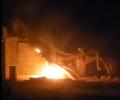
The nine targets struck under 'Operation Sindoor', four in Pakistan and five in Pakistan-occupied-Kashmir, were chosen by the IAF after receiving intelligence inputs about terror camps operating under the guise of health centres to evade detection at these sites, officials said on Wednesday.
 © 2026 Rediff.com - Investor Information - Advertise with us - Disclaimer - Privacy Policy - Sitemap - Feedback - About us - Terms of use - Grievances