
Bayern Munich midfielder Jamal Musiala has been diagnosed with a temporary, brief, but easily treatable neurological disorder after collapsing during two recent friendly matches, the 23-year-old Germany international announced.

Scientists have developed an advanced gene therapy that effectively reduces tremors associated with Parkinson's disease. This new approach, detailed in a package of 26 studies, is more effective and less invasive than current treatments. The research also includes a comprehensive multi-species cellular atlas of the basal ganglia, offering new insights into neurological conditions like schizophrenia and autism.

Hyderabad police have busted four fake silver waraq manufacturing units, seizing large quantities of aluminium foil and adulterants. The units were found to be substituting genuine silver with cheap aluminium, posing significant health risks to consumers of sweets and paan. Criminal cases have been registered against the units for violating food safety standards.

A government laboratory report has revealed dangerously high levels of toxic heavy metals, including mercury and arsenic, in beauty products labelled 'Made in Pakistan' that were seized by Nanded police about four months ago. Two specific creams, 'PARLEY 24K Gold Gleam Beauty Cream' and 'GOREE Beauty Cream with Lycopene', contained mercury far exceeding permissible limits, posing serious health risks.

Zika infection can cause serious birth defects, including microcephaly, and neurological complications.
Gurugram's Paras Health hospital has successfully performed the world's first human implantation of an artificial lumbar disc designed independently by AI. The procedure involved implanting the Nivalon EvoFlex disc, developed by an American company, into its CEO, Todd Hodrinsky, who had suffered from lower back pain for a decade. This surgery marks a significant advancement in personalised, motion-preserving spine surgery, combining AI design, patient-specific modelling, and 3D ceramic printing.

A devastating fire in a five-storey residential building in Kanpur's Patkapur area on Monday killed two people, including a 15-year-old boy, and injured several others. Trapped residents resorted to using sarees, dhotis, and bedsheets as makeshift ropes to escape the blaze, which engulfed the ground-floor parking area and spread thick smoke throughout the building. The incident has raised serious questions about fire safety and construction norms in the congested locality.
A new study from the University of Edinburgh reveals that experiences cause widespread changes in brain cell connections (synapses), influencing brain activity. The research suggests that understanding these synapse changes can explain how the brain adapts or becomes impaired. The study, conducted on mice, found that the quality of synaptic connections, rather than just quantity, is crucial for brain changes and that sensory experiences can lead to widespread molecular adaptations across the brain. These findings could pave the way for interventions for brain disorders.

Karl Deisseroth, Peter Hegemann, and Georg Nagel have been jointly awarded the 2026 Nobel Prize in Physiology or Medicine for their groundbreaking discoveries in light-gated ion channels and optogenetics, a method revolutionising the study of brain function.

Dr Nisha Pansare, fertility specialist at Nova IVF Fertility, explains why women should avoid desi Chinese, excessive caffeine and detox juices in order to have a safe and healthy pregnancy.

'Peter Hegemann was so kind that a paper published in 2010 in Nature Method which mentioned optogenetic as a tool of the year, he wrote, 'My graduate student Suneel Katariya was the one who identified gene in coding channelrhodoxin and that was the turning point of my research'.'
A new study from Stanford University suggests the human brain may have evolved as two independent organs, challenging the long-held belief of a single progenitor cell. Researchers found two parallel nervous systems developing without intersection, which could explain difficulties in growing hindbrain neurons in labs and open new avenues for treating neurological diseases.
A new study published in Nature reveals that lab-grown human brain tissues, or organoids, successfully survived, grew, and formed complex structures when transplanted into mouse brains. This breakthrough offers a novel platform for studying human brain development and neurological disorders.

Indian sports pistol shooter Rahi Sarnobat discusses her challenging journey back to elite competition after battling a debilitating neuropathic pain syndrome. She shares how the illness forced her to redefine her training, mindset, and priorities, leading to a "second life" in the sport as she prepares for her fourth Asian Games.

Bayern Munich, the reigning domestic double winners, secured the German Supercup by defeating hosts Borussia Dortmund 2-1, with Michael Olise contributing a goal and an assist in a dominant performance.
A new study published in the Journal of Neuroscience reveals that even minor cardiac dysfunction can predict microscopic tissue degradation in brain regions associated with Alzheimer's disease. This research suggests that heart issues could serve as an early indicator for neurological risk, mediating the link between cardiac health and memory decline.
A study conducted on older adults in India suggests that the health of the brain's white matter wiring can help mitigate the cognitive effects of gray matter loss, supporting overall cognitive health. Researchers found that healthier superficial white matter is linked to stronger language skills and may act as a source of resilience against cognitive decline.

Allu Arjun's father Allu Aravind and wife Sneha Reddy visited the family of Sritej, a victim of the tragic Sandhya Theatre stampede during the Pushpa 2 premiere, offering continued medical and educational support.
A new study has identified a region in the brainstem, the structure connecting the brain to the spinal cord, that plays a crucial role in cognitive flexibility and the ability to adapt to changing conditions. Researchers found that the 'locus coeruleus' in the brainstem is central to how the brain switches between behavioural rules, impacting disorders like ADHD, depression, and OCD.

Several parts of India are experiencing a severe heatwave, with temperatures soaring past 44 degrees Celsius. States are issuing alerts and taking measures to protect people and animals from the extreme conditions.
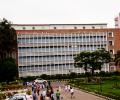
A modified surgical technique developed at AIIMS, Delhi, is providing new hope for patients with severe spinal deformities. The technique, a refined version of posterior vertebral column resection (PVCR), improves spinal stability and reduces complications, leading to better outcomes and improved quality of life for patients.
Researchers at IIT Kanpur are studying alpha waves in the brain to understand how stress affects cognitive functions. The study aims to build automated models of stress dimensions using EEG and correlating them with factors like loss of control, helplessness, and anxiety.

'Of our population of 1.4 billion, 80 per cent are into doomscrolling.'

Doctors in Mumbai successfully removed a sickle-like tool from a man's skull after an alleged assault. The patient is now stable and recovering in the ICU.
A new study reveals that obesity-related changes in body fat can disrupt brain signals and immune function, potentially worsening Alzheimer's disease.
Researchers have developed a lightweight, wearable polygraph system that adheres to the chest and measures heart activity, breathing patterns, sweat response, blood flow, and temperature to provide a real-time, whole-body view of stress.

India's domestic pharmaceutical market recorded its highest value growth in five quarters during Q4 FY26, driven primarily by pricing and an early indication of volume recovery, with a significant structural shift towards chronic and sub-chronic therapies.

Former cricketer Vinod Kambli is facing ongoing health challenges, including memory issues, despite improvements in his physical condition. Sachin Tendulkar and friends have formed a support group to provide financial and emotional assistance.
A US study has revealed three trajectories of cognitive decline in Alzheimer's disease -- stable, slow decline, and fast decline -- based on scans of over 1,100 people with elevated amyloid protein levels.
A Delhi hospital has successfully performed a bilateral hand transplant on a young mother who lost her hands in an accident, thanks to a brain-dead donor's family consenting to the donation.

The Delhi High Court has allowed the continuation of IVF treatment for an Army soldier in a persistent vegetative state, recognising his prior consent and his wife's right to reproductive autonomy.

If the stories are food for the mind then our digestive system has changed. If they are a piece of art, our gaze has altered. This calls for a change not in stories, but in the grammar of storytelling so that it can cut through the deluge and gluttony and force people to savour, appreciate and re-visit it. That is what the creators of Taskaree or Dhurandhar are trying, points out Vanita Kohli-Khandekar.
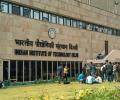
IIT Delhi, in collaboration with the University of Exeter, is developing cutting-edge sports technology, including wearable ultrasound sensors for injury prevention and helmets that can detect concussions in real-time, potentially revolutionising athlete safety and performance.
The Karnataka government has introduced a draft policy to address the growing concerns surrounding excessive and unsafe digital technology use among students, focusing on mental health, cyber safety, and responsible digital behaviour.

A new study reveals that immune cells within brain tumours may be manipulating sugar metabolism, specifically breaking down fructose, to suppress immune responses and promote tumour growth. Blocking fructose breakdown in these cells could improve immunotherapy outcomes for glioblastoma patients.

A 20-year-old woman, Sreekutty, who was pushed from a moving train in Kerala, has been discharged from hospital after three months of treatment for severe injuries.

A woman in Uttar Pradesh, declared brain-dead, showed signs of life after her ambulance hit a pothole. Doctors attribute her recovery to treatment for a suspected toxic bite, not a miracle.

AIIMS-Delhi has begun implementing the Supreme Court's decision to allow passive euthanasia for Harish Rana, who has been in a coma since 2013. A specialised medical team has been formed to oversee the process, which is expected to take two to three weeks.

After a landmark Supreme Court ruling, the family of Harish Rana, comatose for 12 years, prepares for his passive euthanasia, marking a significant moment in India's end-of-life care debate.
The Supreme Court of India has allowed passive euthanasia for a 32-year-old man who has been in a permanent vegetative state since 2013, highlighting the legal and ethical considerations surrounding the right to die with dignity.
