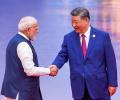
Ahead of Xi Jinping's visit, National Security Advisor Ajit Doval and Chinese Foreign Minister Wang Yi held extensive talks in Beijing on August 25 on the boundary issue and reached an eight-point consensus.

Members of the Tibetan community in exile held a symbolic protest march in Delhi's Majnu Ka Tila ahead of Chinese President Xi Jinping's visit to India for the BRICS 2026 Summit, voicing opposition to Beijing's policies in Tibet.
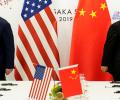
Top US and Chinese officials, including Vice Premier He Lifeng and Treasury Secretary Scott Bessent, held "candid, in-depth and constructive" talks in New York on economic and trade issues, with a specific focus on artificial intelligence. These discussions precede Chinese President Xi Jinping's anticipated visit to Washington and occur amidst new US sanctions targeting countries purchasing Russian oil and gas, and the US unveiling an "AI Force."

'It really sucks': Filipino fans were left frustrated by rain as Alex Eala's Asian Games opener was moved indoors in Nagoya.

Mumbai's prime residential property market recorded a significant 6.2 per cent year-on-year price growth in the second quarter of 2026, more than double the global average, positioning it eighth globally, according to Knight Frank.

Chinese President Xi Jinping is in New Delhi for the 18th BRICS Summit, where he is scheduled to hold bilateral talks with Prime Minister Narendra Modi. This visit, his first to India in nearly seven years, comes amidst efforts to normalise India-China relations following the 2020 Eastern Ladakh standoff and is expected to have significant implications for bilateral ties and BRICS cooperation.

Chinese President Xi Jinping's upcoming visit to India for the BRICS summit is a pivotal diplomatic event poised to significantly impact bilateral ties and global cooperation amidst ongoing international instability.

China's Tiangong Ultra humanoid robot has set a new 100-metre sprint record of 8.86 seconds at the World Humanoid Robot Games in Beijing, significantly surpassing Usain Bolt's human world record of 9.58 seconds.

A humanoid robot named Lightning, developed by Chinese smartphone maker Honor, has reportedly run 100 meters in 9.32 seconds, surpassing Usain Bolt's human world record.

China's communist party has expelled two senior military officials, including General Zhang Youxia, the highest-ranking People's Liberation Army officer, for serious discipline and law violations.

In recent years, China and Russia have pushed for de-dollarisation within BRICS, which India has resisted. One reason is that India does not want to hurt its relationship with the United States, and another is the fear of China controlling trade because the renminbi is considered the strongest currency in the bloc today.

Thailand's Puripol Boonson made history by winning the 200 metres gold, completing an Asian Games sprint double and matching the Asian record, while China's 18-year-old javelin sensation Yan Ziyi defeated an Olympic champion for her first gold.

President Donald Trump is hosting a lavish state dinner for Chinese President Xi Jinping at the White House. The event, meticulously prepared by First Lady Melania Trump, features a unique blend of American and Chinese culinary traditions, a historic toast, and a star-studded guest list including top tech and business leaders. The evening will also include musical performances and decor reflecting Chinese cultural significance.

United States Treasury Secretary Scott Bessent has warned that Iranian airlines could be effectively shut out of international travel from Wednesday, September 23, as Washington threatens secondary sanctions against foreign companies that continue providing services to Iran's carriers.

Teenage swimmer Zhang Zhanshuo made history by winning seven gold medals at the Asian Games, surpassing previous records and cementing China's dominance in the pool. The Games also saw other notable performances, including a second gymnastics gold for Carlos Yulo and an upset in men's table tennis where Japan defeated China.

India has accumulated experience organically and in public, through blood, sweat and toil -- one commissioning and one agreement at a time -- and is called a regional power. China has accumulated hulls, by misdirecting its industrial capacity, and is mistakenly called a superpower. The Indo-Japan defence agreement pushes this theory to its limits without ever naming the dragon in the room, points out Dr Abhishek Puri.

India's Asian Games campaign looked bleak in Nagoya. A slow medal start saw the country slip to around 12th, before a late surge took India back to fourth with 85 medals.

Nairobi, Kenya, has been selected to host the 2029 World Athletics Championships, marking the first time an African city will stage the prestigious event. World Athletics also announced Munich as the host for the 2031 championships. This decision follows Nairobi's previous unsuccessful bid for 2025 and highlights Kenya's strong connection to athletics.

The Philippines Tennis Association has requested a WTA exemption for Alexandra Eala to participate in the Asian Games, which clashes with the mandatory China Open.

The Ministry of External Affairs (MEA) has issued a warning against 'malicious' and 'misleading' social media posts concerning the health of world leaders, specifically Chinese President Xi Jinping and South African President Cyril Ramaphosa, who attended the recent BRICS Summit in New Delhi. The warning comes amidst unverified claims about Xi's health and an official statement from Ramaphosa's office confirming his withdrawal from public engagements due to ill health.

A Chinese humanoid robot, Tiangong Ultra, achieved a remarkable feat by running the 100 metres in 8.64 seconds, surpassing Usain Bolt's human world record. This achievement occurred at the second World Humanoid Robot Games in Beijing, showcasing significant advancements in robot mobility and embodied artificial intelligence. The event highlighted the rapid progress in robotics, with spectators noting improved capabilities and developers seeing it as a crucial test bed for future applications.

Indian and Chinese armies held their first high-level commanders' flag talks in the Arunachal Pradesh sector, following Special Representatives dialogue. These talks, aimed at maintaining peace along the Line of Actual Control, occurred amidst reports of aggressive military posturing and just days before Chinese President Xi Jinping's visit to India for the BRICS summit.

New Delhi was told it had given something up; in reality it had stopped talking about it, notes Dr Abhishek Puri.

National Security Advisor Ajit Doval engaged in Special Representatives talks with Chinese Foreign Minister Wang Yi in Beijing, focusing on the India-China boundary question and enhancing bilateral relations. These crucial discussions precede Chinese President Xi Jinping's anticipated visit to New Delhi for the BRICS summit, aiming to address persistent border differences and stabilise ties strained by past conflicts like the Galwan Valley clash.

Former CDS Anil Chauhan stated that China poses a long-term and comprehensive challenge to India, with the boundary issue remaining unresolved due to differing perceptions of the Line of Actual Control. However, he emphasised that India's ties with Beijing cannot be solely defined by border disputes, advocating for engagement through platforms like SCO and BRICS. He also highlighted the broader global geopolitical flux and instability in India's neighbourhood as significant security concerns, stressing the need for self-reliance.

India's Ministry of External Affairs reported that 320 Indians are missing and 400 are stranded on the Chinese side following devastating flash floods along the Nepal-Tibet border. India is actively involved in rescue efforts, sending relief supplies to Nepal and coordinating with Chinese authorities for the evacuation of its citizens. External Affairs Minister S Jaishankar reviewed the situation, emphasising the priority given to the well-being of Indian nationals.

China Southern Airlines is set to resume its Guangzhou-New Delhi passenger service from September 21, ending a six-year suspension. This move is part of a broader normalisation of India-China relations, following recent high-level diplomatic meetings and previous flight resumptions by other carriers.

Prime Minister Narendra Modi conveyed to Chinese President Xi Jinping that peace and tranquillity along the frontier remains an "essential" basis for the development of India-China relations, even as the two leaders welcomed "steady progress" in bilateral ties during their talks on the sidelines of the BRICS summit.

India and China are in what experts call 'a cooperation-versus-competition situation'.

Prime Minister Narendra Modi, in bilateral talks with Chinese President Xi Jinping, emphasized that both nations must show sensitivity to each other's core issues and be guided by mutual respect, sensitivity, and interest. Modi highlighted the critical importance of peace and tranquillity along the Line of Actual Control for the development of India-China relations, while also addressing concerns regarding Taiwan and Tibet.

Humanoid machines boxed, danced and tackled everyday tasks at the 2026 World Robot Conference in Beijing.

'It beggars belief that Saudi Arabia would deploy military force against India, a top partner and market.'

China on Monday dismissed claims linking its massive hydropower projects in Tibet to the August 26 flash flood disaster in Nepal, calling them "malicious speculation".

China on Friday said the collapse of a high-altitude glacier in Nepal may have triggered the massive flash flood disaster that engulfed the Tibet-Nepal border, killing hundreds and causing widespread damage.

Glimpses of humanoid robots training across soccer, table tennis and other events ahead of the 2026 World Humanoid Robot Games in Beijing.

China has called for stronger global governance of artificial intelligence, advocating for international cooperation to develop the technology for humanity's benefit while preventing it from getting out of control. This comes amidst warnings from leading AI researchers in the US about potential existential risks, with China emphasizing both rapid development and robust safeguards, including its new AI Safety Governance Framework 3.0. The issue is expected to be a key topic in upcoming US-China talks.

Chinese President Xi Jinping's first visit to India in seven years for the BRICS Summit and bilateral talks with Prime Minister Narendra Modi is set to address crucial aspects of India-China relations, including trade, investment, and persistent border tensions.

Indian and Chinese military officials have held corps commander-level talks in Arunachal Pradesh to review the Line of Actual Control (LAC) situation, following recent Special Representative discussions aimed at de-escalating border tensions and fostering bilateral ties.

India and China have agreed to advance discussions on an "Early and Substantial Harvest" of boundary delimitation and border management during the 25th round of Special Representatives talks between National Security Advisor Ajit Doval and Chinese Foreign Minister Wang Yi in Beijing. Both sides reached an eight-point consensus, committing to the 2005 Agreement on Political Parameters and Guiding Principles for Settlement. Key outcomes include enhancing border management, improving understanding of the Line of Actual Control, establishing new meeting points and hotlines, and continuing cooperation on trans-border rivers and pilgrimage.

In July, tension emerged in Taksing, a remote village in the Upper Subansiri district of Arunachal Pradesh after locals sighted PLA soldiers.
