
'While the population remains relatively young, its age structure is beginning to shift, setting the stage for a much older population later this century.'

A career break does not erase the experience that came before it. But the labour market can act as though it does. The more women invest in building professional careers, the more costly an interruption can become. How, then, do we enable women to make a comeback? Whose responsibility is it? asks Radha Roy Biswas.

Union Finance Minister Nirmala Sitharaman expressed strong confidence in India achieving over 10 per cent economic growth, advocating for increased technology adoption and innovation. She urged overcoming scepticism and highlighted technology's transformative role in agriculture and public sector reforms, while also launching a new fund and book at an IIT Madras event.

The Indian corporate sector demonstrated strong credit quality in the first half of FY27, driven by robust balance sheets and healthy liquidity, despite facing risks from elevated crude prices, inflation, and global interest rates.

A one-day patent workshop was held at CSIR-NIIST to promote intellectual property awareness and equip researchers and startups with essential knowledge in patent filing and innovation.

Indian stock markets experienced a significant downturn, with the Sensex plunging 1,124 points to a six-month low and the Nifty closing below 22,800, driven by surging crude oil prices, escalating geopolitical uncertainties, and weak global market trends.

This article details the quarter-century journey of BRICS, from its inception as an economic acronym by a Goldman Sachs economist to its current status as an expanded eleven-member international bloc. It highlights its growth, key historical moments, and the significance of its upcoming summit, particularly with Iran's renewed importance in discussions.

Mumbai's prime residential property market recorded a significant 6.2 per cent year-on-year price growth in the second quarter of 2026, more than double the global average, positioning it eighth globally, according to Knight Frank.
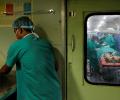
Prof Ajit Kumar Chaturvedi, Vice-Chancellor of Banaras Hindu University, highlighted Artificial Intelligence's transformative potential in healthcare, emphasising its role in augmenting doctors' capabilities and enhancing efficiency. Speaking at PGIMER's Foundation Day, he stressed the need for India to develop AI solutions tailored to its unique healthcare realities, moving beyond being a mere consumer of Western-trained systems. PGIMER Director Vivek Lal also detailed the institute's expansion and commitment to affordable healthcare.
New research from the Revived Genomics of Personality Consortium, published in Nature, suggests that the genetics of personality, involving over 1,200 gene variants linked to the Big Five traits, are significantly associated with various life outcomes including health, education, and career paths. While individual gene variants have small effects, their combined impact is substantial, and environmental factors also play a crucial role in shaping personality.
Experts at AI Manthan 2.0 in Kanpur stressed the need for Artificial Intelligence to be customised for India's specific requirements in education, healthcare, agriculture, and governance. Discussions highlighted the development of local language models, AI solutions for farmers like crop loss assessment and a single-window platform, and AI's role in healthcare for diagnosis and reducing doctors' workload, all while ensuring data privacy through federated learning.

Indian firm Bharat Forge and US defence major Pratt & Whitney Canada have announced a collaboration to support the development of India's high-altitude, long-endurance (HALE) unmanned aerial vehicle. This partnership involves integrating advanced turboprop engines into a DRDO-designed UAV, bolstering India's indigenous defence capabilities under the Aatmanirbhar Bharat initiative.

India's real estate sector recorded an unprecedented $9.5 billion in capital inflows during Q3 2026, primarily driven by foreign investors' strong interest in data centres, according to a CBRE Group report.
A new study has identified a shared biological process that could explain chronic exhaustion in conditions like long Covid, PTSD, rheumatoid arthritis, chronic fatigue syndrome, and multiple sclerosis. Researchers found that despite different triggers, these illnesses converge on common biological systems, including immune and metabolic regulation, leading to profound fatigue. The findings suggest a deeper connection between these seemingly disparate disorders at a network level, rather than at an individual gene level.

'You cannot stop these models from getting better. There is competitive and business pressure and if the US stops then maybe China will go ahead.'

'India should not trade away its energy security for temporary tariff relief. Neither signing a trade agreement nor stopping Russian oil purchases can protect it from future US action.'

'When a glacier collapse or a major flood event does occur, the water will simply reclaim its original path, and anything built in that path will be swept away.'

The Jammu and Kashmir government has removed over 4,700 books, including banned publications, from colleges across the Union Territory after a comprehensive review of nearly 2.2 million publications. This action follows a controversy over objectionable content and aims to uphold constitutional values and national integrity in higher education institutions.
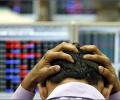
Industry leaders at an AIMA panel discussion emphasised the need for businesses to quickly adapt to changing market conditions and invest in technologies like artificial intelligence to build resilience and achieve long-term growth. They highlighted the current era of uncertainty driven by geopolitical tensions, supply chain disruptions, and rapid regulatory changes, stressing that tactical responses are as crucial as long-term strategy.

'Something has to be new for the audience every time. It has to be a new experience while the emotions remain the same.'

India's IT Ministry sources state the country will not slow down its Artificial Intelligence development, distinguishing its focus on people-centric applications from global concerns over frontier models. The government acknowledges AI safety risks and is tightening incident reporting norms, with IT Minister Ashwini Vaishnaw emphasising regulation for user safety.

Indian stock market investors are closely monitoring crude oil prices, geopolitical developments in West Asia, and the implications of the US Sanctioning Russia and Iran Act, which could impose tariffs on countries, including India, that purchase Russian crude.

A report by Scholars at Risk, 'Free to Think 2026', states that academic freedom in India is "severely restricted" due to increasing government influence over higher education, university governance, and curbs on student expression. India is listed among six countries in this category, with its Academic Freedom Index score sharply declining. The report cites instances of faculty dismissals, event cancellations, and pressure on student protests, highlighting the alleged use of the UGC as a vehicle for state influence.

Indian benchmark indices Sensex and Nifty saw a rebound in early trade, driven by a moderation in crude oil prices, despite persistent selling by Foreign Institutional Investors (FIIs) and mixed global market cues.
Microsoft has officially launched its fourth cloud region in India, located in Hyderabad, as part of its USD 20.5 billion investment in the country's digital and AI infrastructure. This new facility, which became available on August 6, features zero-water cooling technology and aims to enhance capacity and resilience for organisations in India and Asia, supporting the nation's rapid digital growth and projected increase in data centre capacity.
A seminar in New Delhi commemorated Acharya Prafulla Chandra Ray's birth anniversary, focusing on his significant contributions to pharmaceutical sciences and his vision for indigenous research and self-reliance. Organised by DPSRU and VIBHA, the event highlighted Ray's pioneering efforts in "Swadeshi science" and his role in establishing India's pharmaceutical industry.

Researchers at IIT Madras have patented a chemical-free antibacterial surface that physically eliminates harmful bacteria, including "superbugs," without relying on antibiotics or disinfectants. This innovative technology uses specially engineered nanostructures to rupture bacterial cell walls, offering a sustainable solution to Antimicrobial Resistance (AMR) for biomedical and public health applications.
Indian benchmark indices Sensex and Nifty rebounded on Wednesday, driven by a decline in crude oil prices below USD 100 per barrel and optimism surrounding a potential de-escalation of the conflict in West Asia.

China has called for stronger global governance of artificial intelligence, advocating for international cooperation to develop the technology for humanity's benefit while preventing it from getting out of control. This comes amidst warnings from leading AI researchers in the US about potential existential risks, with China emphasizing both rapid development and robust safeguards, including its new AI Safety Governance Framework 3.0. The issue is expected to be a key topic in upcoming US-China talks.

Former Gujarat University Vice Chancellor Neerja Gupta resigned as Principal Investigator for the PMJVK scheme and returned over Rs 14 crore to the university. This comes amidst allegations of financial irregularities and a multi-crore rupee scam by the NSUI, which also led to the suspension of 10 temporary appointees made by Gupta. An audit is pending for the remaining Rs 2 crore.

A new study reveals that approximately 70 per cent of the year-to-year variation in winter air pollution across northern India can be explained by the frequency of western disturbances. These storm systems, originating from the Mediterranean, help clear pollution through precipitation and ventilation. The findings suggest that predicting the frequency of these disturbances could provide advance warning of severe pollution, allowing for better preparedness and implementation of control measures.

Pune police have filed a 5053-page chargesheet in the Ketan Agarwal murder case, detailing how his fiance Siya Goyal, her alleged lover Chetan Choudhary, and Ritesh Hange conspired to push him off Lohagad Fort. The chargesheet reveals the use of a fake Instagram account, online research, and even ChatGPT to plan the murder and avoid detection, after previous attempts failed.

JD(U) president Nitish Kumar and his son Nishant Kumar made a joint appearance at a party orientation programme, sparking speculation about Nishant's political future and potential leadership roles within the party. The event, aimed at training parliamentarians and legislators, also saw Nishant urging attendees to uphold his father's principles of "zero tolerance for crime, corruption and communalism."

Investors opening new brokerage accounts must choose a broker suited to their style.

rediffGURU Radheshyam Zanwar, founder of Zanwar Classes, clarifies doubts and guides young aspirants on eligibility for science, and engineering entrance exams.

Prime Minister Narendra Modi's 76th birthday was celebrated during the inaugural session of SEMICON India 2026 at the Yashobhoomi Convention Centre. The event, focused on building India's semiconductor ecosystem, saw attendees extend warm wishes to the Prime Minister before his address.

'The drought situation of Maharashtra is more severe than in 1972.'
Researchers at BRIC-RGCB in Thiruvananthapuram have developed a novel nanopore-based sensing technology. This innovation allows for the early and highly sensitive detection of biomarkers associated with neurodegenerative diseases like Parkinson's and ALS, addressing a critical challenge in current diagnostic methods. The technology, published in Nature Nanotechnology, uses self-assembling dual-diameter nanopore sensors to identify disease-specific biomarkers even at low concentrations.

A comprehensive study analysing data from over 88 lakh participants across four continents has found a significant association between the consumption of ultra-processed foods (UPFs) and increased risks of various chronic diseases, including cardiovascular events, cancer, obesity, diabetes, and even mortality. The research highlights that even small increases in UPF intake can lead to higher health risks.

'Separate needs from wants and minimise discretionary spending.'
