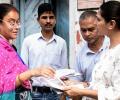
The Election Commission reports a discrepancy of nearly 26 lakh voters' names in West Bengal's current electoral rolls when compared to the 2002 voter list.

Stanislas Wawrinka will hang up his racquet at the end of 2026, the three-times Grand Slam champion announced on Friday, bringing down the curtain on a 24-year professional career that saw him gatecrash tennis's elite during the sport's golden era.

'The CCI will first need to take a prima facie view on whether IndiGo's role warrants a detailed investigation.'

Former England captain Hussain won the toss in the first Ashes Test of the 2002/03 series, electing to field first at the Gabba in a decision that dumbfounded some of his teammates.
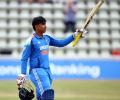
14-year-old Vaibhav Suryavanshi produced an exhibition of magnificent strokeplay, smashing 171 from just 95 balls, including 14 sixes and nine fours.

A new book reveals that Atal Bihari Vajpayee rejected an offer to become President of India, a move that would have made Lal Krishna Advani Prime Minister. Vajpayee believed that a sitting PM becoming President would set a bad precedent for Indian democracy.

The Election Commission released the names of deleted voters in West Bengal ahead of the publication of the draft electoral rolls for the upcoming assembly elections.

The country also mounted bids on some high-profile continental and global events, including the 2031 World Athletics Championships with Ahmedabad as the proposed venue.
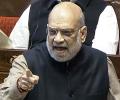
Home Minister Amit Shah defended the Special Intensive Revision (SIR) of electoral rolls in Lok Sabha, accusing the opposition of spreading falsehoods and questioning the safety of democracy if leaders are chosen by infiltrators.

Investing in gold trumped most other asset classes in terms of compounded annualised returns over the long term, suggests a report by FundsIndia.
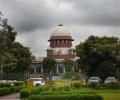
The Supreme Court ensured a widow received compensation 23 years after her husband's death in a train accident, highlighting the court's commitment to justice for the poor.
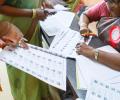
Sex workers in Sonagachi, Asia's largest red-light district, are pleading for relief from stringent voter ID rules that they say are impossible to meet, potentially leading to exclusion from the voters' list.

The teams that have qualified for the 2026 World Cup, to be hosted by the US, Mexico and Canada from June 11 to July 19.

The Election Commission is set to publish the draft electoral rolls for West Bengal on Tuesday following the completion of the statewide Special Intensive Revision (SIR) ahead of the 2026 assembly polls. The publication of the draft rolls will mark the end of the enumeration phase and the beginning of a far more contentious stage - claims, objections and hearings that will stretch into February 2026.

A Gujarat-based couple's 23-year marriage ended in divorce due to a long-standing dispute over the wife's dietary choice of not consuming onion and garlic. The Gujarat High Court upheld the divorce verdict.

Seema Punia gets 16-month ban for failing dope test

Public sector banks have written off loans worth Rs 6.15 lakh crore in the last five and a half years, Parliament was informed on Monday.

'I kept urging Salman to see Pokiri, and one day, past midnight, he finally turned up at a Mumbai preview theatre to see it. Nervously, I waited for Salman's reaction to Pokiri. After watching it, he walked past me without a word. I followed anxiously, and before sitting in his car, he just signalled thumbs up.'
The Supreme Court has sought a response from the CBI on a former RAW official's plea seeking documents related to his trial under the Official Secrets Act. The case involves allegations of revealing secret information in a book written by the official.
As many as 90,000 electors in Goa have either been found absent, shifted, deceased or possessing duplicate voter cards in the ongoing Special Intensive Revision (SIR) in the state, a senior official said on Sunday.
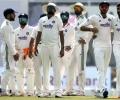
Throughout the Test series, Indian batters struggled against a strong South African bowling attack. Indian batters averaged just 15.23 across the two-match Test series against South Africa.
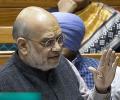
Leader of Opposition in the Lok Sabha Rahul Gandhi on Wednesday challenged Home Minister Amit Shah to debate with him on his three press conferences in which the Congress leader alleged 'vote chori' by the Bharatiya Janata Party in collusion with the Election Commission.

The top three contenders for 2025 were -- rage bait, aura farming and biohack.

The 2026 World Cup will kick off-on June 11 with joint-hosts Mexico playing South Africa at the Azteca Stadium - iconic venue of the 1970 and 1986 finals - followed by South Korea against a play-off winner after the complex draw was made on Friday.

Kyunki Saas Bhi Kabhi Bahu Thi actors Ashlesha Savant and Sandeep Baswana first met on the sets of the television soap in 2002.
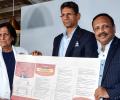
K N Shanth Kumar on Saturday expressed relief after the High Court declared his nomination papers for the post of Karnataka State Cricket Association (KSCA) valid.
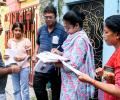
The Election Commission has extended the schedule for the Special Intensive Revision of electoral rolls in several states and Union Territories following concerns raised by opposition parties.
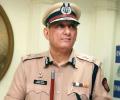
A new book reveals how Bollywood star Helen sought help from the Mumbai underworld after being evicted from her home by her ex-husband.

Even if D K Shivakumar wanted to oust Siddaramaiah, whose support would he take?
The shrewd politician that he is, Siddaramaiah figured his rival had no option but to lump it, points out Aditi Phadnis.

England's all-time highest Test wicket taker James Anderson signed a new one-year contract with Lancashire on Thursday, extending his remarkable 25-year career with the county side into the 2026 season at the age of 43.

Left-arm spinners, all-rounders, and pacers who mastered their craft and left a mark in Test cricket.
The Election Commission has defended its Special Intensive Revision of electoral rolls in West Bengal and Tamil Nadu in the Supreme Court, refuting allegations of mass deletion of genuine voters as exaggerated and politically motivated.
A new book reveals how Bollywood dancer Helen sought help from the Mumbai underworld after being evicted from her home by her ex-husband.
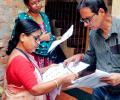
In a unique initiative to speed up the ongoing special intensive revision of electoral rolls, the Pilibhit administration has announced a set of incentives, including a family safari and lunch, for booth-level officers who fills up the maximum number of digitised forms in their respective assembly constituencies.

Janice Tjen is the first Indonesian woman since Angelique Widjaja in 2002 to win a WTA Tour singles crown.

Nitish Kumar was sworn in as Bihar's Chief Minister for a record 10th time, extending his tenure and joining the list of longest-serving CMs in India.
A 30-year-old man in West Bengal's Howrah district died allegedly by suicide on Tuesday, as he was reportedly distressed over errors in his identity document amid the ongoing Special Intensive Revision (SIR) of electoral rolls, a police officer said.
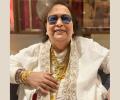
Bappi Lahiri realised disco was a winning ticket and escalated his game with several more dancefloor perennials. Soon, every film producer and music director in town was down with disco fever. On what would have been Bappi Lahiri's 73rd birthday this November 27, Dinesh Raheja rewinds to the late music composer's halcyon days.
Records stretching back to 1947 suggest a consistent strategy by Pakistan's military and intelligence apparatus, the Inter Services Intelligence (ISI), of using terrorism as a state policy against India.
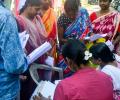
The movement has taken the shape of an unusual reverse migration, which officials and they themselves link directly to the Special Intensive Revision (SIR) of electoral rolls underway in West Bengal.
 © 2025 Rediff.com - Investor Information - Advertise with us - Disclaimer - Privacy Policy - Sitemap - Feedback - About us - Terms of use - Grievances