
The Supreme Court has directed the Election Commission to investigate allegations of false Form 7 applications being filed for the deletion of electors in the Mustafabad assembly constituency in Delhi. The plea highlighted reports of fraudulent applications, some filed in the names of booth level agents who denied knowledge, and others claiming living individuals were dead or had moved. The EC is tasked with verifying these claims and taking remedial action.

The DMK has launched a strong attack on Congress leader Rahul Gandhi, questioning his silence on alleged voter deletions in Tamil Nadu and accusing him of inconsistency regarding electoral roll revisions. This comes amidst a broader campaign by the INDIA bloc against the Election Commission over the Special Intensive Revision (SIR) process.

The Bombay High Court's Goa bench has ruled that draft electoral rolls cannot be the sole basis for deleting names from voter lists, asserting that administrative software cannot supersede statutory laws. The court questioned the Election Commission of India's authority to delete voters without a hearing, highlighting concerns over the ERONET system's limitations and its potential to disenfranchise citizens.

Major opposition leaders, including Rahul Gandhi and Mallikarjun Kharge, have filed a petition in the Supreme Court challenging alleged large-scale voter deletions and irregularities in the Special Intensive Revision (SIR) of electoral rolls. This action follows a "March for Democracy" and a declined request to meet the Chief Justice of India regarding "vote chori" allegations.

The Cockroach Janta Party (CJP) and student organisations have accused the government of attempting to influence electoral outcomes by allegedly deleting over 13 crore voters. They have demanded the resignation of Chief Election Commissioner Gyanesh Kumar, citing alleged irregularities in voter rolls and criticising the police crackdown on protesters. Leaders questioned the government's protection of the CEC and linked voter deletions to the narrow victory margin in the 2024 Lok Sabha elections.
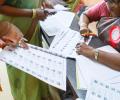
Odisha's Chief Electoral Officer has ordered a thorough verification of nearly 1 million voter deletions following complaints of wrongful removals, particularly concerning deceased voters and those who may have shifted residences.

West Bengal's upcoming 2026 election may hinge on the impact of recent electoral roll revisions, particularly in 65-70 closely contested constituencies where victory margins are slim. The deletion of over 90 lakh names, especially in key areas like Nandigram, Bhabanipur, and the Matua belt, has redrawn the electoral map, potentially influencing the outcome for both the TMC and BJP.

West Bengal Chief Minister Mamata Banerjee has accused the BJP of manipulating voter rolls to divide the state, alleging a conspiracy to deprive Bengali-speaking people of their voting rights. She claims the Election Commission is complicit in deleting lakhs of names from voter lists.

Police in Bengaluru have registered a case against two Booth Level Agents (BLAs) and others for allegedly submitting fraudulent Form 7 applications to delete 5,698 voters from the electoral rolls in the Jayanagar Assembly constituency. The complaint, filed by Karnataka Mahila Congress president Sowmya Reddy, claims the BLAs are affiliated with the BJP and targeted minority communities and politically unfavourable voters.
Election Commission data reveals Bhabanipur constituency in West Bengal recorded significantly higher voter deletions compared to Nandigram, sparking political debate ahead of the 2026 Assembly polls.

FIRs have been registered against BJP leader Ravi Patil and others in Karnataka for allegedly attempting to delete the names of minority community voters from electoral rolls using fraudulent Form-7 applications. Similar cases of alleged voter deletion have also emerged in Bidar and Mysuru, leading to political protests by the Chief Minister.

Goa Forward Party chief Vijai Sardesai has alleged that Nepalese nationals were added to the state's electoral rolls during the Special Intensive Revision (SIR) and that voters were illegally shifted between constituencies. He has demanded an impartial investigation into these alleged irregularities, calling for deletion of illegal entries and action against those responsible.
Bengaluru's electorate has significantly decreased by 43.13% to 59.08 lakh after the Special Intensive Revision (SIR) process and the publication of the final electoral roll on October 27. This reduction is largely due to deletions under the ASDDO category (Absent, Shifted, Dead, Duplicate, Others), with Bengaluru South and Mahadevapura seeing the highest number of removals. Despite the deletions, the Chief Electoral Officer assured that no eligible voter was removed and the process was transparent.
The Supreme Court has declined to intervene in a petition concerning the deletion of names from voter lists in West Bengal, directing the petitioners to seek redressal through established appellate tribunals.
A PIL has been filed in the Supreme Court seeking a detailed constituency-wise disclosure of disenfranchisement caused by the Special Intensive Revision (SIR) of electoral rolls in West Bengal.
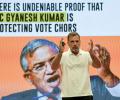
Does voter deletion controversy expose critical gaps in ECI verification procedures and safeguards protecting electoral roll integrity?

A panel of retired Supreme Court and High Court judges, part of an Independent Commission on Special Intensive Revision (SIR), held a public hearing on Thursday to address widespread deletions from India's electoral rolls. Testimonies from affected citizens, including a former MP and a Delhi resident declared deceased by the Election Commission, highlighted significant issues. The SIR process, initiated in 2025, has led to the removal of approximately 13 crore voters nationwide, with substantial deletions reported in Delhi and Uttar Pradesh.
Over 10.56 lakh voters have been deleted from Assam's electoral rolls following a Special Revision, ahead of upcoming assembly elections. The revision included house-to-house verification and aims to create an error-free electoral roll.

The Election Commission of India has introduced new restrictions on the number of Form 7 applications an individual can submit, both online and offline. This move aims to prevent bulk or malicious attempts to remove legitimate voters from electoral rolls and streamline the objection process, especially after reports from states like Karnataka and Odisha.

The Supreme Court will hear a batch of pleas on December 9, including one by Congress leader Rahul Gandhi and other INDIA bloc leaders, alleging widespread voter deletions and irregularities in the special intensive revision (SIR) of electoral rolls. The petitioners seek to question the Election Commission on its decision-making process, particularly regarding whether SIR decisions were collective or unilateral, and modifications to online registration systems. The EC has defended its actions, stating that decisions were unanimous and no changes were made to statutory forms.

The Supreme Court registry has identified over 10 defects in the petition filed by Congress leader Rahul Gandhi and other opposition leaders concerning alleged large-scale voter deletions and irregularities in electoral rolls. Issues include missing ID cards, illegible pages, and a court fee shortfall. The petition seeks an independent audit of the Special Intensive Revision process.

A report by 'Voter Adhikar Manch' has revealed that the number of excluded electors in Delhi's draft electoral roll under the Special Intensive Revision (SIR) exceeded the winning margin in 68 of 70 Assembly constituencies in the 2025 polls. The audit found over 47 lakh electors marked as absent, shifted, dead, or duplicate, raising serious questions about the integrity of the electoral process and the accuracy of voter lists.
The Election Commission of India has told the Delhi high court that two voters, whose names were deleted from the electoral rolls after they could not complete the enumeration process during the Special Intensive Revision in the national capital, can fill Form 6 for redressal of their grievance.

Actor Prakash Raj has claimed his name was deleted from Bengaluru's electoral rolls during the Special Intensive Revision process, affecting 6.5 million voters. He expressed frustration and questioned the ruling dispensation, while reports indicate his name was marked as "permanently shifted" due to a previous case involving multiple voter IDs.
The Election Commission has announced a Special Summary Revision of electoral rolls in 17 states and Union territories, including those facing assembly polls next year. This initiative aims to enrol new voters, correct existing entries, and enhance the accuracy of voter lists, with January 1, 2027, set as the qualifying date.

Karnataka's final electoral roll, published on Tuesday, shows a significant reduction of nearly one crore voters following the Special Intensive Revision (SIR) process, bringing the total count to 4.55 crore from 5.54 crore.

According to Election Commission data, Bhabanipur had 2,06,295 voters as of January 2025. The draft rolls now carry 1,61,509 names, indicating that 44,787 voters, nearly 21.7 per cent of the electorate, have been deleted.

The draft electoral roll for Uttar Pradesh, published on Tuesday, includes 13.58 crore voters, marking an increase of over 18 lakh voters since April. The revision, with January 1, 2027, as the qualifying date, aims to include new eligible citizens and remove duplicate or deceased entries. Citizens can submit claims and objections until December 16, with the final roll to be published on January 4, 2027. Special camps and online facilities are available for verification and updates.

Assam has published its draft electoral roll with 2.52 crore electors, an increase of 2.19 lakh voters since the last revision. The list includes detailed breakdowns by gender, age, and disability, with a period for claims and objections until December 11, and the final list due on January 4 next year. This revision is part of a unique Special Revision process for the state.
The Supreme Court will hear a plea on October 28 regarding the Special Intensive Revision (SIR) of Delhi's electoral roll. Petitioners seek transparency from the Election Commission on voter deletion reasons and a simplified re-inclusion process for those omitted, especially concerning Form 6. The court had previously raised concerns about "mechanical" notice issuance during the SIR, which led to 47 lakh voter deletions in Delhi.

The Supreme Court is set to hear a plea filed by Congress leader Rahul Gandhi and other opposition figures on Thursday regarding alleged large-scale voter deletions and irregularities in the Special Intensive Revision of electoral rolls. The petition seeks an independent audit of these deletions and modifications, and a direction to prevent further deletions without due process.

Data reveals that the number of voters in Uttar Pradesh, Uttarakhand, Goa, Punjab, and Manipur has decreased by up to 13.24 per cent following the Special Intensive Revision (SIR) of electoral rolls. Across these five states, the electorate shrank by approximately 2.29 crore, a 12.2 per cent reduction, with Uttar Pradesh accounting for nearly 90 per cent of this drop. These states are slated for assembly polls early next year, and the Election Commission is conducting further revisions to include eligible voters.

The Cockroach Janta Party (CJP) led a large protest in Mumbai, demanding the resignation of Chief Election Commissioner Gyanesh Kumar. CJP leader Abhijeet Dipke announced a further protest at Delhi's Jantar Mantar on October 10 if Kumar does not step down, citing alleged voter deletions and irregularities in recent elections. The protest, which saw participation from various activists and public figures, also called for freezing voter lists and abolishing the 2023 law on Election Commissioner appointments.

The Supreme Court has sought a response from Congress leader Rahul Gandhi regarding a plea alleging he pushed a pregnant journalist during a march to the apex court on October 12. The plea seeks an FIR and compensation for the alleged assault, which occurred amidst a protest against alleged voter deletions.

CJP founder Abhijeet Dipke, YouTuber Dhruv Rathee, and actor-activist Prakash Raj joined a protest in Bengaluru, demanding the scrapping of the electoral roll revision exercise and the resignation of Chief Election Commissioner Gyanesh Kumar, alleging widespread voter deletion aimed at disenfranchising specific groups.
The Supreme Court has directed the Election Commission to provide details on the disposal of appeals by tribunals concerning deletions from West Bengal's electoral rolls during the Special Intensive Revision (SIR). The court emphasised the need to track the progress of these appeals, which were set up to address irregularities. It also clarified that grievances regarding the denial of PDS benefits due to voter deletion should be taken up with the Calcutta High Court.

The Election Commission of India clarified to the Bombay High Court that the absence of a voter's name from a draft Special Intensive Revision (SIR) roll does not equate to deletion, as SIR is a fresh preparation of the electoral roll. This clarification came during a hearing on a writ petition filed by a Goa resident whose family's names were missing from the SIR roll. The court has reserved its verdict.

Congress leader Rahul Gandhi and other INDIA bloc leaders have moved the Supreme Court seeking permission to submit 48 written questions to the Election Commission regarding its decision-making process for the nationwide Systemic Improvement of Electoral Rolls (SIR). The plea aims to get sworn responses from EC officials on alleged voter exclusions and changes to online registration systems, questioning the transparency and collective decision-making within the EC.

Andhra Pradesh Congress chief YS Sharmila has decided to move her daughter Anjili Reddy's wedding venue after her brother, former Chief Minister YS Jagan Mohan Reddy, refused to allow his Bengaluru property for the ceremony, citing security reasons. Sharmila stated the decision was made to ensure a non-controversial event, despite her claim of full ownership of the property.

The Election Commission has provided a fresh opportunity for voters in seven states marked as Absent, Shifted, Dead, or Duplicate (ASDD) to be included in the final electoral rolls. This decision comes amidst allegations of disenfranchisement and aims to facilitate the inclusion of electors whose enumeration forms were not returned during the Special Intensive Revision exercise.
