Nepal's claim on Lipulekh and Kalapani reopens a 200-year-old border dispute, while historical maps and treaties show the area belongs to India, asserts Lieutenant General Shakti Gurung (retd).

Heavy rains and landslides in Himachal Pradesh have resulted in multiple fatalities and widespread disruption, including road closures and train cancellations.

A total of 750 pilgrims have been selected through a computerised draw for the upcoming Kailash Manasarovar Yatra in Tibet, marking the resumption of the pilgrimage after a five-year gap. The Yatra's resumption is seen as an attempt to normalize India-China relations, which were strained by the eastern Ladakh border standoff. The pilgrimage will begin in June and continue until August, with pilgrims traveling in five batches via the Lipulekh route and ten batches via the Nathu La route. The selection process was deemed "fair, computer-generated, random, gender-balanced" by the Ministry of External Affairs (MEA), which organized the pilgrimage.

The MiG-21's sharp silhouette and supersonic roar will live on in the memories of those who flew it, those who maintained it, and those who watched it streak across the sky as a symbol of India's strength, asserts IAF veteran Air Commodore Nitin Sathe (retd).

In a statement, the BJP MP of Aarunachal East constituency said communities living beyond the McMahon Line share "deep civilisational roots with Bharat", and it's time for India to reclaim the regions "that are rightfully part of our country".

'It is not rigidity.' 'I am just sticking to what I believe very strongly in, particularly if you have been given an opportunity to serve the country....'

There are certain exotic species of wildlife that can only be viewed in their natural habitat in India.
There are certain exotic species of wildlife that can only be viewed in their natural habitat in India.

A heavy rain Sunday morning did little to dispirit the thousands who gathered in the main courtyard of Tsuglagkhang, the Dalai Lama temple, to observe the 90th birth anniversary of the 14th Dalai Lama.
Wang Yang and Xi Jinping's visits signal the beginning of a major Chinese push to bring about a transformation of Tibet, observes Jayadeva Ranade, the distinguished China expert and retired RA&W officer.

India and China have announced a series of measures aimed at improving their relationship, including maintaining peace along the border, reopening border trade, and resuming direct flights.
'New Delhi is not naive about its foreign policy choices.'
Xi's visit to Nyingchi, bordering Arunachal Pradesh, signals China's opening of another front to India in the eastern sector, observes Srikanth Kondapalli, the leading China expert.
Arunachal Pradesh Chief Minister Pema Khandu has expressed grave concerns over China's mega dam project near the Arunachal border, calling it a 'water bomb' and an existential threat.
The visitor returns not just with the jewel-like beauty of the country imprinted on the mind, the body rejuvenated by hot stone massages, but also with the captivating stories and myths that are built into every important structure -- whether a tourist magnet or an off-the-beaten track spot.

China is acutely conscious of the need for the next Dalai Lama to be under its control. It was for this reason that China recently stressed their claim on Arunachal Pradesh. There were rumours that the next Dalai Lama may be found in Tawang. If that happens, India-China relations will become tense and there may be demands for the child to be handed over to the Chinese, points out Ambassador T P Sreenivasan.
The Dalai Lama addressed rumors about his successor, stating he intends to live for another 30-40 years to serve people. He spoke at a long life prayer ceremony ahead of his 90th birthday.

Major Khathing was the first man to hoist the Indian flag in Tawang. He also brought Bum La under Indian control.

'Mountaineering is never 'easy'. Nothing is in your hands, you have to be prepared. That's the same for life as well.'

About 30 airports have been either built or under construction in Tibet and Xinjiang provinces which will boost China's civil and military infrastructure in the remote regions bordering India, the country's official media reported.
Wang Junzheng, Tibet's new Communist party boss, is on a number of sanctions lists by the US, Britain, the EU and Canada, for his tough role in Xinjiang, aimed at China's Uyghur ethnic minority, observes Jayadeva Ranade, the retired senior RA&W officer and distinguished China expert.

The world's most coveted handbag is back in the spotlight.

Many people believe that India's first prime minister Jawaharlal Nehru made a blunder when he recognised China's sovereignty over Tibet but he did what he thought was best for his country, said the president of the Tibetan government in exile.

India was fooled into believing that Communist China wanted a 'negotiated' settlement with the Tibetans; it was never the case, says Claude Arpi.
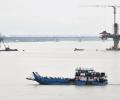
'China could intentionally release excess water.' 'The North East is already flood-prone during the monsoon, and even a controlled release from Chinese dams (during the monsoon) could worsen flooding.'

Why can't the Indian government propose to the Chinese a corridor circumambulating the Holy Mountain where people from both sides could perform the yatra again? asks Claude Arpi.
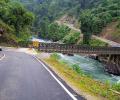
India on Wednesday outright rejected China's attempts to rename some places in Arunachal Pradesh, saying such 'preposterous' attempts will not alter the 'undeniable' reality that the state 'was, is, and will' always remain an integral part of India.

The Kailash Mansarovar Yatra, a pilgrimage to Mount Kailash and Lake Manasarovar in Tibet, will resume on June 30 after a five-year hiatus due to the COVID-19 pandemic. The yatra will be conducted in five groups of 50 people each, with the first group entering China via Lipulekh Pass on July 10 and the last group departing on August 22. The pilgrimage, which holds great religious significance for Hindus, involves circumambulating Mount Kailash and taking a bath in Lake Manasarovar, believed to be the abode of Lord Shiva.

Chhonzin Angmo became the first visually-impaired woman from India to plant the Tricolour on Earth's highest mountain.

The Tibet-bound plane was carrying 113 passengers and nine crew members, state-run Xinhua news agency reported.

The Games will also include five competitors from China's western Xinjiang region, media there reported, including two ethnic Kazakhs, one Uyghur, one Kyrgyz and one from China's Han majority.

A visit to Tibet appears to have become the new touchstone for expressing fealty to Xi Jinping, observes Jayadeva Ranade, the retired senior RA&W officer and distinguished China expert.
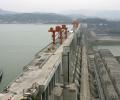
China has defended its plan to build the world's largest dam on the Brahmaputra River in Tibet, assuring that the project will not affect riparian states and safety issues have been addressed through decades of studies. The dam, estimated to cost USD 137 billion, has raised concerns in India and Bangladesh, but Chinese authorities maintain that the project has been thoroughly studied and safeguards are in place. The dam is part of China's efforts to develop clean energy and respond to climate change.
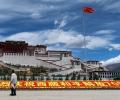
National security, consolidation of border defences and border security highlights China's Tibet policy, points out Jayadeva Ranade, the former senior RA&W officer and China expert.

Lieutenant General Shakti Gurung deserves to be complimented in telling his life story and that of his people, as subaltern communities within this vast and diverse nation of ours clamour for recognition and a plea for their voices to be heard and their aspirations to be met, notes Lieutenant General Gautam Moorthy.
Xi commended the battalion members for their remarkable efforts in guarding China's border region, noting that they have dedicated their youth to securing the country's territorial integrity and have accomplished their missions well, state-run Xinhua news agency reported.
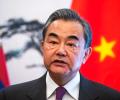
Was Wang Yi'S visit intended to remind India of 1962, asks Claude Arpi?

The Dalai Lama offered prayers for victims of the powerful earthquake that claimed more than 120 lives.
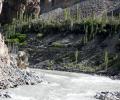
'China has thus far been cautious, emphasising its focus on development rather than weaponising water resources.'
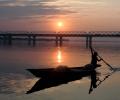
China has reiterated its plan to build the world's largest dam over the Brahmaputra River in Tibet, near the Indian border. The Chinese Foreign Ministry has assured that the project, estimated to cost around USD 137 billion, will not have any negative impact on downstream countries, India and Bangladesh. The ministry has stated that the project has undergone rigorous scientific verification and will be conducive to disaster prevention and mitigation, as well as climate change response. India has expressed concerns about the dam, raising the issue during talks with the visiting US National Security Advisor, Jake Sullivan. China has maintained that the project will not negatively affect the lower reaches and has committed to maintaining communication with downstream countries.
