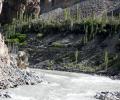
'China has thus far been cautious, emphasising its focus on development rather than weaponising water resources.'

China has reiterated its plan to build the world's largest dam over the Brahmaputra River in Tibet, near the Indian border. The Chinese Foreign Ministry has assured that the project, estimated to cost around USD 137 billion, will not have any negative impact on downstream countries, India and Bangladesh. The ministry has stated that the project has undergone rigorous scientific verification and will be conducive to disaster prevention and mitigation, as well as climate change response. India has expressed concerns about the dam, raising the issue during talks with the visiting US National Security Advisor, Jake Sullivan. China has maintained that the project will not negatively affect the lower reaches and has committed to maintaining communication with downstream countries.

US Secretary of State Mike Pompeo on Wednesday named Robert Destro, assistant secretary of state for democracy, human rights and labour, as the special coordinator for Tibetan issues. Destro will focus on advancing dialogue between the Communist-run government in Beijing and the Dalai Lama, protecting the distinct religious cultural and linguistic identity of Tibetans, improving respect for their human rights and much, much more, Pompeo said.
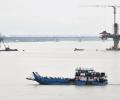
India has expressed concerns over China's plan to build a mega dam on the Brahmaputra River in Tibet, stating that it will continue to monitor and take necessary measures to protect its interests. New Delhi has urged Beijing to ensure that the interests of downstream states are not harmed by activities in upstream areas. The dam, estimated to cost USD 137 billion, has raised apprehensions about its impact on the ecological balance of Arunachal Pradesh and Assam, through which the Brahmaputra flows. India has repeatedly expressed its concerns to China through diplomatic channels, highlighting the need for transparency and consultation with downstream countries.

Arpi deserves to be complimented for the commitment and hard work that have gone into this production. The frustrations of seeking reliable documentation from the catacombs of the Indian bureaucracy did not deter him from going after the best information available, and the result is one that he can take much satisfaction in. Ambassador Prabhat P Shukla, Member Advisory Council, Vivekananda International Foundation, reviews Claude Arpi's The End of an Era: India Exits Tibet.

Advocating resolution to all disputes through dialogue, he asserted that all human beings are equal and they need to rise above the narrow-minded approach of "my nation, my ideology" which is the main trigger for fights among people.
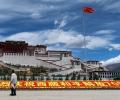
The Tibetan government-in-exile and China are continuing to hold back-channel talks and the last round took place this month, just days before US President Joe Biden signed a legislation that seeks to press Beijing for a negotiated settlement to Tibet's demands for greater autonomy.
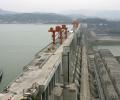
China has approved the construction of the world's largest dam on the Brahmaputra River in Tibet, close to the Indian border. The USD 137 billion project, which is expected to dwarf even China's own Three Gorges Dam, has raised concerns in India and Bangladesh, the downstream riparian states. Concerns in India are centered around China's potential to control water flow, potentially enabling the release of large amounts of water to flood border areas in times of hostilities. The dam is part of China's 14th Five-Year Plan, and the Chinese government claims that the project is safe and prioritizes ecological protection.

India is preparing to resume the Kailash Mansarovar Yatra, a pilgrimage to Mount Kailash in Tibet, after a three-year hiatus. The decision comes as part of efforts to improve relations between India and China, which have been strained since a military standoff in 2020. The two countries have also agreed in principle to resume flight services between them.

The seventh Tibet Work Forum was held in Beijing on August 28 and 29. Delhi should be deeply concerned, at a time India faces a precarious situation in Ladakh, because the TWF also defines China's western border policies, observes Claude Arpi.

China supplied more than $20 billion worth of arms to Pakistan. These include 20 J-10CE and JF-17 Block III fighter aircraft, Wing Loong drones, frigates, submarines, Hongqi HQ-9P surface-to-air missiles, 240 PL-15E air-to-air missiles, LY-80 air defence systems, ZDK early warning aircraft and other weapons.
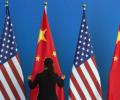
Secretary of State Mike Pompeo said he was taking action against an unspecified number of Chinese officials, including from the ruling Communist Party, under a US law that calls on China to let Americans visit Tibet.

China on Friday operationalised its first fully electrified bullet train in the remote Himalayan region of Tibet, connecting the provincial capital Lhasa and Nyingchi, a strategically located Tibetan border town close to Arunachal Pradesh.

'India should today tell China to provide proper facilities in Minsar for Indian yatris visiting Mt Kailash,' says Claude Arpi.

China's ruling Communist Party has appointed Wang Junzheng, sanctioned by the US, Britain, EU and Canada for his alleged role in the human rights violations against Uygur Muslims in Xinjiang, as the head of its party unit in the sensitive Himalayan region of Tibet.
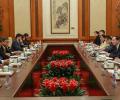
In the talks, China emphasised that the two sides should proceed from the fundamental interests of China, India and adhere to the strategic height and long-term perspective of China-India relations, the readout said.

And while delegates from all over China attended the National People's Congress, all eyes were on one man, the anointed-by-personal-diktat ruler for life, Xi Jinping.

China is worried about the situation post the Dalai Lama and that his reincarnation could surface in Arunchal Pradesh, a region it claims as its own, but which is part of the Indian Republic, says former RA&W Additional Secretary Jayadeva Ranade.
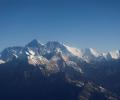
Research using NASA satellite images has revealed a concerning retreat of snow cover atop Mount Everest, indicating a lack of snow accumulation during the winter season of 2024-2025. This trend, observed through a 'rising snow line', suggests a warming climate and warmer, drier conditions prevailing in recent winters. Glaciologist Mauri Pelto attributes the snow cover loss to sublimation, where ice directly evaporates, contributing to the retreat of glaciers even above 6,000 meters on Mount Everest.

Statements emanating from the recent Chinese Communist party congress suggest potentially increasing pressure on India with regard to the Dalai Lama and the Central Tibetan Administration in Dharamsala, notes former RAW officer Jayadeva Ranade.

Former US House Speaker Nancy Peolsi, who is part of a US bipartisan delegation which met with the Dalai Lama on Wednesday, launched a broadside against Chinese President Xi Jinping, stating that while the legacy of the Tibetan spiritual leader will live forever, Xi will be gone in a few years.
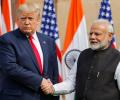
The China threat continues to resonate in the strategic partnership between India and the USA, points out Rup Narayan Das.

India's External Affairs Minister S Jaishankar has stated that the US administration under President Donald Trump is moving towards multipolarity, which aligns with India's interests. He also revealed that India and the US have reached an agreement on the need for a bilateral trade pact. Jaishankar touched upon various foreign policy issues including India's role in the Russia-Ukraine conflict, the trajectory of the BRICS grouping, and relations with China during a session at the Chatham House think-tank in London.
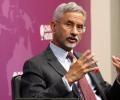
"From President Trump's perspective, the one big shared enterprise that we have is the Quad, which is an understanding where everybody pays their fair share. There are no free riders involved. So that's a good model which works," he said. The Quad alliance consists of the US, India, Australia and Japan.

In underlining the role of border villages as custodians of India's frontiers, New Delhi is following China's example in Tibet.
US Special Coordinator for Tibetan issues Uzra Zeya will travel to India and Nepal this week to deepen cooperation on human rights and democratic governance goals with the two nations, the state department has announced.

'The logical step is to challenge the very legitimacy of the Chinese claim over Tibet,' recommends Inspector General Gurdip Singh Uban (retd).

US special coordinator for Tibetan issues Uzra Zeya met the Dalai Lama in Dharamshala on Thursday and discussed the rich traditions of freedom and democracy in the United States and India.
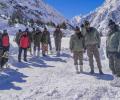
The bodies of the last four of the trapped labourers were pulled out from the site of the avalanche-hit Border Roads Organisation (BRO) camp in Chamoli on Sunday, taking the death toll to eight as authorities ended the nearly 60-hour rescue operation.

The Battle of Lhagyala on November 23, 1962, fought by the 4 Rajput Regiment against the Chinese PLA, remains a forgotten chapter of heroism, with no survivors left to tell their story.

Samdong Rimpoche's visit to China materialised against the backdrop of strained India-China relations consequent to the face-off between Indian and Chinese troops at Doklam, says former RAW officer Jayadeva Ranade.
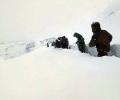
The avalanche hit the BRO camp between Mana and Badrinath between 5:30 am and 6 am on Friday, burying the workers inside eight containers and a shed, according to the Army.

The people who know Tibet will continue to fight the good fight. Long, hard, less than hopeful, but always peaceful.

In Tibet, the people's frustration with their colonial masters has reached the extreme, international silence is too loud, says Vijay Kranti

The world must hang its head in shame for being a mute spectator to the 'cultural holocaust' in Tibet, says Major General Mrinal Suman (retd).
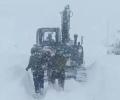
Forty-one Border Road Organisation labourers working to clear snow near the high altitude border village of Mana in Uttarakhand's Chamoli district were trapped under an avalanche on Friday.

'Rafales can play an important role in doing DEAD (Destruction of Enemy Air Defence) on the Surface-to-Air Missiles that the Chinese have put on Tibet'

China is building the world's highest-altitude cloud computing data centre in Tibet that will meet the data storage needs of the country and South Asian nations like Nepal, Bangladesh and Pakistan, official media reported on Thursday.

China, which is building numerous villages in Tibet close to its borders with India and Bhutan, has held several celebratory events to mark its takeover of Tibet in the new border villages with a mix of border troops and the local population, the official media in Beijing reported.

Wing Commander Pratap Marathe's story is one of dedication, bravery, and humour, a shining example of the spirit of the Indian Air Force. Air Commodore Nitin Sathe (retd) salutes Wing Commander Marathe who passed into the ages last week.
