The benefits are common in many cases, but are also different in some other respects.

Narendra Modi promised to be A B de Villiers but has batted like a Geoff Boycott, says T C A Srinivasa-Raghavan

'If the government had not spent an incredible amount of energy on demonetisation it may -- may, because it had not done anything the previous six months either -- have been able to pay attention to the deeper problems of low investment and job creation.'

The prime minister sees himself as the "vikas purush". But realising his government's agenda for development requires not just a more efficient administration but also a credible implementation plan, says Nitin Desai.

In putting the country's economy back on the rails, it is best that Narendra Modi and Arun Jaitley draw on grass-roots feedback and their own practical sense and native wisdom without allowing themselves to be sucked into the quicksand of economic punditry, says B S Raghavan.

The middle class's long push to force the state to retreat from the economy may be reversing, says Ajit Balakrishnan.

The best message the Prime Minister could bring to London is that he will return to India to focus on economic matters. Britain, on its part, should ensure that it addresses matters that concern India, instead of engaging in pomp during his visit, says Adam Roberts.

For the traditionalists, wars on Twitter and Facebook smack of immaturity.

Every start-up's dream is to become a unicorn.

The unemployment situation is becoming increasingly acute.
We've got a national case of hitchyourwagonitis, a condition that causes people to believe that unless they shut down their brains and self-respect and concentrate on propping upsome ascendant star by smacking down dissent, they'll never get ahead, says Mitali Saran
It, however, lags other states on crucial parameters such as health care and rural poverty.
The West has always preferred a timid, half intelligent and a dependent India rather than a decisively independent and self-reliant one. A pliable Indian leadership suits the West best, says Tarun Vijay.

Americans are lucky they have inherited the innovations of the past.
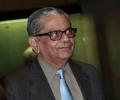
Economists who get too close to prime ministers eventually come to grief after their boss is defeated

The government should start with two assumptions: first, that oil prices are fundamentally unstable and susceptible to wide fluctuations, and second, that raising the prices of petroleum products is politically difficult.

'A bit of marketing, a bit of positioning, and a lot of strategic thinking is required, and all this should be in aid of India's strategic intent: Becoming the third pole in a global G3 and aiming for Numero Uno,' says Rajeev Srinivasan.

Panagariya has advocated a more liberalised spending, arguing that greater capital expenditure could relax some of the infrastructure bottlenecks facing the country.

With GDP down by 2 per cent, while 99 per cent of banned notes make way back to the banking system, whom did demonetisation benefit?

There are a couple of proposals, however, whose goals are not easily achievable.

A policy-related problem that urgently needs to be redressed is the 'miniaturisation' of projects.
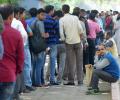
'High denomination cash notes which was 1.4 lakh crores of Rs 500 and Rs 1,000 notes in 2004 became Rs 15.5 lakh crores in 2016.' 'If it had been allowed, by 2022, it would have been Rs 34 lakh crores, and that would have been the end of the Indian economy.' 'Demonetisation was a huge hit on the head of the economy, but without the hit, you could not U-turn the economy.'

India's economy is not like Western ones, and thus needs restrained fiscal policy even during a recession, says Ajay Shah.

Rediff.com, present to you a dummy's guide to the historic vote that could shape British-EU ties for generations.
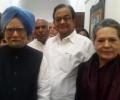
It is an open secret that Manmohan Singh is not a popular figure in the Congress, but Sonia's presence, support and strategy are proving a blessing for the good doctor. When P V Narasimha Rao ran into rough times, Sonia remained indifferent and the Congress had left him to the wolves, says Rasheed Kidwai, author of books on Sonia Gandhi and the Congress party.

Democracies avoid serious political turbulence only so long as they ensure that the relative level of inequality between the rich and the poor does not become excessively large, says Vice President M Hamid Ansari.

'I feel now we have a leader who is non-corruptible.' 'But he needs time as corruption is deep-rooted in our society, and people have no shame about being corrupt.' 'It will take at least 7 years to make some changes.'

'What his minions do, we are not sure, but he has got to keep them under control. Pogroms against Muslims in India -- I don't think that is going to be his policy.'

Sadly, for hundreds of millions in India, that inequality from their birth and the utterly inadequate schooling and health care they receive thereafter mean that the lottery is stacked against them.

'Today if you look at the way India is growing many people are saying the sleeping elephant has finally woken up, is dancing!' 'I have travelled extensively, in about 60 countries. In all these the moment you say India, the first thing they mention is either an actor's name. Or they start humming a song.' 'I wanted to be in Bollywood. It is the most powerful medium we have in this country. That's soft power.' Listening in on Shobhaa De, Kabir Khan, Vikas Swarop and Saffron Art CEO Hugo Weihe speak on India's Soft Power, Hard Influence.

The time is nigh for India to ensure that investment by its former citizens is encouraged by protecting their rights, says C B Patel.

Drones are of course, remotely controlled and modern ships are also chip-driven.

The largest athlete's village in the history of the Games is a visceral monument to now-faded optimism. Planned when Brazil was booming, its harnessing of private sector wealth was meant to set the gold standard for a sustainable Olympics. Instead, the worst recession in generations pushed the luxury apartments out of reach.

The parlous state of Asia's third largest economy was reflected in the rupee's 18 per cent plunge against the dollar to all time lows since May, when signals emerged that the US Federal Reserve was considering winding down an easy money strategy that had benefitted emerging markets like India.

A new leadership is needed to replace the present culture of indifference.

A major slugfest erupted on Thursday over Bharatiya Janata Party MP Chandan Mitra's demand for stripping Nobel laureate Amartya Sen of the Bharat Ratna award and the economist offering to return it if Atal Bihari Vajpayee asks him to do so.

For the past few years the top brass at Pearson did pretty well to grapple with the threat of digital disruption.

An enormous amount of black money flows in and out of the banking system and still remains black.

Finance Minister Arun Jaitley witll spearhead the campaign with BJP President Amit Shah as its chief strategist.
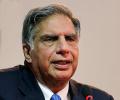
John Elliott, the author of Implosion: India's Tryst with Reality, on his Riding the Elephant blog, says the sacking of Cyrus Mistry as chairman of Tata and Sons was in line with Ratan Tata's personal style of dealing with executives
 © 2026 Rediff.com - Advertise with us - Disclaimer - Privacy Policy - Sitemap - Feedback - About us - Terms of use - Grievances