
Jeremy Corbyn is a most unusual politician in these times.

A government can't just take away public money, and the RBI can't extinguish its liability. 'The RBI has to honour the value any time a person with legal and taxed money lays claim on the value.'

United States current affairs magazine Newsweek, which had ceased publication last year to focus on its website, plans to bring back the print edition early next year.
CRR to remain unchanged at 4.00 pc this fiscal
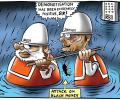
'Too much energy these three years has been invested in turning the party into an election-winning machine.' 'To recover its mojo, the Modi government needs a more impressive set of economic figures to flaunt,' says Shekhar Gupta.

Studies suggest net benefits of hydro-power, nuclear energy or natural gas as sources of electricity are greater than those of wind and solar.


After Brexit, ethnic minorities in Britain worry about their future.

Bengaluru has been ranked among top 20 technology-rich cities in the world in a survey done by Jones Lang LaSalle.

Economist Abheek Barua's insight into the global and domestic economy at the turn of the financial year.
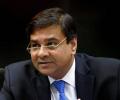
Breaking his silence over the demonetisation issue, RBI Governor Urjit Patel on Sunday said the central bank is monitoring the situation on a daily basis and taking all necessary actions to "ease the genuine pain of citizens" with a clear intent to normalise the things as early as possible.

Jean Dreze, a noted economist who was was a member of Sonia Gandhi led National Advisory Council, was dropped from the list of speakers at the Delhi Economics Conclave organised by the finance ministry and inaugurated by Prime Minister Narendra Modi.

The so-called 'fourth industrial revolution' will bring ever faster cycles of innovation, posing huge challenges to companies, workers, governments and societies alike

To imagine that no one contributed to global peace to deserve the prize in 2017 is to be extremely cynical about peacemakers around the globe.

PM also came up with new acronym of Vikas--V for 'vidyut', K for 'kanoon vyawastha' and S for 'sadak'.

Seeking urgent steps by mobile operators to check call drops, regulator TRAI on Wednesday said their performance would be reviewed after 15 days and warned it will "cross the bridge" if they fail to do the needful.
The 90-day compliance window to declare overseas wealth ends on September 30.

Melbourne is the world's best city to live in.

They bent rules. Shut down haters. And inspired many with their successes. Let them inspire you too!

'Modi is a symbol of Asia Rising; and, for the first time in decades, a non-white has the potential to be the most compelling global leader.'


But it scores high on firm dynamics - which is partly accidental, as it benefits from high labour turnover.

Many emerging economies have witnessed a flight of foreign portfolio capital and their currencies have slumped against the dollar.
Credit rating agency Crisil observed in its report that some 'high frequency indicators go out of whack' as credit growth and service tax collections are not in tune with the CSO's growth projections.

'It is clear that Britain is a country with a limited future,' says Rajeev Srinivasan.

'By not letting bankrupt banks fail, we have discouraged ordinary folk from taking precautions while choosing their bank or at least when they hear bad news about their bank,'says S Muralidharan, former MD, BNP Paribas.

Assocham told Modi policy makers needed to act fast to "bullet proof" India from global jitters.

'In contrast to the generally buoyant tone of the Economic Survey in January, he sounds uncharacteristically pessimistic, saying that forces in the world economy -- slowing global trade, protectionism, robots -- will limit India's manufacturing to levels well below what propelled East Asia's economies decades ago.'

'The Reserve Bank's independence has remained a work in progress, an enduring challenge that the nation has been grappling with on an ongoing basis,' says RBI Deputy Governor Dr Viral Acharya.

If the deal is indeed being considered, this will be the first time that Ambani will be putting his money in a print media venture since he and his younger brother, Anil Ambani, split businesses to form their own groups
The Left parties attacked the government's policies and said the country was heading towards an economic emergency.

The macro economic situation and currency depreciation might top the priority list of Reserve Bank of India (RBI) governor-designate Raghuram Rajan.

Now mergers, acquisitions, sale of assets, fundraising, strategic intent and competitive position in the market are part of business life everywhere.

Qatar is the world's richest country in terms of per capita income.

The government plans to take India into the top 50 ranks in ease of doing business in the next two years with efforts such as shifting all applications for industrial licenses online.

No country has achieved a faster, deeper modern transformation than China, says former ambassador Kishan S Rana.

The RBI governor-designate may be economical with spoken words, but is known for his sharp and critical writings

Protectionism and a rollback of regulation. Defusion of tensions with Russia and a lowering of geo-political risks. Looser fiscal policy and tighter monetary policy. At least Donald Trump can't be faulted for not trying something different where existing policies have disappointed, says T T Ram Mohan.

India needs to build its Grand Narrative, and its cultural power, which conquered all of ASEAN (then known as Indo-China), needs to be forcefully projected while simultaneously hard economic and military power are also emphasised, says Rajeev Srinivasan.
 © 2026 Rediff.com - Advertise with us - Disclaimer - Privacy Policy - Sitemap - Feedback - About us - Terms of use - Grievances