
From Azhar and Sanju to Thackeray and Swatantrya Veer Savarkar, Bollywood has often struggled to tell controversial true stories without turning their subjects into heroes.

A report by Bain & Company and HealthQuad identifies remote patient monitoring, OT/ICU optimisation, and chronic disease management as key opportunities for Artificial Intelligence in Indian healthcare. The report highlights a shift from experimental AI to real-world applications, driven by government initiatives, increasing EMR adoption, and a robust startup ecosystem. AI's autonomous capabilities are rapidly advancing while costs decrease, creating significant growth potential for providers and startups.

'There is a long set of decisions that have to be made along the way for anything to actually get actuated in the real world.'

Union Finance Minister Nirmala Sitharaman expressed strong confidence in India achieving over 10 per cent economic growth, advocating for increased technology adoption and innovation. She urged overcoming scepticism and highlighted technology's transformative role in agriculture and public sector reforms, while also launching a new fund and book at an IIT Madras event.

Researchers from IIIT-Delhi and MS Swaminathan Research Foundation have developed SICKLE, a multi-satellite dataset designed to enhance AI systems' ability to monitor crops, identify growth, and estimate yields across vast agricultural areas. This dataset combines satellite imagery with field-level information, enabling machine learning models to understand various aspects of crop cultivation and predict key parameters like phenology and productivity.

'My parents were crying because they were so excited that I was on screen, that it was an YRF film, and it was opposite Rani Mukerji.'

Dhoomakethu has a fun time-loop premise, a game Sajin Gopu and some genuinely funny moments, but runs out of steam long before Kuttan can break free.

The ICPC Internship Programme 2026, offered by the Policy, Politics and Governance Foundation, provides final-year and penultimate-year undergraduate students with hands-on exposure to politics, policymaking and governance. The programme combines online and offline learning with real-world experience, expert mentorship, and networking opportunities.

A Goa-based man, Shubhang Borkar, ingeniously used ChatGPT to locate his lost footwear amidst a pile of shoes outside the Mahakal Temple in Ujjain, Madhya Pradesh. He uploaded images of the footwear and his own shoes to the AI chatbot, which then successfully identified his pair, showcasing a practical and unusual application of artificial intelligence.
India's Engineering Research and Development (ER&D) sector is projected to exceed USD 100 billion in revenue by 2030, driven significantly by the integration of Artificial Intelligence (AI) into engineering workflows. This growth, highlighted by Nasscom, positions India as a critical global engineering hub, necessitating focus on talent development and strategic partnerships.

IIT Guwahati researchers have developed SH²RFSSM, a model inspired by how biological neurons communicate.

Mahindra has launched the Thar OG, an upgraded version of its popular SUV, built on a new M Glyde 4G platform with advanced features like Frequency Dependent Damping and Electric Power Steering, while retaining an accessible starting price of 10.32 Lakh.

Students are learning to combine technology with agriculture, healthcare, biotechnology, architecture and fashion, explains Mandeep Singh, assistant professor and deputy dean, Lovely Professional University.

Did love make Bhagat Singh a weaker revolutionary? In a heated argument once, Sukhdev accused him of allowing his fascination with a woman to come in the way of revolutionary duty. Bhagat Singh's answer, in a letter days later, was a defence of love as a revolutionary's strength, not a weakness. On Bhagat Singh's 119th birth anniversary, Utkarsh Mishra looks at the friendship, arguments and ideas that bound him and Sukhdev together.
Uttar Pradesh Governor Anandiben Patel addressed AI Manthan 2.0, advocating for the comprehensive integration of Artificial Intelligence across all university subjects rather than as a standalone course. She urged universities to develop clear, time-bound AI roadmaps covering education, research, healthcare, and agriculture, emphasising indigenous AI development, employment creation, and the importance of "Safe and Trusted AI." The event also saw the formation of an AI Policy Advisory Group and an AI Implementation Group to drive these initiatives.
The University of Delhi and semiconductor major AMD have signed a Memorandum of Understanding (MoU) to train up to 10,000 students and faculty in industry-relevant artificial intelligence skills over the next year. This collaboration will provide access to AMD's AI Engage Developer Programme, including its open-source ROCm AI software platform, learning resources, and developer GPU cloud credits, aiming to foster indigenous AI capabilities and bridge the gap between academia and industry.

Noted scientist Prof V Ramgopal Rao highlights India's significant progress in higher education and research but points out a critical gap in converting scientific discoveries into market-ready technologies. He advocates for a robust institutional framework, multidisciplinary collaboration, and stronger academia-industry ties to foster innovation and translate research into practical products.

'It requires new skilling, new ways of working, and new structures. That's the reality.'
Researchers have successfully demonstrated the transmission of quantum information over commercial fibre-optic infrastructure, a significant step towards building practical quantum networks. This breakthrough addresses the challenge of cost and maintaining fragile entangled states outside laboratory settings.
The Confederation of Indian Industry-Indian Women Network (CII-IWN) organised a hands-on Artificial Intelligence (AI) workshop in Chandigarh for women entrepreneurs and professionals. The session focused on practical applications of AI, including generative AI and LLMs, to address business challenges and enhance productivity across various functions like marketing, content creation, and data analysis.

The Supreme Court has dismissed a Public Interest Litigation (PIL) seeking mandatory and uniform labelling of ethanol percentage in petrol at fuel pumps. The petitioner, Narendra Kumar Goswami, was advised to approach the jurisdictional high court for relief, with the Attorney General arguing it was a proxy litigation.

US Ambassador to India, Sergio Gor, highlighted the evolving US-India space partnership, moving from cooperation to "co-creation" at the Bengaluru Space Expo. He emphasised joint design, funding, and co-authoring the future of human discovery, citing the NISAR satellite and India's participation in the Artemis Accords as key examples of this growing synergy.

The Supreme Court is set to hear a petition seeking mandatory and uniform labelling of ethanol percentage at petrol pumps and a public database on vehicle compatibility with ethanol-blended fuel. The plea also calls for an expert committee to assess the impact of E20 fuel on vehicles, environment, and food security, and a consumer disclosure protocol.

Researchers at NIT Rourkela have patented a novel hybrid energy-storage system designed to significantly improve the efficiency and lifespan of electric vehicle batteries. This innovation addresses common issues like low power density and thermal stress by integrating supercapacitors with a simplified architecture, making EVs more reliable, especially in urban driving conditions.

Last Man In Tower is an unsettling portrait of a society that can turn against one another when greed dangles the promise of a better life, observes Sreeju Sudhakaran.

India is set to launch Bharat Vecto, its first certification tool for assessing the fuel efficiency and CO2 emissions of medium and heavy commercial vehicles, by December, with a full launch targeted for the Bharat Mobility Global Expo in February 2027.

Fintech firm PhonePe has signed a Memorandum of Understanding (MoU) with the Ministry of Electronics and Information Technology (MeitY) to integrate its enterprise data intelligence platform, PulsePro, into the PM GatiShakti framework. This collaboration aims to provide granular, hyperlocal insights for national infrastructure planning, economic analysis, and holistic urban and rural development.

Humanoid machines boxed, danced and tackled everyday tasks at the 2026 World Robot Conference in Beijing.

Glimpses of humanoid robots training across soccer, table tennis and other events ahead of the 2026 World Humanoid Robot Games in Beijing.

'ISRO will not manufacture any launch vehicles. That will all be done by the private sector or public sector undertakings.'
The third edition of the Viksit Bharat Young Leaders Dialogue (VBYLD) has commenced with a quiz contest, leading to a national finale in January 2027 where young leaders will present their ideas for a developed India to Prime Minister Narendra Modi. The multi-stage event includes essay challenges, district championships, and state-level dialogues, aiming to foster youth participation in nation-building across various thematic areas.
Goa has successfully completed its first pilot drone-skilling workshop for 12 women and plans to train 100 women annually under the Goa Drone Didi Training Scheme. This initiative aims to promote drone technology, rural livelihoods, and women-led entrepreneurship, aligning with the Centre's Namo Drone Didi programme.
Researchers have developed an AI-based approach to generate detailed maps highlighting differences in how distinct parts of the brain age. This new model reveals that not all brain regions age at the same rate, with frontal and temporal lobes appearing biologically older. The study also links these regional ageing patterns to cognitive function and neurodegeneration, particularly in Alzheimer's disease.

'I don't need to wait for work to find me. I can find stories that excite me and make them myself.'
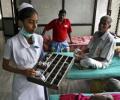
A new study published in The Lancet Public Health journal reveals that almost all countries are overusing 'watch' class antibiotics, which are stronger drugs meant for specific conditions and contribute significantly to antibiotic resistance. The research developed a framework to assess appropriate antibiotic use and found that while many countries overuse antibiotics, particularly the 'watch' category, some also underuse 'reserve' antibiotics, potentially leaving patients with drug-resistant infections untreated. The study highlights a global inequality where lower-income countries need more specialised antibiotics but higher-income countries use them more.
Researchers at IIT (ISM) Dhanbad have developed an ultra-compact wearable antenna, measuring just 5x5x0.75 mm, designed to significantly enhance the performance of future healthcare devices, smart wearables, and wireless body communication systems. This innovation offers high-speed data transmission, wider wireless coverage, and a low Specific Absorption Rate (SAR), making it safe and efficient for prolonged use in Wireless Body Area Networks (WBANs).

'Applying AI to change the lives of Indians and at population scale -- just like we did with DPI [digital public infrastructure] -- is really where it's going to go.'

Crypto can rise or fall for many reasons. Here's a simple guide to what gives digital assets value and drives their prices.

If you do not insulate your retirement corpus from the true cost of modern critical care, you don't have a retirement plan -- you have a fragile strategy waiting for an expensive medical emergency to break it

First Drive: Why the New Tata Sierra Was Born to be an EV
