
Tensions between India and Pakistan are escalating following last week's dastardly terror attack in Pahalgam that claimed 26 lives.
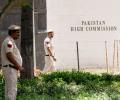
Pakistan is holding a high-level security meeting to formulate a response to India's suspension of the Indus Water Treaty and downgrading of diplomatic ties. The meeting, convened by Prime Minister Shehbaz Sharif, will include the National Security Committee, three services chiefs, and key ministers. The move comes after India blamed Pakistan for a terror attack in Pahalgam, which Pakistan has denied. Diplomatic observers warn that the escalation could further strain relations between the two countries.
The Congress Working Committee (CWC) condemned the Pahalgam terror attack, calling it a direct assault on the values of the republic. The party accused the BJP of exploiting the tragedy to promote discord and polarization, while urging for unity and solidarity in the face of adversity. The CWC also demanded a comprehensive analysis of the intelligence failures and security lapses that led to the attack.

The Minister for Housing, Waqf, and Minority Affairs in the Siddaramaiah-led government claimed that if Prime Minister Narendra Modi and Union Home Minister Amit Shah were to give him a suicide bomb, he would tie it to himself and go to Pakistan to fight.

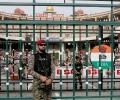
Several Pakistani nationals visiting India started returning home through the Attari-Wagah land route in Amritsar on Thursday, a day after the Centre set a 48-hour deadline for them to leave the country. The decision came after India announced a raft of measures, including the expulsion of Pakistani military attaches, suspension of the Indus Water Treaty of 1960, and the immediate shutting down of the Attari land-transit post in view of the cross-border links to the horrific terror attack in Kashmir's Pahalgam that killed 26 civilians on Tuesday.
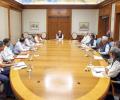
The Cabinet Committee on Security (CCS) met on Wednesday under the chairmanship of Prime Minister Narendra Modi and firmed up the responses to the terror attack.
When searched for his account, YouTube displays an error message.

With national security as the top priority, the BCCI, in coordination with local authorities, decided to abandon the match as a precautionary measure.

Police also announced a bounty of Rs 20 lakh for information leading to the neutralisation of terrorists involved in the gruesome killings.

Former Pakistani Foreign Minister Bilawal Bhutto has acknowledged the country's tango with terror operatives, saying that Pakistan has a past.

China supplied more than $20 billion worth of arms to Pakistan. These include 20 J-10CE and JF-17 Block III fighter aircraft, Wing Loong drones, frigates, submarines, Hongqi HQ-9P surface-to-air missiles, 240 PL-15E air-to-air missiles, LY-80 air defence systems, ZDK early warning aircraft and other weapons.
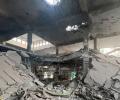
Pakistan claims it was a mosque and an educational complex that were hit in the strikes at Muridke, located at about 40 km from Lahore.

India has strongly condemned Pakistan's recent drone attacks on Indian cities and civilian infrastructure, calling it a "deranged fantasy" and a desperate attempt to deceive the world. Foreign Secretary Vikram Misri also accused Pakistan of attacking religious sites, including a gurdwara in Amritsar, in an attempt to give a communal color to the situation. Misri criticized Pakistan's "blatantly farcical denial" of the attacks and said the country is resorting to disinformation tactics.

A senior government official confirmed that after a meeting with other stakeholders, the decision has been taken and airlines and airport authorities have been informed about it.

Stock market benchmark indices Sensex and Nifty tumbled over 1 per cent each on Friday as tensions soared between India and Pakistan, fuelling fears of a wider conflict.
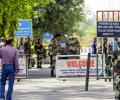
Abdul Waheed was brought from Srinagar by the Jammu and Kashmir police for his repatriation to Pakistan.

Saudi Arabia's Deputy Foreign Minister Adel al-Jubeir visited India on Thursday to meet with top Indian officials and discuss de-escalating tensions between India and Pakistan. Al-Jubeir's visit followed India's military strikes on terrorist infrastructure in Pakistan and Pakistan-occupied Kashmir. He met with External Affairs Minister S Jaishankar and discussed the situation, emphasizing India's commitment to combating terrorism.

The Border Security Force (BSF) has shot dead a Pakistani intruder along the International Border in Punjab. The man was shot during the intervening night of May 7-8 in the Ferozepur sector, officials said. He was found crossing the International Border purposefully in the dark.

The statement came hours after Prime Minister Narendra Modi on Tuesday told the top defence brass that the armed forces have "complete operational freedom" to decide on the mode, targets and timing of India's response to the Pahalgam terror attack, government sources said.
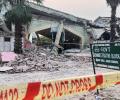
India dismissed claims on Pakistan social media about 'Operation Sindoor', saying the neighbouring country has unleashed a 'full-blown disinformation offensive' with 'lies' and digital theatrics to control the narrative.

Pakistan has denied any connection to Tahawwur Rana, a key accused in the 2008 Mumbai terror attacks. Rana, a Canadian national, has not renewed his Pakistani documents for over two decades, according to the Foreign Office spokesperson.
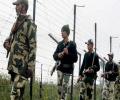
The Border Security Force (BSF) has lodged a protest with Pakistan Rangers after a BSF jawan was apprehended by the Rangers last week after he mistakenly crossed the international border in Punjab. The incident comes amid heightened tensions between India and Pakistan following the Pahalgam terror attack.
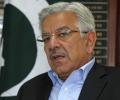
Regarding the possibility of talks, the minister said he was not aware of any such potential engagements.

The Indian Army responded in a measured and effective manner to the provocation.
The intruder, who is in his early 20s, was taken into custody by Army troops soon after he entered into this side from across the LoC.
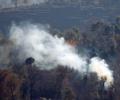
Pakistani troops continued to violate the ceasefire along the Line of Control (LoC) by resorting to unprovoked firing in Jammu and Kashmir's Poonch and Kupwara districts, army officials said. This was the fourth consecutive night that Pakistan resorted to unprovoked firing along the LoC and came amid heightened tension between New Delhi and Islamabad following last week's terror attack in Pahalgam. Indian troops responded swiftly and effectively.
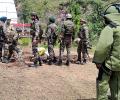
The officials said dozens of unexploded explosives were destroyed by the experts along the Line of Control in Rajouri and Poonch districts and along the International Border in Jammu and Samba which witnessed intense cross-border shelling and drone attacks from May 7 to May 10.

The Bombay High Court criticized the Maharashtra government for arresting a 19-year-old student from Pune for her social media post on Indo-Pak hostilities, calling its reaction "radical." The court granted the student bail and said the state's actions were unwarranted and had turned a student into a criminal. The court also questioned the conduct of the college for rusticating the student, stating that an educational institution's approach should be to reform, not punish. The student had reposted a post on Instagram that criticized the Indian government for provoking a war against Pakistan, but she later deleted the post and apologized for her actions. The college, however, deemed the post to be anti-national and expelled the student. The court emphasized that mistakes are bound to happen, especially at a young age, and urged the college to focus on reforming students rather than punishing them.

This move comes as a precautionary measure, in light of airspace restrictions and heightened security.
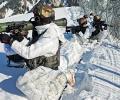
This was the third consecutive night that Pakistan resorted to unprovoked firing along the Line of Control.
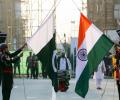
The UN Security Council will hold closed consultations on Monday on the situation between India and Pakistan after Islamabad sought an emergency meeting on the issue. Pakistan, which currently sits as a non-permanent member of the council, requested the meeting in light of rising tensions between the two countries following a terror attack in India. The meeting comes after India's foreign minister spoke with all council members except China and Pakistan, emphasizing the need to bring perpetrators of the attack to justice. The Pakistani envoy has argued that the situation in Jammu and Kashmir poses a threat to regional and international peace and security, justifying the need for a council discussion.
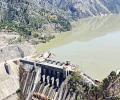
Pakistan has halted the construction of contentious canals in Punjab province after India suspended the Indus Waters Treaty following a deadly terrorist attack in Kashmir. The decision to suspend the canals project was made after Prime Minister Shehbaz Sharif met with PPP chairman Bilawal Bhutto-Zardari and agreed to address the concerns of Sindh province, where the project had sparked protests. The canals project, aimed at irrigating the desert region in Punjab, was seen as a threat to water resources in Sindh. Both sides have agreed to seek consensus on the issue in the Council of Common Interests (CCI), a high-powered inter-provincial body. Meanwhile, Pakistan has reiterated the importance of the Indus Water Treaty for its water security and economy, and condemned India's move to suspend it.
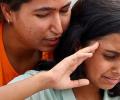
The mortal remains of soldier Surendra Kumar, who was martyred in the Pakistani attack on the Udhampur airbase, were consigned to flames with full military honours at his native village in the Jhunjhunu district of Rajasthan on Sunday.
Pakistani troops continued unprovoked small arms firing in different sectors along the Line of Control (LoC) in Jammu and Kashmir for the 10th consecutive night, prompting effective retaliation by the Indian army. The ceasefire violations, which started after the April 22 terror attack in Pahalgam, were reported from eight places across five districts in the Union Territory during the intervening night of Saturday and Sunday. Indian Army responded promptly and proportionately to the unprovoked firing, a defence spokesperson said.

Following a deadly terror attack in Pahalgam, India has ordered all Pakistani nationals to leave the country within 48 hours. This has led to a mass exodus of Pakistani citizens from India, while several women married to Pakistani nationals and holding Indian passports are facing difficulties returning to their families in Pakistan.

The Indian government has revoked 14 categories of visas for Pakistani nationals, including business, conference, visitor, and pilgrim visas, following the terror attack in Pahalgam, Jammu and Kashmir. The decision was made after a Cabinet Committee on Security meeting, and the Home Minister has instructed state governments to ensure that all Pakistani nationals leave India by the set deadlines. The order does not apply to Long Term Visas (LTVs) and diplomatic and official visas issued to Pakistani nationals.

Earlier, at 4:39 am, the district collector had also advised residents to keep lights off and avoid going near windows, roads, balconies, or terraces.
For Ali, who hails from Mendhar sub-division near the Line of Control (LoC) in Poonch district, the uniform is more than a job -- it's a calling. He has dedicated nearly half his life in the police force, serving its various wings with distinction and earning multiple commendations for his courage and unwavering commitment to duty.
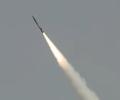
The army said the missile launch was part of "Exercise INDUS" without giving details about the exercise.

External Affairs Minister S Jaishankar said the 2008 Mumbai terror attack marked a turning point in relations with Pakistan when Indians collectively felt that such behaviour from a neighbouring country could no longer be tolerated. Speaking at Charotar University of Science and Technology, Jaishankar acknowledged India's transformation under Prime Minister Narendra Modi over the last decade, while Pakistan has remained unchanged, continuing with what he termed as its "bad habits."
