
The Dhurandhar: The Revenge trailer teases high stakes and major thrills, observes Mayur Sanap.

Ranveer Singh electrified fans at the Dhurandhar: The Revenge music launch in Mumbai, building anticipation for the action film.

Bigger surprises and shockers await in Dhurandhar 2? Mayur Sanap trusts Aditya Dhar on this.

If we, as an audience, are mature enough to dissect facts from fiction, and propaganda from creative storytelling, the director and technical team deserve full credit for putting together an entertaining masala film that deserves a sequel, notes Divya Nair.

In the movie, veteran star Sanjay Dutt portrays Chaudhary Aslam. The police officer was assassinated by Pakistan Tehreek-e-Taliban's Mohmand chapter who claimed responsibility for carrying out a bomb attack on his car on the Lyari Expressway on January 9, 2014, in which two other police officers, his driver, and guard were also killed.

Tahawwur Hussain Rana, a Canadian national convicted in the United States for his role in the 2008 Mumbai terror attacks, has been extradited to India. Rana, a close associate of Pakistani-American terrorist David Coleman Headley, was involved in the conspiracy from 2005 onwards and assisted Headley in obtaining a visa for India. He is the third person to be sent on trial in India for the 26/11 attacks after Ajmal Kasab and Zabiuddin Ansari alias Abu Jundal. Rana's extradition comes after US President Donald Trump approved the request.
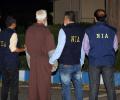
He was sent to judicial custody on May 9 and lodged in Tihar jail after his custodial interrogation by the NIA.
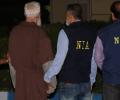
Tahawwur Hussain Rana, a key accused in the 26/11 Mumbai terror attack case, had helped co-conspirator David Coleman Headley to obtain an Indian visa, a Mumbai police official familiar with the probe said. Rana was arrested by the National Investigation Agency (NIA) on Thursday evening following his extradition from the United States. Rana, who had served in the Pakistan Army medical corps, had emigrated to Canada in the late 1990s and started an immigration consultancy firm. He later moved to the US and set up an office in Chicago. Through his firm, Rana gave cover to Headley to carry out reconnaissance mission in Mumbai prior to the November 2008 attacks and helped him get a ten-year visa extension. During his stay in India, Headley used the front of running an immigration business and was in regular contact with Rana. There were more than 230 phone calls between the two during this period. Rana was also in touch with 'Major Iqbal', another co-conspirator of the attacks during this period, as per the NIA charge sheet. Rana himself visited India in November 2008. As per the charge sheet filed by Mumbai Police against Rana in 2023 in the 26/11 attack case, he lived in a hotel in Powai, and had a discussion about crowded places in South Mumbai with a person who has been listed as a witness in the case. Subsequently, some of these places were targeted by the Pakistani terrorists during the deadly attacks that claimed 166 lives.
Tahawwur Hussain Rana, a Canadian national accused of involvement in the 2008 Mumbai terror attacks, has been extradited to India from the United States. Rana's interrogation is expected to shed light on the role of Pakistani state actors in the attacks, which claimed 166 lives. Indian authorities are particularly interested in his travels across India in the days leading up to the attacks, including visits to Hapur, Agra, Delhi, Kochi, Ahmedabad, and Mumbai. Rana's extradition follows a lengthy legal battle, with the US Supreme Court ultimately denying his application to challenge it. Rana is known to be associated with Pakistani-American terrorist David Coleman Headley, one of the main conspirators of the 26/11 attacks. The investigation into the Mumbai attacks has implicated senior members of terror outfits Lashkar-e-Taiba (LeT) and Harkat-ul Jihadi Islami (HuJI), as well as officials from Pakistan's Inter-Services Intelligence (ISI).
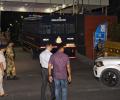
Tahawwur Hussain Rana, the key mastermind of the 2008 Mumbai terror attacks, is being interrogated for eight to ten hours daily by the National Investigation Agency (NIA) to unravel a larger conspiracy behind the strikes. Rana, who was extradited from the US, is being grilled by NIA investigators to probe a larger conspiracy behind the attacks, in which 166 people were killed and over 238 injured. He is being allowed to meet his lawyer and is being provided with basic necessities. The investigators hope to find some important leads on his travels in parts of northern and southern India days before the carnage in Mumbai on November 26, 2008.

Even after Lashkar-e-Tayiba's David Coleman Headley identified his Inter-Services Intelligence handler Major Iqbal as Chaudhery Khan, mystery continues to shroud his presence. Hoping to get another access to Headley, the National Investigation Agency on the 26/11 money trail, is positive of hunting down the major. Vicky Nanjappa reports.
While Pakistani handler Sajid Mir and ISI's Major Iqbal are both in the dock in the Chicago court where Tahawwur Rana is being tried for his role in the 26/11 terror attacks, Mir remains Pakistan's biggest worry. Vicky Nanjappa reports.

Tahawwur Hussain Rana, a Pakistan-born Canadian national and close associate of David Coleman Headley, is set to be extradited to India from the US. Rana was involved in the planning and execution of the 2008 Mumbai terror attacks, which killed 166 people, including six Americans. He assisted Headley in obtaining a visa for India, established a front company in Mumbai, and helped in reconnaissance of targets in Mumbai and New Delhi. Rana was convicted in the US for providing material support to Lashkar-e-Taiba (LeT) and sentenced to 14 years in prison. His extradition to India will allow authorities to question him about his involvement in the Mumbai attacks and potentially uncover new information about the role of Pakistani state actors.
The National Investigation Agency (NIA) has begun questioning Tahawwur Hussain Rana, the mastermind behind the 2008 Mumbai terror attacks, to uncover the larger conspiracy behind the deadly strikes. Rana, who was extradited from the US, is being held at the NIA headquarters in New Delhi. The interrogation is focused on his possible connection with the Lashkar-e-Taiba (LeT) and his suspected links with the Pakistani spy agency Inter-Services Intelligence (ISI).
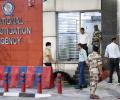
Tahawwur Hussain Rana, the mastermind behind the 2008 Mumbai terror attacks, has been taken into 18-day custody by the National Investigation Agency (NIA) in India. Rana was extradited from the United States after years of legal battles and will be questioned to unravel the complete conspiracy behind the attacks.
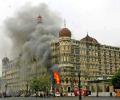
Tahawwur Rana, accused of involvement in the 2008 Mumbai terror attacks, is expected to be extradited to India from the United States soon. The US Supreme Court denied his last-ditch effort to stop his extradition, moving him closer to being handed over to Indian authorities. Rana's extradition is expected to help probe agencies expose the role of Pakistani state actors behind the attacks and shed new light on the investigation. He is associated with Pakistani-American terrorist David Coleman Headley, one of the main conspirators of the 26/11 attacks.
Tahawwur Hussain Rana, a key accused in the 26/11 Mumbai terror attacks, was brought to India on Thursday after being "successfully extradited " from the US, the National Investigation Agency (NIA) said. The 64-year-old Canadian citizen of Pakistani origin landed in Delhi in a special plane on Thursday evening, ending days of speculation of when and how he will be extradited, officials said. The NIA said in a statement that it had secured the successful extradition after years of sustained and concerted efforts to bring to justice the key conspirator behind the 2008 mayhem that claimed 166 lives. Rana is accused of conspiring with David Coleman Headley alias Daood Gilani, and operatives of designated terrorist organisations Lashkar-e-Taiba (LeT) and Harkat-ul-Jihadi Islami (HUJI) along with other Pakistan-based co-conspirators, to carry out the the three-day terror siege of India's financial capital.
'He is the key to unravel the 26/11 conspiracy.'

Pakistani-origin Canadian businessman Tahawwur Rana, a key accused in the 26/11 terror attacks case, stayed at a hotel in Mumbai's Powai area for two days in November 2008 ahead of the attacks, where he discussed about the crowded places in south Mumbai with a witness in the case, the police said on Tuesday.

Both Major Iqbal and Major Pasha are shown as wanted accused in the charge sheet filed by the city police's crime branch in the case.
According to these documents, unsealed after Chicago Tribune petitioned before the court, Major Iqbal, said to be an ISI officer, also gave him Indian currency notes for his operation in India.
Pakistan national Major Iqbal, who has been indicted by United States federal prosecutors for his involvement in the Mumbai terrorist attack, was a serving Inter Services Intelligence officer, a media report said on Wednesday.
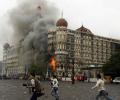
Pakistani-American terrorist David Coleman Headley on Thursday exposed how Inter-Services Intelligence and Lashkar-e-Tayiba majorly funded terror operations in India.
The dossier has also named another officer, who has retired as a Major. The two officers have been referred as 'Major Iqbal' and 'Major Samir Ali,' sources said. The dossiers were handed over during the Indo-Pak Foreign secretary level talks.

Here's what Headley told the court on Thursday:

Here are the highlights from the Lashkar terrorist's deposition on Day 4.

Here are the revelations made by Headley so far in the deposition
Rana's extradition is barred under Article 6 of the United States-India extradition treaty with India because he has previously been acquitted of the offences for which extradition is sought, and under Article 9 of the Treaty because the government has not established a probable cause to believe that Rana committed the alleged offences, his attorneys argued.

However, the Pakistani-American LeT commander Zakiur Rehman Lakhvi stopped him, saying something more "adventurous" was in store for him.

Pakistani-American terrorist David Coleman Headley on Tuesday continued his deposition for the second consecutive day before a court in Mumbai.
Pakistan's Inter-Services Intelligence should focus on nabbing some of the world's most wanted terrorists -- Ayman al-Zawahiri, Siraj Haqqani, Major Iqbal, Sajid Mir and Dawood Ibrahim -- hiding in the country, a United States foreign policy magazine has demanded.
Pakistan spy agency Inter-Services Intelligence was planning recruitment of retired Indian military personnel to penetrate into the system and then use them for its anti-India activities, according to Lashkar-e-Tayiba operative David Headley.
In his last surveillance trip to India before 26/11, David C Headley, the Mumbai attacks terror accused, at the instruction of his Pakistani handler Major Iqbal bought 15 red bracelets to be worn by the attackers so that they can disguise as Hindus, according to released unsealed court documents.
Indian agencies are rejoicing over statements made by 26/11 accused David Headley, but they also know that the task ahead, especially for the interrogators, is not an easy one.
Clinching evidence of key Mumbai attack accused David Headley's links with the Inter-Services Intelligence and Jamaat-ud Dawa is provided by his diary, which contains telephone numbers of two Major-rank officers of the Pakistani Army besides some others who handled the 26/11 attackers.
Jamaat-ud Dawa chief Hafiz Muhammad Saeed has moved the Lahore high court seeking direction for the Pakistan government to defend him, Inter Services Intelligence officians and others before a United States court, which has issued summons to them in connection with the 2008 Mumbai terror attacks.
A top United States attorney has vowed to bring to justice the other six Pakistan-based defendants who have been named in the indictment filed by federal prosecutors before a Chicago court in Mumbai case. The six defendants are Al Qaeda leader Illyas Kashmiri, Lashkar-e-Tayiba commander Sajid Mir; Major Iqbal, said to be a serving Inter Services Intelligence officer and Abdur Rehman Hashim Syed alias Pasha, another LeT leader.
Mumbai attack co-accused David Headley on Thursday told a US court that a Pakistani Navy man was present during discussions with his ISI handler Major Iqbal on landing sites and arrival of Lashkar-e-Tayiba terrorists by sea.
The mysterious Major Iqbal, who India suspects is a Pakistani army officer in the Inter-Services Intelligence, has now been identified as Chaudhery Khan by Mumbai terror accused David Headley. Headley also confirmed that Khan was the mastermind of the 26/11 attacks.
With the arrest of Lashkar-e-Tayiba operative David Coleman Headley the attack on the offices of Danish newspaper Jyllands-Posten that published the Prophet Mohammed cartoons was averted. But the masterminds of this attack are the ones who planned and executed the 26/11 strikes -- Sajid Mir, Abu Qahafa, Mazhar Iqbal and Major Iqbal. The US court may have named them conspirators in the Mumbai attacks, but the danger is far from over. They are still at large in Pakistan.
 © 2026 Rediff.com - Investor Information - Advertise with us - Disclaimer - Privacy Policy - Sitemap - Feedback - About us - Terms of use - Grievances