
'I don't think the government will sacrifice such a fine institution for monetary gains.'

A rocket designed and developed by ISRO is being transferred to industry for production.
Nine ISRO associations want to know whether this is simply an effort to expand India's industrial capacity or part of a larger policy under which ISRO itself will eventually withdraw from rocket manufacturing.

'It seems the prime minister may not be given the real picture about the country's space sector and ISRO. So, we are having the seminar to bring the issues to his notice.'

Their message is blunt: Public scientific wealth should not be transferred at what they describe as 'throwaway prices'.capability, recruitment, promotional avenues and the voice of its employees.

The larger question raised by the associations is simple: If ISRO is no longer to manufacture launch vehicles, what will happen to the institution's accumulated capabilities and the people who built them?

'IN-SPACe like an octopus is stretching its tentacles everywhere and choking ISRO.'

'He didn't touch upon the core questions raised by the nine employee associations.'

There is no answer to the question of how IN-SPACe invited EOIs for ISRO's mature rockets and whether it was based on any government policy decision.

Nine employee associations at ISRO have written to Chairperson V Narayanan, seeking official clarification on the proposed transfer of manufacturing and operational functions to private entities. They raised concerns about ISRO's future role, employee consequences, and recruitment, following comments by IN-SPACe chairperson Pawan Goenka regarding ISRO's eventual exit from launch vehicle manufacturing.

'It is to observe the Sun continuously that you have the Aditya L1 mission.' 'It is in a position from where it can observe the Sun continuously.'

'It is not economical to operate GSLV-Mk II due to its cost and complexity. Future launches to be managed with LVM3.'
ISRO has successfully launched EOS-05, India's first geo-imaging satellite, into a precise sub-geosynchronous transfer orbit using a GSLV rocket. This 2,367 kg satellite, the heaviest ever carried by a GSLV, will provide real-time imagery for applications in agriculture and disaster management from an altitude of 36,000 km.

'ISRO will not manufacture any launch vehicles. That will all be done by the private sector or public sector undertakings.'

It is about proving that the agency can still deliver when the stakes are high.

The Department of Space has directed that requests for voluntary retirement or resignation from Group 'A' Scientific and Technical personnel associated with the prestigious Gaganyaan human spaceflight programme and other important missions should not be accepted as a matter of routine.
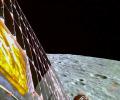
NASA has invited ISRO to join its ambitious Moon Base mission to establish a permanent lunar outpost near the Moon's South Pole, aiming for scientific discoveries and future deep space exploration. This invitation follows discussions at the Civil Space Joint Working Group meeting in Bengaluru, where both nations also advanced cooperation under the Artemis Accords and the TRUST initiative.

Keralam-based Genrobotics Innovations, known for its Bandicoot robots used in hazardous underground environments, has secured a project from ISRO's U R Rao Satellite Centre. The company will develop a high-precision articulated boom arm system for satellite missions, marking its entry into advanced aerospace engineering and contributing to India's commercial space programme.

'An instruction came from somebody in Delhi saying, "don't go with the launch".'

A US appeals court has upheld a $562.5 million arbitral award, which has grown to over $2 billion with interest, in favour of Devas Multimedia against Antrix Corporation, the commercial arm of ISRO, ruling that US courts have jurisdiction despite Antrix being government-owned.

Buying a mature rocket technology gives companies the designs and hardware know-how, but not necessarily the decades of engineering wisdom needed to make it work.

'We are ready to help Prime Minister Modi achieve his vision of 100 per cent connectivity throughout India -- a vision all of our company, including Elon, shares,' Lauren Dreyer, vice-president of Starlink business operations at SpaceX, said at the pre-business day of the India Mobile Congress in New Delhi.

ISRO has issued an Announcement of Opportunity, inviting Indian scientists and researchers to submit proposals for accessing data from its XPoSat Mission. Launched in January 2024, XPoSat is India's first satellite dedicated to X-ray polarimetry measurements, designed to study extreme astronomical X-ray sources like black holes and neutron stars, thereby enhancing understanding of celestial emissions.

A government bill proposing to widen the remit of the Indian Statistical Institute (ISI) is facing scrutiny from Members of Parliament. Concerns have been raised that the Indian Statistical Institute Bill, 2026, could reduce the premier institute's autonomy. The bill, currently under examination by a Parliamentary Standing Committee on Finance, aims to incorporate ISI as a 'body corporate' to strengthen governance and promote academic excellence, but critics fear increased government control.
Prof Rajeev Ahuja, Director of IIT Ropar, has been awarded the National Systems Gold Medal by the Systems Society of India. This prestigious award has previously been conferred upon eminent scientists like Dr A P J Abdul Kalam and Dr K Sivan, recognising significant contributions to Systems Science and Engineering.

A high-level committee investigating the failures of ISRO's PSLV rockets, which have impacted strategic satellite missions, has yet to release its report and recommendations, raising concerns about the future of the ageing launch vehicle.

US Ambassador to India, Sergio Gor, highlighted the evolving US-India space partnership, moving from cooperation to "co-creation" at the Bengaluru Space Expo. He emphasised joint design, funding, and co-authoring the future of human discovery, citing the NISAR satellite and India's participation in the Artemis Accords as key examples of this growing synergy.

'When a glacier collapse or a major flood event does occur, the water will simply reclaim its original path, and anything built in that path will be swept away.'

Group Captain Angad Pratap, one of the astronauts for India's Gaganyaan mission, addressed the programme's delays, stating they are inherent in developing human spaceflight. He emphasised the need for patience to ensure the mission's eventual success and detailed his involvement in designing the human-machine interface. ISRO plans uncrewed missions before the crewed launch, now targeted for 2027.

Police in Bengaluru have launched an investigation after an unmanned aerial vehicle was allegedly spotted flying over the ISRO's ISITE campus, a designated 'No Drone Zone'. The incident occurred on May 2, prompting a complaint by a CISF sub-inspector.

The National Testing Agency (NTA) has moved to a new office and deployed CISF security to safeguard confidential areas, following a major controversy over the NEET paper leak and administrative lapses. This move aims to implement foolproof security arrangements and restore public trust in the examination system.
'The prime minister has given us the task of taking at least 300 satellites to orbit in the next five to six years.'
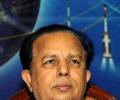
ISRO and TIFR have signed a Memorandum of Understanding to collaborate on space science, technology, and exploration, marking a significant milestone for India's space programme.
JAKSON Group has appointed Ivan Saha as the Managing Director of its integrated Solar Manufacturing business. Saha, with over 31 years of experience in the semiconductor, solar, and sustainable energy sectors, will oversee technology, operations, and business growth, supporting JAKSON's expansion and backward integration plans in the solar value chain.

The task force's move to directly solicit views from students, parents and teachers marks a parallel effort to bring education stakeholders into the reform process.
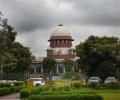
The Supreme Court has indicated that its judges may personally visit the National Testing Agency (NTA) to examine its upgraded facilities aimed at preventing recurring NEET paper leaks. This unusual move underscores the court's emphasis on institutional strengthening and permanent solutions. The NTA informed the bench that it has overhauled its system, while a high-powered panel is also working on structural reforms to ensure foolproof examination processes.

The question for the next 20 years is not whether India can become a $5 trillion or $10 trillion economy. Those are attractive targets, but the real question is whether India can create enough productive jobs, educate its children properly, make its cities liveable, and give hundreds of millions of people a substantially better life, asserts Ramesh Menon.

One of the important topics of discussion between the two leaders is expected to be the Northern Sea Route and the Chennai-Vladivostok Maritime Corridor.

The Indian government has notified the Legal Metrology (Indian Standard Time) Rules, 2026, establishing IST as the sole reference for all official purposes nationwide. These rules, effective in 180 days, aim to synchronise digital systems, reduce reliance on foreign time sources, and enhance coordination across critical sectors like banking, railways, and telecommunications.

ISRO stated that the disengagement of at least one contact -- in both the main and redundant paths -- of a connector led to the failure of NVS-02.

A recent study by scientists indicates that the Hindu Kush-Himalaya region is experiencing increased frequency and intensity of extreme weather events due to climate change, including rapid glacial melting and changing rainfall patterns. However, the research also cautions against solely blaming climate change, highlighting that human factors like population growth, commercial activities, and non-enforcement of regulations contribute significantly to the vulnerability and impact of these disasters. The study points out that many devastating floods originate from small glaciers and rain-fed streams, exacerbated by encroachment on unstable slopes and floodplains.
