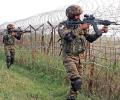
Pakistan troops have violated the ceasefire agreement for the 11th consecutive night, firing on Indian posts along the Line of Control (LoC) in Jammu and Kashmir. The firing began in Kupwara and Baramulla districts and spread to other sectors, including Poonch, Rajouri, Mendhar, Naushera, Sunderbani, and Akhnoor. The Indian Army responded promptly and proportionately. The ceasefire violation comes despite a recent phone call between the Directors General of Military Operations (DGMOs) of India and Pakistan on April 29. This marks the latest escalation of tensions between the two countries, following a terror attack in Pahalgam in April.
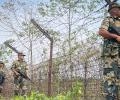
The Border Security Force (BSF) is set to receive government approval for 16 new battalions, comprising around 17,000 personnel, and two forward headquarters for its western and eastern commands. The move aims to strengthen security along the India-Pakistan and India-Bangladesh borders, respectively. The new battalions and headquarters are part of a larger plan to address evolving security dynamics and challenges in the border regions.

The Border Security Force (BSF) destroyed five Pakistani posts and a terrorist launch pad across the Jammu border in an operation, an officer said. The BSF retaliated after Pakistan targeted civilian areas and Indian establishments in a systematic manner, the officer said.

Suspected drones were observed along the International Border in Samba district of Jammu region on Monday, while armed forces downed a 'surveillance drone' in Punjab's Jalandhar district.

A 30-minute blackout rehearsal was conducted in the Ferozepur Cantonment area in Punjab on Sunday evening amid heightened tension between India and Pakistan following the April 22 terror attack in Pahalgam. The drill, which took place from 9 pm to 9:30 pm, involved turning off all lights in the area after a siren went off. The exercise was part of a routine preparedness exercise to ensure the effectiveness of blackout procedures during potential war threats. Police and security forces have also increased vigilance in the area, with checkpoints set up at strategic locations and social media activities under surveillance.

The closed-door luncheon meeting came amid escalating tensions between Israel and Iran with Trump exploring Washington's possible involvement.

Emotional scenes were witnessed across the country as the last rites of those killed in shelling by Pakistan during the recent military conflict with India were performed on Sunday.

The Border Security Force (BSF) remains on high alert along the International Border (IB) and has not let its guard down, BSF Inspector General, Jammu Frontier, Shashank Anand said on Tuesday. Operation Sindoor, aimed at preventing infiltration attempts, continues as Pakistan cannot be trusted, he added. Anand highlighted the BSF's robust response after the April 22 Pahalgam terror attack, including destroying multiple terror launch pads and thwarting infiltration attempts.

India has accused Pakistan of breaching an understanding reached earlier on Saturday to stop military actions. Foreign Secretary Vikram Misri said there have been repeated violations of the understanding since the evening, and that the Indian armed forces are giving an appropriate response.

'I hear that there are some 10,000 Indians stuck in Iran, including nearly 4,000 students from Kashmir. But, I do not know any of them. Here I am all by myself and the embassy has asked me not to venture out far from my hotel. People here are going about their daily lives despite the bombings'

Starc, who won the IPL last year with Kolkata Knight Riders, said having lack of information was also among the reasons he chose not to go back to India.
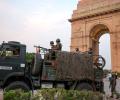
Bollywood celebrities have extended support to the nation and offered prayers for the safety and well-being of the people.

The Indian Army effectively repulsed multiple drone attacks and other munitions launched by Pakistan's armed forces along the western border on the intervening night of May 8-9. Pakistan also violated ceasefire along the Line of Control in Jammu and Kashmir. The Indian Army said it responded with force, asserting that all nefarious designs will be countered.

The Indian Army has released a booklet on Operation Sindoor, which was launched to avenge the April 22 ghastly Pahalgam attack in which Pakistan-backed terrorists brutally killed 26 civilians, mostly tourists, and left many injured.

US Secretary of State Marco Rubio on Thursday spoke separately with External Affairs Minister S Jaishankar and Pakistani Prime Minister Muhammad Shehbaz Sharif, emphasising the need for de-escalation and reiterated his calls for Pakistan to take concrete steps to end any support for terrorist groups.

Several Indian states bordering Pakistan have implemented stringent security measures, including school closures, blackouts, and cancellation of leave for police and administrative personnel, in response to escalating tensions between India and Pakistan. These measures were taken after India conducted airstrikes on terror infrastructure in Pakistan in retaliation for the April 22 Pahalgam massacre. Punjab, Haryana, Rajasthan, Gujarat, and West Bengal have all implemented these precautionary measures.
'Unlike the surgical strikes and the Balakot air strikes across the LoC, we have gone further inside Pakistan and raised the bar of escalation.'
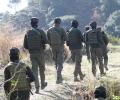
Security forces have intensified search operations using aerial surveillance and sniffer dogs following a night-long cordon after fresh reports of suspected movement of three individuals, believed to be terrorists, who escaped a recent encounter in Jammu and Kashmir's Kathua district, officials said.
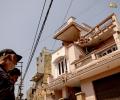
The casualties were reported hours before India and Pakistan agreed to end hostilities, which soared after the Indian Armed Forces hit terror launchpads in Pakistan and Pakistan-occupied Kashmir earlier this week in response to the Pahalgam attack.
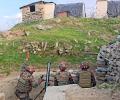
'With a military-led strategy to counter terrorism emanating from Pakistan, India has clearly signalled that it would respond decisively to future terrorist threats.'
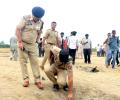
Indian Armed Forces brought down a number of these drones using kinetic and non-kinetic means.

An IndiGo flight from Delhi to Srinagar encountered severe turbulence near Pathankot on Wednesday, prompting the crew to request permission to enter Pakistani airspace to avoid the weather. However, their request was denied. The aircraft, an A321 neo operating flight 6E 2142, experienced hailstorm and turbulence, triggering various warnings and forcing the autopilot to trip. The crew managed to safely land the aircraft in Srinagar after a harrowing experience. The incident is under investigation by the Directorate General of Civil Aviation (DGCA), which confirmed there were no injuries to passengers but noted damage to the aircraft's nose radome.

Official confirmation from the government is still awaited, and more details are expected soon.

The Director Generals of Military Operations (DGMOs) of India and Pakistan on Monday deliberated on various aspects of the May 10 understanding reached between the two sides on cessation of hostilities.

The Attari-Wagah border crossing point between India and Pakistan was shut completely on Thursday following a week-long heavy rush of people from either side to cross over after the Union government ordered all Pakistani citizens with short-term visa to leave India in the wake of the Pahalgam terror attack, sources said.

The Indian Air Force conducted precision strikes on terror hideouts in Pakistan, targeting a Jaish-e-Mohammad communication network housed in a primary health centre in Tehra Kalan village. The communication setup was essential for planning and coordinating activities with infiltrated terrorists in Jammu and Kashmir. The strikes aim to dismantle the communication network and hinder the terrorists' ability to operate.

Following the Pahalgam terror attack, the Indian Army launched Operation Sindoor, targeting Pakistani terror infrastructure and posts in the Poonch sector of Jammu and Kashmir. Over 600 artillery shells were fired in three days, decimating 20 Pakistani posts used for infiltrating terrorists into India. The precision strikes crippled enemy logistics, material, and morale, prompting retaliatory attacks by Pakistan on civilian areas. Despite the retaliation, Indian Army officers described the operation as a success, highlighting the high morale of the troops and the effective coordination between artillery and air defense units. The article details the intensity of the artillery shelling and the impact on both sides, highlighting the strategic significance of the Poonch sector and the ongoing tension between India and Pakistan.

Congress leader Udit Raj criticized party colleague Shashi Tharoor for his reported remarks that India breached the Line of Control (LoC) for the first time during the 2016 surgical strike on a terror base, saying he should be declared a "super spokesperson of the BJP". Raj argued that India had crossed the LoC in 1965 and 1971, and that the UPA government had also conducted surgical strikes. Tharoor had reportedly said that India breaching the LoC to conduct a surgical strike was "something we had not done before". This is not the first time Raj has criticized Tharoor for his comments on India-Pakistan relations. Last month, Raj had hit out at Tharoor for his reported "no country has 100-per cent foolproof intelligence" remarks, questioning how Tharoor could be giving the BJP a "clean chit" on the Pahalgam terror attack. Tharoor had hit back at Raj, saying the latter is a former BJP MP and "is better qualified to understand who speaks for the BJP".
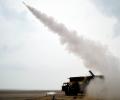
The Indian Army in the intervening night of May 8 and May 9 successfully repelled and responded to multiple drone attacks by Pakistan along the western border and the Line of Control (LoC) in Jammu and Kashmir.

Villagers living near the International Border and Line of Control in Jammu are on high alert following the recent terror attack in Pahalgam, preparing underground bunkers and accelerating crop harvesting. The incident has heightened security concerns despite a renewed ceasefire agreement between India and Pakistan in 2021. Residents are demanding swift action against the perpetrators and their handlers.
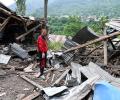
Drones were sighted and explosions were heard in Jammu and Kashmir on Friday, a day after India thwarted attempts by the Pakistan military to attack Indian military installations using drones and missiles. The drones were also engaged in Udhampur and Nagrota of Jammu and Punjab. Heavy cross-border shelling started along the International Border in Suchetgarh and Ramgarh sectors of Jammu and Samba districts. Chief Minister Omar Abdullah appealed to residents to stay indoors and ignore rumors.
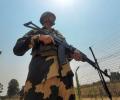
The incident took place on the intervening night of April 8-9 near Dorangla village in Gurdaspur district. The Border Security Force (BSF) has issued an "alert" all along the 553 km of this front in Punjab and suspension of farming around the blast area.

Tensions between the Congress and its leader Shashi Tharoor escalated on Thursday with the party saying he was very much part of their family but had erred in claiming that surgical strikes against Pakistan were held for the first time in 2016.

Amid concerns of espionage, the Rajasthan administration has intensified security measures along the India-Pakistan border, with authorities in Jaisalmer and Sri Ganganagar banning the use of Pakistani SIM cards.
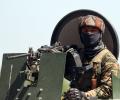
Security forces in Jammu and Kashmir are continuing a multi-agency operation to track down three terrorists who have escaped multiple encounters. The operation has entered its 12th day and has seen the deployment of additional troops, aerial surveillance, and a crackdown on terrorist supporters.

Security checks have been intensified in Paltan Bazaar, a well-known market in Dehradun, following concerns about the unauthorised sale of military uniforms on Friday.
India on Thursday night swiftly foiled Pakistan's attempts to hit various key Indian installations including military stations at Jammu, Pathankot and Udhampur with drones and missiles, the defence ministry said.

The Pakistan Army continued shelling along the Line of Control (LoC) in four sectors of Jammu and Kashmir, prompting a befitting response by the Indian Army, officials said on Thursday. The intensity of cross-border firing was less than Wednesday, when Pakistan Army carried out one of the most intense artillery and mortar shelling in years targeting the forward villages in J-K following missile strikes by India as part of 'Operation Sindoor'.
The Border Security Force (BSF) launched "Operation Sindoor" in retaliation to unprovoked firing and shelling by Pakistani Rangers along the International Border (IB) in Jammu. BSF troops destroyed three terrorist launch pads and targeted 76 Pakistani border outposts and 42 forward defence locations. The BSF action came after Pakistan launched heavy firing and shelling on 60 Indian posts and 49 forward positions, reportedly providing cover for an attempted infiltration by 40-50 terrorists.

A series of blasts took place in Srinagar city as the security agencies brought down a drone that was seen hovering over Batwara area of the city, close to an army installation, officials said.
 © 2026 Rediff.com - Investor Information - Advertise with us - Disclaimer - Privacy Policy - Sitemap - Feedback - About us - Terms of use - Grievances