'If Modi had followed Vajpayee in Kashmir, then there would have been absolutely no problem in Kashmir.'

In the book, 'Where Borders Bleed: An Insider's Account of Indo-Pak Relations', Rajiv Dogra says that a judge had told him of this.

'What is required is to make Pakistan less war-like and more modest in its ambitions. To normalise with India and to reduce the State's fondness for religion.' 'It is pragmatism and not charisma that it required and it is by being boring and not heroic that this can be achieved.' 'This is the moment of realisation which brings the Pakistani leader into conflict with the army.' 'Imran Khan will learn the lesson in time,' says Aakar Patel.
'Jaish is known for its fidayeen activities.' 'This well trained human resource backed by military-based training makes the JeM an obvious choice over the LeT and HM.'

Amit Shah now enters an unfamiliar and interesting phase of his political career. His success or failure will henceforth be assessed based on his performance as a key minister, points out Shekhar Gupta.
'Past experience shows us that cross-border strikes have not prevented Pakistan from continuing with further terror attacks.'
'The osmosis between Hinduism and Islam that really gave birth to the Hindustani or Indo-Islamic civilisation was due to the conversation between Muslim mystics and yogis.'

'Peace talks with Pakistan are like accepting a dinner invitation from cannibals and hoping to return alive,' says Colonel Anil A Athale (retd).

Former Research and Analysis Wing chief AS Dulat has claimed that everybody in Kashmir makes money off the unstable situation in the region, alleging that it is 'in their DNA'.

'Although India has a lot more to offer in terms of tourism other than the Taj, yet there is nothing compared to the Taj Mahal.'

'Bolstering India's conventional military capability against China is in America's strategic interest,' says military historian Colonel Anil A Athale (retd).
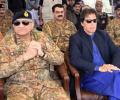
'Any conventional conflict could trigger a nuclear war with results that neither India nor Pakistan could survive easily.' >A revealing excerpt from Shuja Nawaz's The Battle For Pakistan: The Bitter US Friendship And A Tough Neighbourhood.
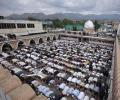
The appointment of General Raheel Sharif as the new army chief of Pakistan has come as a surprise to many. Rajiv Dogra, former ambassador and India's last Consul General to Karachi, speaks to Aabhas Sharma about the appointment, what it says about the priorities of Pakistan Prime Minister Nawaz Sharif and most importantly, what it means for India.

Chief Pakistan prosecutor in the Mumbai terror attacks in 2008, Chaudhry Azhar says the bail will lead to unusual delays in the case. Shahzad Raza reports from Islamabad.
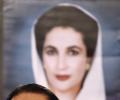
In a golden moment in Pakistan's chequered 66-year political history, President Asif Ali Zardari on Sunday left the presidency after successfully completing his five-year term, paving the way for India-born Mamnoon Hussain to take over.

Girls in the Kashmir valley hurling defiance at the security forces will detract from the legitimacy of India's response and its standing in the world, says Ajai Shukla.
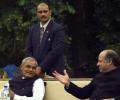
Pakistan Prime Minister Nawaz Sharif says improving ties with India is "my favourite subject" even as he once again sought America's intervention in the Kashmir issue.

Nawaz Sharif's appointment of a new army chief will influence India-Pakistan relations
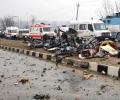
'A resurgent Jaish could be a reflection of the Pakistani security establishment's view that with the region moving ever closer to a post-US Afghanistan, it is time to redirect attention to Kashmir.'

'He knows India is going nowhere.' 'India will never let go of Kashmir, so he wants to settle with India.' 'Settle honourably with peace, dignity and justice.'

'Nawaz Sharif asked: "What if I invited him and he declined?"' 'I said I will check.' 'Vajpayee liked the idea. He said I should see him on my return.' Shekhar Gupta reveals how Sharif wanted to make peace, but was tripped by the army and notes the lessons it has for Imran Khan.

'Vajpayee was the first prime minister to visit the battlefield at the height of conflict,' recalls Colonel Anil A Athale (retd).

It is time to forge a credible New Delhi-Srinagar axis, says Ajai Shukla.

Pakistan's new Army Chief has begun setting the stage to act against groups like LeT and JeM

I have always believed that the Nehruvian vision of giving a separate status to Jammu and Kashmir was a flawed one, says BJP's Arun Jaitley.
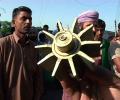
New Delhi's decision not to call for a flag meeting underlines its conviction that the military cost will soon become too high for Pakistan.

'Once the violence is contained, the politicians must play their role, but unfortunately that is not happening.'

'Kulbhushan Jadhav is a very sad case.' 'I think Pakistan handled this issue very clumsily.' 'They gave too much of publicity and also said that they will hang him.' 'Now obviously, they are not going to hang him.'

In comments that are likely to create a political storm over the next few days, former Research and Analysis Wing chief A S Dulat has reveled that former prime minister Atal Bihari Vajpayee had expressed his discontent over the 2002 Gujarat riots and called it "our mistake".
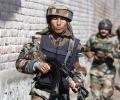
'After General Raheel Sharif took on the Tehrik-e-Taliban Pakistan, some sections of the military establishment may have felt unease as to whether the crackdown could be extended against friendlier 'non-State' actors like the Lashkar-e-Tayiba.'
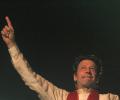
Both Messrs Imran Khan and Tahirul Qadri claim to march independently, but most of Pakistan believes they are marching to the Army's tune

Sanjeev Nayyar suggests 16 measures by which we can tackle our unrelenting and untrustworthy neighbour.
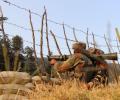
'India has to understand that the permanent state of war that exists between India and Pakistan has to be expected,,' says Colonel Anil A Athale (retd). 'The only way to ensure peace or absence of war is to maintain a militarily-dominant position over Pakistan.'
'By beheading an Indian soldier, the Pakistan army has demonstrated its proclivity for barbaric medievalism.' 'The strategies adopted and the punishment inflicted by India must be made progressively more stringent with every new act of terrorism till the cost becomes prohibitive for Pakistan,' says Brigadier Gurmeet Kanwal (retd).

Saroj Kumar Rath, author of the newly-published book Fragile Frontiers: The Secret History of Mumbai Terror Attacks, speaks to Rediff.com's Vicky Nanjappa.
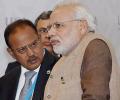
India should adopt a pro-active strategy on Pakistan -- catalysing, facilitating and making room for a change in its anti-India posture.

A grieving Pakistan's policy shift towards the Taliban has comes at a great cost, says Shahzad Raza.
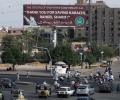
'New Delhi feels that given the internal dynamics in Pakistan and the overwhelming powers wielded by the army, one will have to wait for better times to see any meaningful progress in the India-Pakistan relationship,' says Ambassador G Parthasarthy.
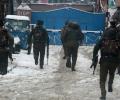
'We need to be in a perpetual state of aggression, and able to swiftly change the goal posts to keep Pakistan in a state of imbalance,' argues Sanjeev Nayyar.
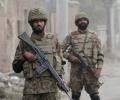
India must watch for signs after Peshawar that Pakistan is waking up to the dangers of Islamism, muses Ajai Shukla
 © 2026 Rediff.com - Advertise with us - Disclaimer - Privacy Policy - Sitemap - Feedback - About us - Terms of use - Grievances