
India has rejected any role for third parties in resolving its border dispute with Nepal, following comments from Nepal's Prime Minister suggesting involvement of China and the UK.

Russian President Vladimir Putin stated that Moscow would not interfere in the "delicate" bilateral relations between India and China, expressing confidence in their ability to resolve border disputes amicably. He also discussed Russia's independent partnerships with both nations, touched upon India-Pakistan ties, and highlighted ongoing and proposed defence cooperation with India, including the BrahMos missile and a potential Su-57 fighter jet project.

Nepal has reiterated its commitment to resolving the border issue with India through diplomatic channels, emphasising historical agreements and understanding.
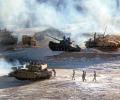
While tensions have eased at several friction points and mechanisms for managing the boundary have been reactivated, underlying differences persist. Disputes over naming practices in Arunachal Pradesh, continued infrastructure development on both sides, and unresolved questions regarding patrolling rights indicate that the structural gap remains, notes Dr Kumar.

Assam Chief Minister Himanta Biswa Sarma has urged his Arunachal Pradesh counterpart, Pema Khandu, to order an inquiry into a recent firing incident along the inter-state border that injured 12 people from Assam. The incident occurred amidst ongoing efforts to resolve long-standing boundary disputes between the two northeastern states, with Sarma emphasising the need for cooperation despite the setback.

Former CDS Anil Chauhan stated that China poses a long-term and comprehensive challenge to India, with the boundary issue remaining unresolved due to differing perceptions of the Line of Actual Control. However, he emphasised that India's ties with Beijing cannot be solely defined by border disputes, advocating for engagement through platforms like SCO and BRICS. He also highlighted the broader global geopolitical flux and instability in India's neighbourhood as significant security concerns, stressing the need for self-reliance.

A fresh clash erupted between protesters from Assam and Arunachal Pradesh in Dhemaji district, leading to police firing in the air, as an indefinite economic blockade against Arunachal Pradesh entered its second day over land encroachment issues and an earlier firing incident.

At the border, places that you had just seen on a map, suddenly acquire a life. Looking at the vast expanse of quiet land, you realise an emotional connect, a sense of belonging binds you to a piece of land which is not merely territory, but a part of who you are.
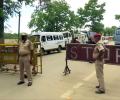
At least 12 people from Assam were injured in alleged firing by miscreants from Arunachal Pradesh along the interstate border in Dhemaji district on Monday over encroachment of land, the police said.

Under the agreement reached between the two sides, Karbi community farmers from Assam will be allowed to cultivate and tend their crops for one agricultural season in fields claimed by Meghalaya.

Karnataka and Maharashtra have bickered over a disputed border for more than half a century.
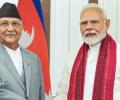
Nepal's claim on Lipulekh and Kalapani reopens a 200-year-old border dispute, while historical maps and treaties show the area belongs to India, asserts Lieutenant General Shakti Gurung (retd).

The Nepalese foreign minister was speaking to the media a day after holding wide-ranging talks with his Indian counterpart S Jaishankar that focused on ways to further expand ties in diverse sectors, including trade, critical technology, connectivity and energy.
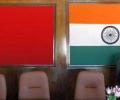
China said that "sound and stable ties" serve the common interests of China and India.

Prime Minister Narendra Modi conveyed to Chinese President Xi Jinping that peace and tranquillity along the frontier remains an "essential" basis for the development of India-China relations, even as the two leaders welcomed "steady progress" in bilateral ties during their talks on the sidelines of the BRICS summit.

Each of Assam's border disputes has its own legacy of claims and counter-claims:

Indian and Chinese armies held their first high-level commanders' flag talks in the Arunachal Pradesh sector, following Special Representatives dialogue. These talks, aimed at maintaining peace along the Line of Actual Control, occurred amidst reports of aggressive military posturing and just days before Chinese President Xi Jinping's visit to India for the BRICS summit.

Assam Chief Minister Himanta Biswa Sarma on Tuesday said he and his Meghalaya counterpart Conrad Sangma will also visit the disputed areas later as a goodwill gesture.

National security advisor Ajit Doval arrived in Beijing on Monday for a two-day visit to take part in the Special Representatives talks on the India-China boundary question with his Chinese counterpart and Foreign Minister Wang Yi.
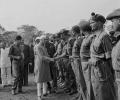
The conversations on July 22 and 23, 1962, meetings in Geneva between V K Krishna Menon, India's defence minister at the time, and Chinese vice premier Chen Yi are important because, had they been followed up, the subsequent border war may perhaps have been avoided, notes former foreign secretary Shyam Saran.

Raut said that he did not need anyone's 'permission' regarding the issue.

In July, tension emerged in Taksing, a remote village in the Upper Subansiri district of Arunachal Pradesh after locals sighted PLA soldiers.

The legislature reiterated the state's stand that the issue is a settled one, and not an inch of land will be given to the neighbouring State.
National Security Advisor Ajit Doval engaged in Special Representatives talks with Chinese Foreign Minister Wang Yi in Beijing, focusing on the India-China boundary question and enhancing bilateral relations. These crucial discussions precede Chinese President Xi Jinping's anticipated visit to New Delhi for the BRICS summit, aiming to address persistent border differences and stabilise ties strained by past conflicts like the Galwan Valley clash.

In recent years, China and Russia have pushed for de-dollarisation within BRICS, which India has resisted. One reason is that India does not want to hurt its relationship with the United States, and another is the fear of China controlling trade because the renminbi is considered the strongest currency in the bloc today.

India on Tuesday firmly rejected Turkish President Recep Tayyip Erdogan's reference to Jammu and Kashmir during his address at the 81st United Nations General Assembly (UNGA), asserting that the issue pertains strictly to the country's territorial integrity and sovereignty.

Nepal's Prime Minister Balendra Shah addressed parliament on the ongoing border dispute with India, stating both countries have agreed to seek resolution through diplomatic means and expert consultation. Shah's remarks about Nepal also encroaching on Indian territories have sparked controversy.


Prime Minister Narendra Modi, in bilateral talks with Chinese President Xi Jinping, emphasized that both nations must show sensitivity to each other's core issues and be guided by mutual respect, sensitivity, and interest. Modi highlighted the critical importance of peace and tranquillity along the Line of Actual Control for the development of India-China relations, while also addressing concerns regarding Taiwan and Tibet.

On the border dispute, officials on both sides say the protracted boundary talks made progress, while both sides made attempts to avert tensions along the 3,488-kilometre-long Line of Actual Control, which remains undefined.

The appearance of the signboard has reignited long-standing concerns over alleged encroachment in the Assam-Nagaland border belt.

Senior Congress leader Shashi Tharoor has articulated India's position on BRICS, advocating for it to be a "non-West, but not anti-West" platform, a stance he believes is crucial for India's national interest. He highlighted the prestige of hosting the BRICS summit, India's responsibility to represent the Global South, and the significance of bilateral meetings, particularly with China and Russia. Tharoor also addressed the strained India-China relations, citing border issues and trade leverage, and discussed the challenges within BRICS, including difficulties in achieving consensus on global issues and trade imbalances, while also considering the need for diversified international relations amidst unpredictable US sanctions.
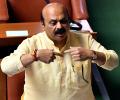
'No village in Maharashtra will go to Karnataka! The state government will fight strongly in the Supreme Court to get Marathi speaking villages in Karnataka including Belgaum-Karwar-Nipani!' said Fadnavis.
National Security Advisor Ajit Doval is in Beijing for the 25th round of Special Representatives talks on the India-China boundary issue with his Chinese counterpart Wang Yi. These crucial discussions precede Chinese President Xi Jinping's anticipated visit to India for the BRICS summit, offering a potential opportunity for a meeting with Prime Minister Narendra Modi. The talks aim to address the long-standing border dispute and recurring tensions, with both sides emphasising the importance of peace and tranquillity for bilateral relations amidst recent reports of aggressive Chinese posturing in Arunachal Pradesh.

Indian and Chinese military officials have held corps commander-level talks in Arunachal Pradesh to review the Line of Actual Control (LAC) situation, following recent Special Representative discussions aimed at de-escalating border tensions and fostering bilateral ties.

India and China have agreed to advance discussions on an "Early and Substantial Harvest" of boundary delimitation and border management during the 25th round of Special Representatives talks between National Security Advisor Ajit Doval and Chinese Foreign Minister Wang Yi in Beijing. Both sides reached an eight-point consensus, committing to the 2005 Agreement on Political Parameters and Guiding Principles for Settlement. Key outcomes include enhancing border management, improving understanding of the Line of Actual Control, establishing new meeting points and hotlines, and continuing cooperation on trans-border rivers and pilgrimage.

China and Bhutan held the 15th Expert Group Meeting to discuss boundary alignment, focusing on areas where there are no disputes, and agreed to maintain the momentum of negotiations.

During the 18th BRICS Summit in New Delhi, Chinese President Xi Jinping and Prime Minister Narendra Modi held a bilateral meeting, outlining a four-point approach for the steady and long-term development of China-India relations. The leaders stressed strategic understanding, win-win cooperation, mutual respect, and inclusive multilateral engagement, reaffirming their commitment to resolving the boundary question and addressing economic concerns. They also discussed global challenges and strengthening people-to-people ties.

Xi brought in asymmetrical power play by stating that India should have 'strategic cognition' and 'strategic judgement made on the basis of the stage of development the two countries are at'. This is a very nuanced way of asserting China's coercive diplomatic posture and reflects Beijing's penchant to unleash border instability at will, restrict rare earth metal exports, exert pressure on India at global and regional orders, asserts China expert Srikanth Kondapalli.

Chief Justice of India Surya Kant stated that while artificial intelligence (AI) can augment judicial reasoning, it cannot substitute judicial conscience, and a permanent apex body is proposed to supervise AI adoption and accountability within the judiciary.
