

Nepal's claim on Lipulekh and Kalapani reopens a 200-year-old border dispute, while historical maps and treaties show the area belongs to India, asserts Lieutenant General Shakti Gurung (retd).
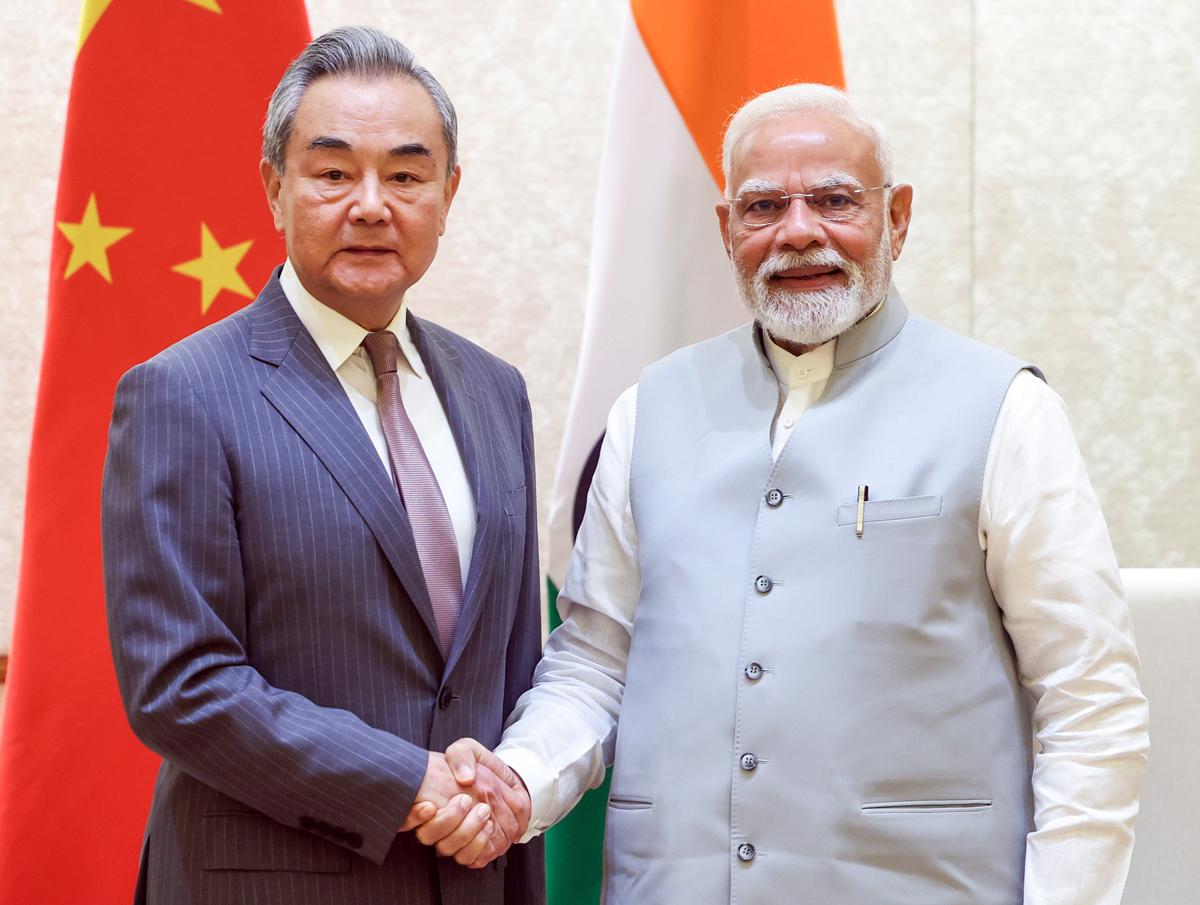
On August 18 and 19 during Chinese Foreign Minister Wang Yi's visit to India, the two countries signed a deal for resumption of trade through the Lipulekh axis.
Nepal was quick to respond with 'The Constitution of Nepal has already incorporated Nepal's official map which clearly establishes that Limpiyadhura, Lipulekh and Kalapani located to the east of the Mahakali river are integral parts of Nepal.'
In support of its statement Nepal quoted the Treaty of Sagauli 1815-1816 signed between British India and Nepal at the end of the Anglo-Gorkha War.
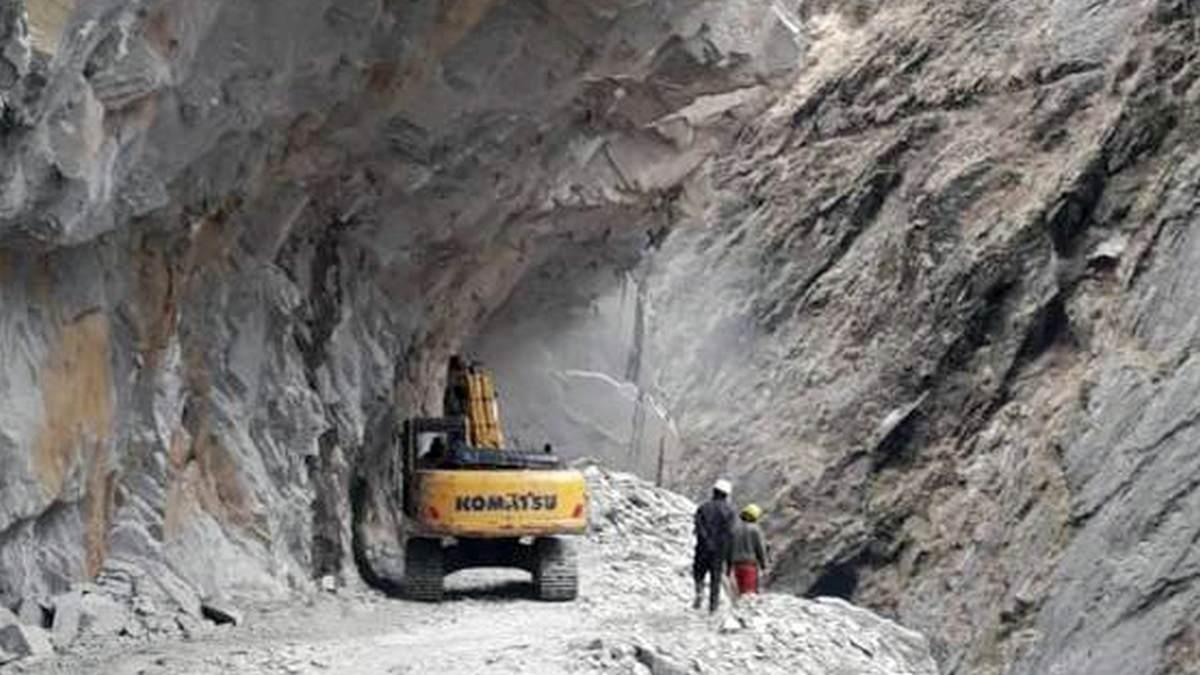
Lipulekh is a Himalayan pass on the border between India, Nepal and Tibet China. To the south of the pass lies Kalapani, a border village which Nepal claims to be an intrusion on the part of India.
Kalapani is accessible by road from Gunji in Pithoragarh district of Uttarakhand that is at the junction of three rivers -- Mahakali (Kuti Yankti) from Limpiyadhura, Kali from Lipulekh (Lipugad according to India), and Kali again from the springs near the temple at Kalapani.
While Nepal follows Mahakali due to its volume of water being more, the East India Company (EIC) which signed the treaty followed the Lipulekh Kali till 1879, and British India thereafter the Kali from the Kali temple.
Article V of the Treaty of Sagauli reads: 'The Rajah of Nipal renounces for himself, his heirs, and successors, all claim to or connextion with the countries lying to the west of the River Kali and engages never to have any concern with those countries or the inhabitants there of.'
There is no mention as to which tributary of the river Kali is being referred to, wherein lies the problem.
Lord Moira, the governor general at that time and an 'employee' of the East India Company, chose to leave it vague adding flexibility to the final choice.
The conditions laid down by him to the commissioner of Kumaon were two: The frontier with Nepal must be formidable and secure to prevent any further intrusions by the Gorkhas, and it should enable trade with the region beyond the pass.
As a consequence, the Lipulekh Kali which fulfilled both these requirements was chosen as the frontier between Kumaon and Nepal.
No maps were attached to the treaty as cartography was still very primitive and inaccurate.
To authenticate the frontier, in 1817 Moira agreed to the return of two Byansi (local tribe) villages to the east of the Lipulekh Kali to Nepal but negated the request later that year for two more villages lying to the east of Mahakali (Kuti Yankti) clarifying they were in Kumaon territory.
This element of doubt which existed even in 1817 confirms varying views of the frontier even at that time.
Two maps of the Survey of India of 1850 and 1856 vintage confirmed the frontier between Kumaon and Nepal as the Lipulekh Kali.
For Moira the two requirements of a secure frontier were more important. However, the first ever recorded survey of the area by W J Webb in 1816 identified the river flowing out of the springs near the Kalapani temple as the Kali Nadi.
Thereafter, in 1879, using reasonably reliable and accurate cartographic techniques a fresh map was produced by the Survey of India which showed the frontier further east roughly 5 kms of Lipulekh Pass in the general area of Tinkar Pass.
This brought Lipulekh and the village of Kalapani well within Kumaon territory.
The Kali river now was the one flowing out of the temple at Kalapani drawing its waters from the watershed surrounding the area.
This was the map handed over to India which was accepted at the time of Independence.

India's authority over the Kalapani-Lipulekh area gets further strengthened from the trade agreements signed between it and China since 1954.
Moreover, topographical surveys undertaken by Nepal from 1924 to 1927 also followed the 1879 map as also its boundary treaties/protocols with China in 1961 and 1963.
The issue of the boundary was first raised by Nepal's government in 1997 during a visit by the then Indian prime minister to that country.
Following that the issue came up again in May 2020 when Nepal officially announced its claim with the release of a map called 'Chu Che Naksha' thereafter including it in their constitution as well.
To say that Nepal had a number of opportunities to raise their claim is saying the least.
The first opportunity came its way when the 1879 map was issued by the Survey of India.
The next was in 1923 when the Britain-Nepal Peace and Friendship Treaty was signed declaring Nepal a sovereign and independent country.
Article 2 of this treaty confirms the Treaty of Sagauli 1815 except if altered by the 'present treaty' which was not questioned by Nepal.
Finally, when the India-Nepal Peace and Friendship Treaty was signed in 1950 once again Nepal refrained from raising the issue as it stood to gain more than losing out from their geo-strategic advantages.
The Treaty of Sagauli is flawed no doubt as it does not specify Kali Nadi clearly.
W J Webb, the surveyor general, clarified in 1816 about the real Kali Nadi being the branch that originated from the springs near the temple. However, Lord Moira chose to follow what would benefit the East India Company the most declaring the river from Lipulekh being the main Kali Nadi.
Nepal's claim makes the muddle even deeper and must be resolved earliest before another border issue erupts between neighbours.
Lieutenant General Shakti Gurung, PVSM, UYSM, AVSM, VSM (retd), an alumnus of NDA Khadakvasla and IMA Dehradun, was commissioned into The GRENADIERS in June 1975.
During his career spanning forty years, General Gurung held important command and staff appointments in the army and has also served as India's Defence Attache in Myanmar from May 2000 to December 2003.
He is an M Phil in Military and Strategic Studies, is settled in Dehradun and is actively involved in speaking and writing on strategic and security affairs.
Feature Presentation: Rajesh Alva/Rediff






 © 2026