
'Previous governments in India had reservations about working with Israel.' 'Modi has shed this tag.' 'Disengaging itself from its traditional and ideological foreign policy approach in the Middle East shall serve India's long-term interests.' Rajaram Panda explains why the significance of Modi's visit to the Jewish nation goes beyond markers like the first-ever visit to Israel by an Indian PM and 25 years of diplomatic ties.

Under the deal, Israel would suspend its plans to annex large parts of the occupied West Bank.
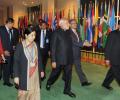
Prime Minister Narendra Modi, who is on a strict religious fast, has had several high profile engagements on the second day of his United States visit.

President Pranab Mukherjee's visit to Israel is a final and critical step in the normalisation of relations between the two countries.

The Israeli ambassador said the efficiency of the agriculture sector as a whole will increase with the new legislations and consumers will also enjoy better and fresh crops.

Argentina have cancelled their final World Cup warmup match against Israel, striker Gonzalo Higuain said on Tuesday, as political pressure grew ahead of Saturday's scheduled fixture in Jerusalem.

FIFA chief Sepp Blatter, visiting the Middle East to try to persuade the Palestine FA (PFA) to drop a proposal to suspend Israel from the world body, on Tuesday proposed a peace match.

He ordered to start the process of moving the United States embassy from Tel Aviv to the holy city.
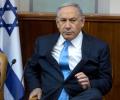
Israeli Prime Minister Benjamin Netanyahu has clinched an 11th-hour deal with a right-wing party to form a hardline coalition government that could pose a major challenge to any global initiative to break the logjam in peace talks with the Palestinians.

Commentators in Canadian media highlighted that Union Minister of State for Agriculture Gajendra Shekhawat received Trudeau at the Delhi airport when he arrived on a seven-day India visit on Saturday evening and contrasted it against Modi himself receiving several world leaders at the airport.

She added that Washington wants to facilitate both the Palestinian Authority and Israel coming together, 'being accountable' and moving forward for peace.

The two leaders discussed opportunities to strengthen the partnership between the US and India in broad areas such as the economy and defence.

Prime Minister Narendra Modi will be reciprocating the reception he received from the Israeli PM during his visit last July, report Archis Mohan & PTI.

On the eve of his unprecedented visit to Israel, Prime Minister Narendra Modi on Monday said he will discuss with his counterpart Benjamin Netanyahu the common challenges like terrorism and ways to boost the economic ties.

The fashion police fell in love with the yellow Emilio Pucci gown the US First Lady wore for Modi's White House visit. But then the former Slovenian model rarely gets it wrong.

Netanyahu would be received by Modi in Ahmedabad on his arrival on January 14, the sources said.

Israel on Tuesday accepted an Egyptian-proposed ceasefire plan to halt its deadly offensive on the Hamas-ruled Gaza Strip but the Palestinian militant groups rejected it calling it "surrender", even as the death toll in the nine-day long conflict rose to 192.

Israel has found the bodies of the three missing teenagers buried in a grave in southern West Bank, just over two weeks after their kidnapping allegedly by Hamas, and vowed to make the Islamist movement pay for their deaths.

Netanyahu has apologised to Israel's Arab citizens for racist remarks he made during last week's parliamentary election.

Netanyahu's right-wing Likud party has claimed a stunning victory in the election.
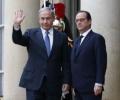
France apparently wanted to keep the Israel-Palestinian conflict out of the Paris march but Israeli domestic politics seems to have prevailed as the 2 leaders participated in the largest demonstration of people's unity against terrorism in Europe.

43.2 million people follow the Indian premier on the social media platform.
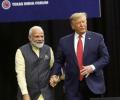
'What has India got out of Howdy India in substantive terms?' asks Ambassador M K Bhadrakumar.

'Unsurprisingly, the joint statement issued after Modi's visit contains a paragraph on terrorism.' 'It is on the usual lines that India would have with, say, Croatia.' 'The surprising part is that it shies away from getting into specifics,' points out Ambassador M K Bhadrakumar.

Israel is determined to take the bilateral engagement to a different level that goes beyond defence hardware and intelligence software. Kanchan Gupta reports exclusively from Tel Aviv for Rediff.com

'The real challenge cannot be underestimated considering that this is still very much a "boutique relationship" -- a transactional relationship at its core based on its utility value to both countries -- but enveloped in an aura of romance,' says Ambassador M K Bhadrakumar.

Israel said it had conducted a joint missile test with the United States over the Mediterranean Sea on Tuesday, hours after Russia's announcement of its detection of missile launches added to jitters about possible military action against the Syrian regime.

After a successful first day to the Taj Mahal and the wildlife sanctuary in Mathura, Canadian Prime Minister Justin Trudeau, who is in India on a seven-day-long visit, made his way to Gujarat accompanied by his wife Sophie Gregoire Trudeau and three children -- daughter Ella Grace, and sons Hadrien and Xavier. Here are the some snapshots of Trudeaus' day in Gujarat.

Secretary of State Mike Pompeo said the United States recognises -- as have Israeli courts -- the legal conclusions relating to individual settlements must depend on an assessment of specific facts and circumstances on the ground.
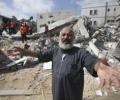
Fighting between Israel and Hamas intensified in Gaza on Tuesday after a brief lull as both sides ignored international calls for restraint and the Jewish state warned of a "prolonged" war that has killed 1,088 Palestinians and 56 Israelis in more than three weeks.

Intense shelling resumed in Gaza on Monday night after a lull with Israel warning of a protracted military campaign against Hamas despite mounting international calls for an immediate and unconditional ceasefire to end the 21-day conflict.

The United Nations Security Council has called for an "immediate and unconditional humanitarian ceasefire" between Israel and Palestine, asking the parties to implement the truce beyond the Muslim holiday of Eid and allow delivery of urgently needed assistance in Gaza as the raging conflict has killed over 1,000 people.

Rouhani said the people of Iran were free to protest peacefully, but rejected violence.
Israelis began voting on Tuesday in a general election following a high-pitched campaign
Information released by Israel provided new and compelling details about Iran's efforts to develop missile-deliverable nuclear weapons, says WH.

A leading Chinese bank may have been used by Palestinian terrorist group Hamas and its allies to launder money for their global operations,according to Israeli intelligence reports.

'The Indian and Israeli rabbis were singing a small departure song for brave little Moshe, who had spent many, likely, heartbreaking but bittersweet hours at this home of his babyhood, looking at the drawings his mother had made for him, that were still up in his room.'

Bloodbath in Gaza continued unabated on Sunday with Israeli jets pounding the coastal strip, even as the fragile peace process got a new lease of life with Palestinian negotiators saying they have accepted an Egyptian proposal for a new 72-hour truce with Israel.

Israeli attacks on the Gaza Strip on Friday killed six persons, including a pregnant woman and two children, taking the Palestinian toll to 815, as the 18-day conflict threatens to spread to the West Bank after deaths of two youths in anti-Israel protests in north of Jerusalem.

Israel on Monday pressed on with its heavy bombardment of Gaza and foiled major infiltration attempts by Hamas on the 14th day of the conflict that has killed 558 Palestinians and 27 Israelis, even as the United Nations and the United States called for an "immediate ceasefire".
