

'A man with a gun commanded respect. I thought if I also got a gun, I could save my family.'
'With this thought, I went to Pakistan and got training there.'
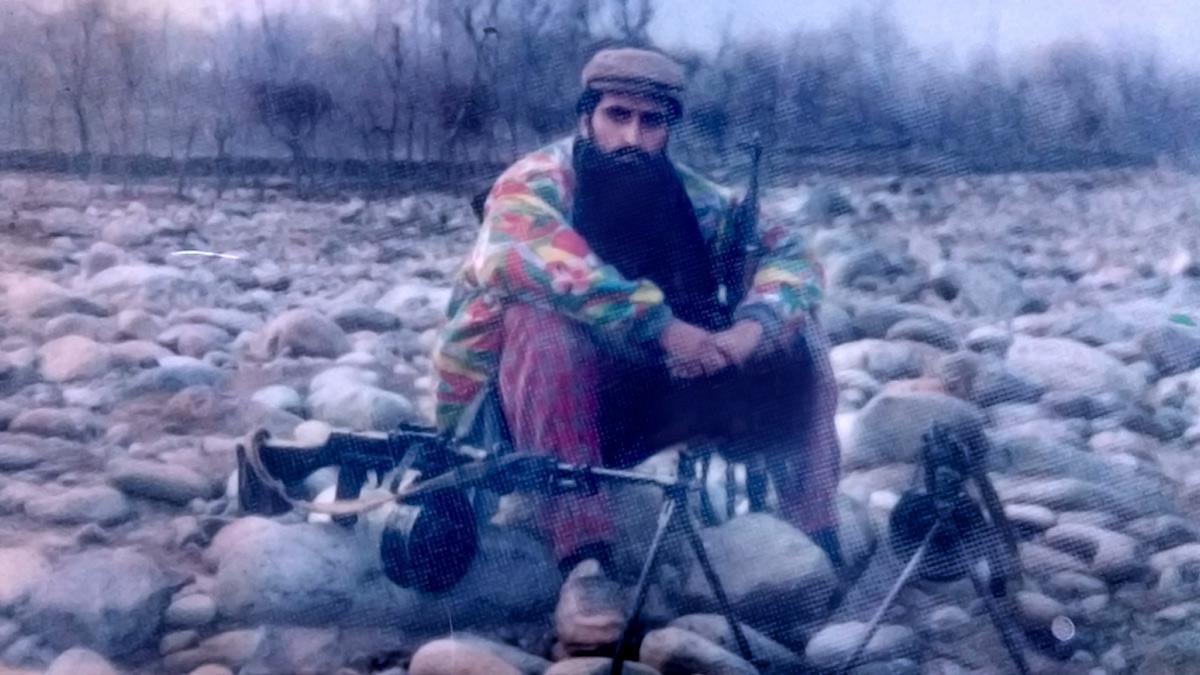
Mushtaq Ahmed Bhat -- aka Ishfaque (the alias he used when he was with the terrorists) aka Romeo (the moniker he used when he started working for the Indian Army) -- is India's answer to James Bond or Jason Bourne -- a man whose life reads like a spy thriller scripted in the shadows of Kashmir's insurgency.
Once a teenage militant from Kashmir's Pulwama, Mushtaq crossed into Pakistan under the cover of darkness, trained with Afghan warlords, fought against the government forces in Afghanistan and against Sher-e-Panjshir Ahmad Shah Masoud's Northern Alliance, and returned to the Valley as a gun-wielding insurgent.
But unlike most, Mushtaq's story didn't end in a hail of bullets or a prison cell. Instead, he switched sides, infiltrated terror networks, and became the Indian Army's most valuable undercover asset.
"I saw how Pakistan does double-dealing, how it gives an Islamic colour to the azaadi narrative," he says, recalling his days behind enemy lines.
Haunted by betrayal and hunted by both sides, Mushtaq's intelligence saved hundreds of lives -- including the moment he tipped off the Indian Army about the imminent Kargil attack, rewriting the course of history.
Today, he's credited with bringing back scores of radicalised Kashmiri youth, guiding them away from terror and into the ranks of the Territorial Army. His journey, chronicled in S Ramachandran's The Bravehearts, is a tale of danger, redemption, and patriotism -- proof that sometimes, the bravest warriors are forged in the enemy's own den.
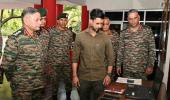
Interestingly, despite the fear of death looming large over operatives like him, Mushtaq Ahmad Bhat not only agreed to reveal his real identity to S Ramachandran for the book but also shared his pictures with these correspondents and allowed them to be used for this report.
Mushtaq Ahmed Bhat's journey, as chronicled in The Bravehearts, is not just a tale of danger, redemption, and patriotism -- he is a living example to the possibility of change, even in the darkest of times.
His story, and those of hundreds like him mentioned in The Bravehearts without being named for their security is paramount, proves that the bravest warriors are sometimes forged in the enemy's own den, and that the battle for Kashmir's soul is fought as much with courage and hope as with guns and intelligence.
The Making of a Militant
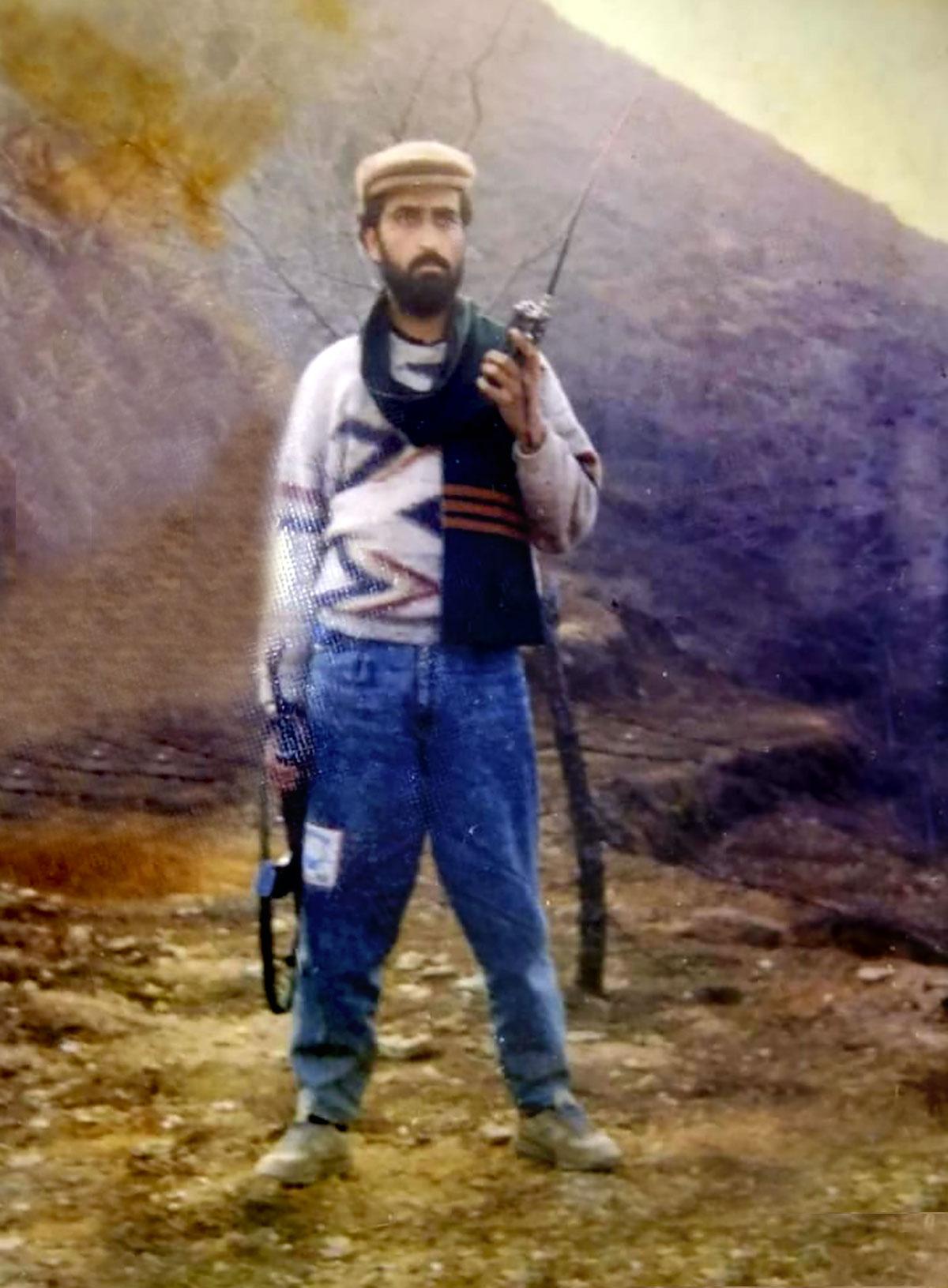
Mushtaq Ahmed Bhat's story begins in the turbulent years of Kashmir -- the late 1980s -- when the valley was gripped by violence and fear.
"When the situation in Kashmir deteriorated, all the intellectuals -- not just Kashmiri Pandits, but also Muslim intellectuals -- fled out of fear," he recalls.
Mushtaq's own family, with its Congress background -- a fact that often made them targets for humiliation and threats by those demanding azaadi -- found itself isolated and vulnerable.
"At that time (when militancy gripped the valley in the 1990s, the state administration had totally collapsed, the Army was in the barracks, the law and order machinery had become defunct), there was no administration, no police, no army -- everything was shut down."
The power vacuum was swiftly filled by armed men, both real and fake militants, who preyed on the local population.
"In the beginning, there were some people from JKLF (the Jammu Kashmir Liberation Front), then fake terrorists also started coming. They knew who had money. They would enter homes and harass people," Mushtaq remembers.
At just 18 or 19, he saw firsthand how "a man with a gun commanded respect." The allure of power and the instinct to protect his family pushed him down a dangerous path.
"I thought if I also got a gun, I could save my family. With this thought, I went to Pakistan and got training there."
The Illusion of Azaadi
Mushtaq's journey to Pakistan was facilitated by a well-oiled network. "Jamaat-e-Islami had created a channel. From Qazigund to Rajouri, Poonch, they had formed bodies in all the districts which selected boys," he explains.
In Pakistan and Afghanistan, Mushtaq underwent rigorous training. "Initially, in Jalalabad, Afghanistan. There was the Najib government, the Russians had left. First, they taught us weapon handling for 15 days, then sent us straight to Khost -- fight, just fight."
"I went to Jalalabad, did 15 days of training in explosives, candle making (IEDs), weapons handling, then was sent straight to Khost. We used RPGs (rocket-propelled grenades), anti-aircraft (guns) and light machine guns."
But the reality of the so-called freedom struggle was a far cry from what was promised. "I saw how Pakistan does double-dealing, how it gives an Islamic colour to the azaadi narrative," Mushtaq says.
When asked if he was motivated by any passion for azaadi, he is blunt: "No. My only aim was to save my family. Carrying a pistol in college, creating dominance, that was it."
The Double Life: 1994-1999
After returning to Kashmir in July 1990, Mushtaq's homecoming was anything but peaceful. "When I came back and tried to surrender, our whole family was threatened -- 'kill them, they are terrorists.' Somehow, I survived till 1994."
During those years, he was forced to participate in attacks under terror handlers like Mast Gul and (Syed) Salahuddin.
The real turning point came in 1994, when Mushtaq, desperate to escape the crossfire between the terrorists and security forces, made a fateful decision.
He secretly reached out to a Border Security Force officer, risking everything to offer actionable intelligence. His information -- on terrorist hideouts, infiltration routes, and planned attacks -- quickly proved invaluable.
Trusted by neither side, Mushtaq lived a double life, operating as a double agent for five perilous years.
Between 1994 and 1999, he maintained his cover among the terrorists while secretly passing crucial intelligence to the Indian Army.
"I was always looking over my shoulder. If either side found out, I was dead," he admits. But his tips led to successful operations, the rescue of hostages, and the prevention of major attacks.
As his credibility grew, he started working for the Indian Army. Between 1994-1995, Mushtaq was formally inducted as an operative, his unique position making him a linchpin in both counter-insurgency and deradicalisation efforts.
This period also set the stage for his most celebrated act: Tipping off the Indian Army about the imminent Kargil attack, a move that changed the course of the conflict and saved countless lives.
From Militant to Army Officer
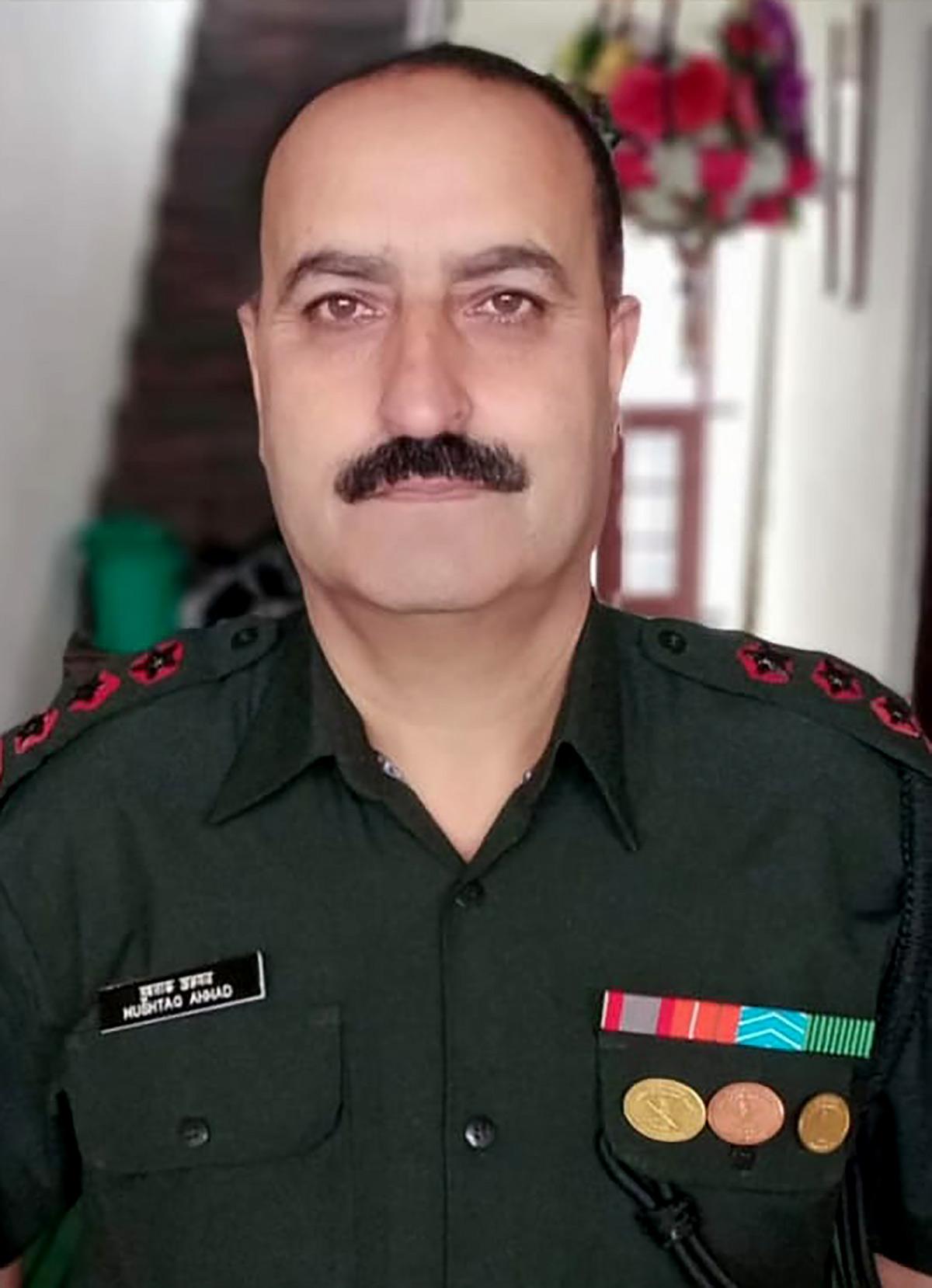
Mushtaq's transformation was not easy. The police kept him indexed -- always under watch. "The police have kept me indexed, and I'm watched. But if I ask the army, they'll give me a passport and everything in ten minutes," he says explaining the contradiction between how the local police and the Indian Army treats him. Despite suspicion, Mushtaq found a new purpose -- helping the Indian Army bring back other misguided youth.
He played a crucial role in identifying and neutralising the most radical elements. "I made categories -- who does civilian killings, who talks too much about Islam and seeks to justify killing of innocents in the name of Islam. I used to eliminate those."
When asked how many he had to kill, he answers with a heavy heart: "More than 300 (of these two categories)."
"When I joined I was taken in as a JCO (Junior Commissioned Officer) and later was promoted as a captain. I retired as a Ccaptain," says Mushtaq.
Mushtaq's intelligence and operational experience became the backbone of deradicalisation missions. He personally persuaded several dozen young men to abandon militancy and join the Territorial Army, giving them a second chance at life and peace.
The Battle for Kashmir's Soul
Mushtaq is candid about the ongoing struggle. "The same glamour that was there in 1989, happened again in 2014. The 2010 agitation was also orchestrated by (Kashmir's political) parties. The Centre should form committees on this (and they will find out the truth)."
He is clear that the idea of azaadi still finds some resonance among Kashmiri youth, but he expects that the children who were born in 2019 (Article 370 was abrogated on August 5, 2019), who will be about six years old now, will be 18, twelve years later and "that is when we will see a generational shift (in the azaadi narrative in Kashmir). A child who is six today will be an adult after twelve years. We'll see then."
Yet, he is also aware of the cost of his choices. "Yes, I admit that. But by God's grace, I started doing the right thing at the right time. Otherwise, I wouldn't be sitting alive before you today." He adds, "If I'd been in Pakistan, they would have made me wear a suicide vest and sent me off."
"In those days and even today I became a ray of hope and inspiration for those Kashmiri youth in Pulwama and Shopian who wanted to help the Indian Army. These youth started trusting me so much that they would pass on lot of secret information to me directly. The Kashmiris started trusting me so much that when the local people caught a terrorist who had lobbed a grenade in 2006 on a group of worshippers in a local mosque killing five and injuring more than 30, they did not hand over this terrorist to the local administration. They handed him over to me," he says revealing how he helped bridge the trust-deficit between the locals and the administration.
Interestingly, the next day, the religious leaders in the valley who tacitly supported Pakistan began claiming that the person caught by locals was an 'Indian agent'.
"The next day I produced him before the media and this guy revealed how and from where he got the grenade, the motive behind lobbing the grenade in the mosque where even small children were present; he not only exposed the role of Pakistan in this attack but also revealed the names of the local masterminds behind this attack."




 © 2026