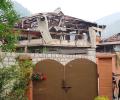
Markaz Taiba of Lashkar-e-Taiba (LeT) in Pakistan's Muridke, one of the nine terror camps struck by the Indian armed forces on Wednesday, is a site where terrorists including Ajmal Kasab involved in the 2008 Mumbai attack were trained, a senior military official said.

India's recent missile strikes on nine terrorist locations in Pakistan and Pakistan-occupied Kashmir (PoK), including Bahawalpur, mark a significant escalation in the long-standing military tensions between the two nations. This article provides a historical overview of the Indo-Pak military confrontations, tracing their roots back to the 1947 war following India's independence and the partition of the sub-continent, and highlighting key conflicts such as the 1965 war, the 1971 Bangladesh Liberation War, the 1999 Kargil War, the 2016 Uri attack, and the 2019 Pulwama attack.
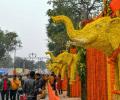
"The holy water of the Sharda Kund at the Sharda Peeth PoK was collected by Tanveer Ahmed and his team. Our civil society member across the LoC (Line of Control) carried it to Islamabad, wherefrom it was sent to his daughter Maghribi in the UK.

The Save Sharda Committee (SSC) in Bengaluru on Friday sought the help of the Indian government to remove the 'encroachment by the Pakistan Army' on the Sharda temple premises in Pakistan-Occupied Kashmir (POK), in order to pave way for its restoration.

India has carried out strikes against nine terrorist infrastructure in Pakistan and Pakistan-occupied Kashmir, Defence Minister Rajnath Singh said on Wednesday. The strikes were in retaliation to the Pahalgam terror attack in which 26 civilians were killed. Singh said the strikes were precise and destroyed the targets set under Operation Sindoor.

External Affairs Minister S Jaishankar addresses Parliament on Operation Sindoor, denying any US trade linkage and highlighting Pakistan's request for a ceasefire through the DGMO channel.
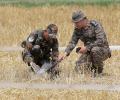
Metal debris was found scattered in three villages of Amritsar district, with some locals claiming them to be parts of missiles. Police are investigating the objects, while the Indian government claims to have foiled Pakistan military's attempts to attack 15 places in northern and western India using missiles and drones. Tensions between India and Pakistan have escalated after India launched missile strikes on terror targets in Pakistan and Pakistan-occupied Kashmir (PoK) in response to the April 22 killing of 26 people by terrorists in Kashmir's Pahalgam.

Punjab and Rajasthan, which share borders with Pakistan, have gone into full alert mode following India's retaliatory missile strikes on nine terror targets in Pakistan and Pakistan-occupied Kashmir (PoK). Punjab Police has cancelled leaves of all its personnel and shut schools in six border districts, while Rajasthan has also cancelled leaves of administrative officials and police personnel deployed in the border areas and closed schools in four border districts.

The government stated that Operation Sindoor was launched in response to a 'barbaric' attack by 'Pakistan-sponsored terrorists,' focusing on dismantling terror infrastructure and neutralizing terrorists likely to be sent across to India.
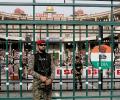
The intruder, who is in his early 20s, was taken into custody by Army troops soon after he entered into this side from across the LoC.

Operation Sindoor is not just a name but India's latest policy against terror as it has set a new standard, a 'new normal' in counter-terrorism measures, Prime Minister Minister Narendra Modi asserted on Monday.

The Chinese see no need to fight directly. They have an able and willing proxy in Pakistan, points out Shekhar Gupta.

With Monday's court order, the total number of proclaimed offenders in Kishtwar stands at 36, they said.
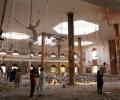
These photographs capture the immediate aftermath in Bahawalpur and Muridke near Lahore -- from damaged buildings to the scrambling of rescue workers.
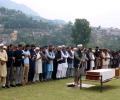
The Pakistan Army and members of the banned Jamaat-ud-Dawah (JuD) of Hafiz Saeed attended the funeral of three persons killed in the Indian military strikes on the terror group's headquarters in Muridke, some 40 kms from Lahore. The funeral prayer was held amid high security, with members of the civil bureaucracy also present. Qayyum, a JuD spokesperson, said the three persons were sleeping in a room adjacent to the mosque when the Indian attack occurred and the mosque was destroyed. He said Malik, Khalid, and Mudassir, believed to be members of the JuD, served as the mosque's prayer leaders and caretakers.
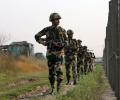
Army troops could not open fire on the terrorists due to the presence of Pakistani posts nearby, they said. Drone footage of the area showed a blood trail, indicating that the terrorists had suffered injuries due to the fall.
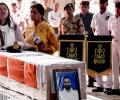
The family of Navy officer Vinay Narwal, killed in a terror attack in Pahalgam, expressed gratitude for "Operation Sindoor", the Indian military's retaliatory strikes against terror infrastructure in Pakistan and PoK. Vinay's wife, Himanshi, who was widowed during their honeymoon, called the operation a testament to her late husband's spirit and a strong message against terrorism. Vinay's father, Rajesh, said the strikes would make terrorists think twice before carrying out such attacks. The operation was lauded for its decisive response to the Pahalgam attack, which claimed the lives of 26 tourists.
Pakistan on Wednesday summoned the Indian charg d'affaires and lodged a strong protest against the Indian military strikes.
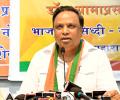
Amid violence against Hindi-speaking people, Maharashtra minister and Bharatiya Janata Party leader Ashish Shelar on Sunday drew parallels between the Pahalgam terror attack and the beating of 'Hindus' in Mumbai, which he said is condoned by some leaders.
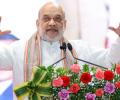
Union Home Minister Amit Shah said on Sunday that indigenously developed BrahMos missiles destroyed Pakistani air bases while its air defence system, borrowed from China, remained unused, during Operation Sindoor, which exposed its lies on terrorism to the world.

The paramilitary Rangers, which were called in to maintain law and order in the disputed region, came under attack while moving out of the region, the Dawn newspaper reported.
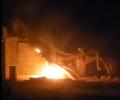
The nine targets struck under 'Operation Sindoor', four in Pakistan and five in Pakistan-occupied-Kashmir, were chosen by the IAF after receiving intelligence inputs about terror camps operating under the guise of health centres to evade detection at these sites, officials said on Wednesday.

India on Tuesday strongly condemned the visit of the secretary general of the Organisation of Islamic Cooperation (OIC) to Pakistan occupied Kashmir (PoK) and for his comments on Jammu and Kashmir, asserting that the grouping has no locus standi in matters related to the region.

Chief of Defence Staff General Anil Chauhan emphasized the need for constant high military preparedness, citing Operation Sindoor as an ongoing example. He also highlighted the importance of 'information warriors, technology warriors and scholar warriors' in future warfare.

The Indian Embassy in Beijing has warned China's state-run tabloid Global Times to verify information before spreading it on social media. The embassy accused the publication of spreading disinformation about Indian military strikes on Pakistan's terror infrastructure. The embassy's statement comes after the Global Times published articles based on Pakistan Air Force claims about the strikes, which were later debunked by Indian authorities.

'We heard about it just as we were walking in the doors of the Oval (Office). I guess people knew something was going to happen based on a little bit of the past'

Tharoor led a multi-party delegation, visiting various countries, to apprise the world about India's stand against cross-border terrorism following Operation Sindoor, which was launched in retaliation against the ghastly Pahalgam terror attack that claimed 26 lives.

Addressing a massive Martyrs' Day rally in Kolkata, Banerjee gave a clarion call to defeat the Bharatiya Janata Party in the 2026 assembly elections and eventually oust it from power at the Centre, declaring, "If this linguistic profiling doesn't stop, our resistance movement will reach New Delhi."
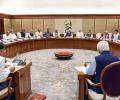
India has reached out to key global powers, including members of the UN Security Council, and apprised them about the reasons behind its military strikes on nine terror targets in Pakistan and Pakistan-occupied-Kashmir in retaliation for the Pahalgam terror attack. New Delhi also conveyed to the countries that it will retaliate if Islamabad escalates the already tense situation.
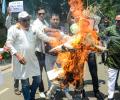
The Madhya Pradesh high court on Thursday expressed dissatisfaction with the first information report (FIR) registered by police on its orders against minister Vijay Shah regarding his objectionable remarks about Colonel Sofiya Qureshi, and said it must be comprehensive.
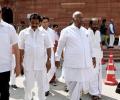
Leaders of 16 opposition parties demanded a special session of Parliament on Operation Sindoor in a letter to Prime Minister Narendra Modi as Indian National Developmental Inclusive Alliance (INDIA) parties held a meeting on the issue in the national capital on Tuesday.
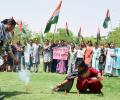
Opposition parties in India, including the Congress, Left parties, Samajwadi Party, Bahujan Samaj Party, Trinamool Congress, Dravida Munnetra Kazhagam, Rashtriya Janata Dal, Shiv Sena (UBT), and NCP (SP), have unanimously hailed the armed forces' "Operation Sindoor", a retaliatory strike against terrorist infrastructure in Pakistan and Pakistan-occupied Kashmir (PoK). The operation, which involved missile and drone strikes, was conducted in response to the April 22 Pahalgam terror attack. Despite political differences, all parties expressed support for the government and the armed forces, stressing the importance of national unity and integrity in the face of terrorism. While emphasizing the need for diplomatic avenues to prevent further escalation, some parties also called for caution in attributing political credit for the strikes.
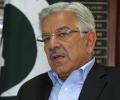
Regarding the possibility of talks, the minister said he was not aware of any such potential engagements.

The Congress party launched a scathing attack on the central government regarding the Pahalgam terror attack and Operation Sindoor, demanding accountability from Home Minister Amit Shah and clarification on the number of Indian jets downed during the operation.
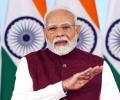
In his first address to the nation after Operation Sindoor, the prime minister said on Monday that for India to uphold peace, it must be strong, and when necessary, that strength must be exercised.

The attack has "footprints and tracks" similar to previous attacks claimed by The Resistance Front, the ministry said in a presentation, adding the terror organisation is just another name of designated terror outfit Lashkar-e-Tayiba.
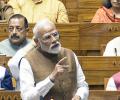
Prime Minister Narendra Modi defended India's actions against terrorism, stating no country stopped India and criticizing the Congress party for not supporting the armed forces. He highlighted the success of Operation Sindoor and warned Pakistan against further misadventures.

Heavy security has been deployed at vital installations in Delhi, including government buildings and areas with high footfalls, following Pakistan's drone attacks on Indian military sites. Police have strengthened vigil in areas with high footfalls and have canceled leaves for all Delhi Police personnel. The developments come after India swiftly thwarted Pakistan's attempts to strike military sites with drones and missiles.

The Pakistan Army has vowed to respond to Indian air strikes that targeted locations in Pakistan-occupied Kashmir and Punjab. The strikes were carried out from within Indian airspace, according to the army spokesman, who said that Pakistan will respond at a time and place of its choosing. The army is currently assessing the damage caused by the strikes.
Army spokesman Lt Gen Ahmad Sharif Chaudhry in a media interaction said at least 26 people were killed and 46 injured in the missile strikes on cities in Punjab and PoK. "The six locations that India attacked last night... Pakistan lost 26 people and 46 were injured," he said.
