
The Indian Air Force is set to procure a compact, indigenous unmanned aerial vehicle (UAV) system for its elite Special Forces unit, designed to operate in extreme conditions and high altitudes.

ISRO stated that the disengagement of at least one contact -- in both the main and redundant paths -- of a connector led to the failure of NVS-02.

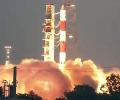
Based on the broadcast visuals, a rocket expert said the failure appeared similar to the anomaly seen during the PSLV-C61 mission.

These upcoming launches carry added significance in light of setbacks suffered in recent years.
'There's too much coincidence in back-to-back failures of missions critical to national security.'
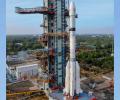
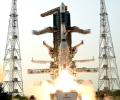
At 6.23 am on 29.1.2025, the 50.9 metre tall and weighing 420.7 ton Geosynchronous Satellite Launch Vehicle-F15 (GSLV-F15) is slated to blast off from the second launch pad carrying the 2,250 kg NVS-02 navigation satellite.
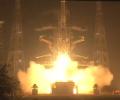
The Indian Space Research Organisation successfully launched its 100th mission on Wednesday, with a GSLV rocket carrying navigation satellite NVS-02.
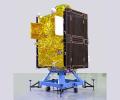
The need for NavIC was cemented after India was denied access to crucial navigation data from global providers during the 1999 Kargil War.
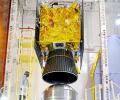
India successfully launched IRNSS 1C on board ISRO's PSLV C26 rocket from the spaceport at 1.32 am on Thursday, moving a step closer to setting up the country's own navigation system on par with Global Positioning System of the US.
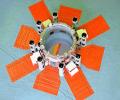
The Indian Space Research Organisation will open 2025 scoring a century orbiting the country's navigation satellite 2,250 kg NVS-02 with its rocket Geosynchronous Satellite Launch Vehicle (GSLV)-F15.

ISRO's vendor policy and quality control processes are under scanner.

India is set to operationalise its own navigational system with the successful launch of IRNSS-1D, the fourth in the series of seven navigational satellites, onboard PSLV-C27 from Sriharikota on Saturday.

The stage is set for the launch of India's satellite IRNSS-1D on Saturday from Sriharikota onboard workhorse PSLV-C27 that would pave the way for the country's own navigation system on par with the GPS of United States.

In terms of success rate, the PSLV rocket has an enviable record of 57 successful missions out of 58 commercial ones.
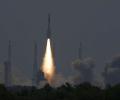
The Indian Space Research Organisation (ISRO) on Monday successfully launched a second generation navigation satellite, using a GSLV rocket with a cryogenic upper stage to do the job.
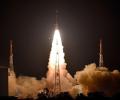
"I am really grateful to the entire ISRO family for having worked this hard and making IRNSS-1I a success," said the space centre's chief K Sivan.

Scientists are working on conducting various tests for the ambitious Gaganyaan mission and the agency is coordinating with the Navy and others in this connection, he said.
Prime Minister Narendra Modi lauded the scientists saying, "with this successful launch, we will determine our own paths powered by our technology".

In a textbook mission, ISRO's PSLV-C32 lifted off from Sriharikota and later injected the IRNSS-IF in sub-Geosynchronous Transfer Orbit.

ISRO launched 12 Indian, 22 foreign satellites and successfully flight-tested India's first winged-body aerospace vehicle.

The Indian Space Research Organisation successfully launched India's fifth navigation satellite IRNSS-1E from Sriharikota.
A S Kiran Kumar, chief of ISRO, said the mission was unsuccessful because the satellite housed within the heat sink could not be injected.
'The goal seems to be that we do not invest further in our system to make our system more accurate and more reliable or more global in reach,' an ISRO source tells Shivanand Kanavi.

Countdown began on Thursday for the launch of the latest navigation satellite that will make India on par with the GPS of the US.

The launch of IRNSS IC, the third of seven satellites in the series to put in place India's navigation system at par with US' Global Positioning System, that was deferred following a technical snag has been rescheduled for October 16.

In a landmark late Monday night journey into a new era of space application, India successfully launched its first dedicated navigation satellite using the Polar Satellite Launch Vehicle which blasted off from the Satish Dhawan Space Centre.

If the April launch of the Chandrayaan-2, the country's second mission to the Moon, is not possible, then the ISRO will aim for a launch by October.
Enthused over its successful launch of GSLV D5 with GSAT-14 communication satellite from Satish Dhawan Space Centre in Sriharikota on Sunday, the Indian Space Research Organisation is planning a series of GSLV launches and an experimental launch of the advanced version GSLV Mark III soon from the spaceport.

Why did ISRO's workhorse Polar Satellite Launch Vehicle rocket fail during its 41st flight?

India has made a good beginning in the area of satellite navigation but still there is a long way to go.

This would be the 44th flight of the PSLV and the third launch by ISRO this year.

The announcement comes two days ahead of the proposed historic launch of the ISRO's 100th satellite along with 30 others in a single mission from Sriharikota.

In a landmark journey into a new era of space application, India successfully launched its first dedicated navigation satellite using the Polar Satellite Launch Vehicle, which blasted off from the Satish Dhawan Space Centre in Sriharikota, Andhra Pradesh.

"Efforts are underway to establish the link with the satellite," it added.

The 'context' of the launch of GSAT-15 highlights that India has much ground to cover in the transponder arena while in satellite navigation arena ISRO's progress has been satisfactory, says Ajey Lele.

A salvo from a Pinaka battery brings down on the enemy more than seven tonnes of high explosive in just 44 seconds.

GSAT-6, the country's latest communication satellite has been successfully positioned in its orbital slot, Indian Space Research Organisation said on Sunday.

The ISRO lost communication with the satellite when it attempted to ignite the engine in a third and final move to its desired location.

The countdown began at 6.27 am for the launch on board ISRO's third generation workhorse Polar Satellite Launch Vehicle, in its 47th flight, ISRO said.
Over 32 missions -- satellites and rockets -- have been planned for the year.
 © 2026 Rediff.com - Advertise with us - Disclaimer - Privacy Policy - Sitemap - Feedback - About us - Terms of use - Grievances