
Dozens of Indian-flagged ships and over a thousand seafarers are stranded in the Persian Gulf, Gulf of Oman, and surrounding areas due to the closure of the Strait of Hormuz amidst ongoing military actions involving the US, Israel, and Iran.
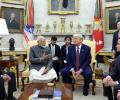
Prime Minister Narendra Modi and US President Donald Trump discussed the Middle East crisis, with a focus on the Strait of Hormuz.

Qatar remains committed to hosting November's MotoGP and Formula One races despite regional uncertainty, with Lusail preparations continuing and Formula One set to decide the race's fate.

Donald Trump stated that Iran has been given a "last chance" to reach an agreement, revealing that the US paused a planned military strike after receiving requests from Saudi Arabia, the UAE, Qatar, and Iran to pursue diplomacy instead.
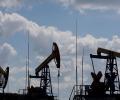
Live updates on the US-Israel-Iran war: Trump escalates threats, Iran retaliates, and oil prices surge as the Strait of Hormuz crisis disrupts global markets.

Supreme Leader Mojtaba Khamenei has reshuffled Iran's political and national-security establishment, appointing former SNSC Secretary Mohammad Bagher Zolghadr as his political adviser and veteran IRGC commander Mohsen Rezaei as his representative on the Supreme National Security Council, consolidating power amid the West Asia crisis and Strait of Hormuz tensions.

...reopen for up to six months. Until then, the Strait stays nearly closed. The world pays. And no one, including the man who started this, can say when it ends, notes Prem Panicker in his must read blog on the Iran War.

If the oil infrastructure is attacked by the United States, the whole area could be flooded with oil, spilling into the Persian Gulf.

US President Donald Trump on Friday referred to the Strait of Hormuz as a potential "gusher" for the world and spoken about "opening it for the world."
The family of Captain Rakesh Ranjan, who died on a merchant vessel near the Strait of Hormuz, is seeking assistance from the Indian government to repatriate his body. They claim the ship was stranded due to the West Asia conflict and are urging authorities to expedite the process and ensure the release of his financial dues.

Gold futures experienced their seventh consecutive daily decline, falling to Rs 1.5 lakh per 10 grams, driven by escalating military exchanges between the US and Iran which have pushed oil prices higher and intensified concerns over inflation and potential interest rate hikes.

Two Indian ships carrying liquified petroleum gas (LPG) from the Gulf countries crossed the Strait of Hormuz early on Saturday morning, raising the number of Indian vessels safely passing through the war-hit, narrow shipping lane to three.

The Centre on Monday told the Supreme Court that authorities in Muscat are examining claims that the family of Indian merchant navy captain Ashish Kumar received ransom calls following his disappearance after a drone or missile attack on a vessel in the Strait of Hormuz.
Trump said that the strait will be "open very soon" if ongoing negotiations with Tehran continue successfully.

Crude oil futures surged over 3 per cent, snapping a three-session losing streak, as renewed military escalation in West Asia revived fears of supply disruptions, driving prices higher on both domestic and international exchanges.

India is hosting the BRICS summit, leveraging the platform to address global trade tensions and champion the developmental priorities of the Global South, including food, energy, and supply chain security. The summit, attended by leaders like President Xi Jinping and Vladimir Putin, will focus on resilience, innovation, cooperation, and sustainability, with India aiming to strengthen intra-BRICS collaboration and discuss global matters. The expanded BRICS grouping represents a significant portion of the world's population and GDP, making its discussions crucial for global economic stability.

Amidst rising Middle East tensions, External Affairs Minister S Jaishankar highlights India's strategic dialogue with Iran to safeguard maritime traffic through the Strait of Hormuz, ensuring India's energy security and continued oil trade.

The two leaders also emphasised the importance of ensuring safe and free navigation through the Strait of Hormuz, the Ministry of External Affairs (MEA) said.

Prime Minister Narendra Modi has highlighted the risks posed by the 'weaponisation' of resources and strategic sea routes, urging India to achieve greater self-reliance in energy to mitigate vulnerabilities to overseas supplies and geopolitical tensions.

'India is trying to project that it can engage with the world in a different way too.'

Prime Minister Narendra Modi on Thursday discussed with a group of senior ministers the prevailing global security situation and how to maintain supply chain uninterrupted despite conflicts in different zones, including the Strait of Hormuz, the Black Sea, the Red Sea, and the Gulf of Aden.

Indian benchmark equity indices, Sensex and Nifty, experienced declines in early trade due to a surge in Brent crude oil prices, which rose above USD 90 per barrel, coupled with subdued global cues and ongoing US-Iran skirmishes. Track Sensex, Nifty on Auigust 12.

An Indian crew member was killed and six other Indian nationals were among eight injured when Iranian cruise missiles struck two UAE tankers, Mombasa and Al Bahiyah, in the Strait of Hormuz, escalating regional tensions and drawing strong condemnation from the UAE.

The diplomatic intervention follows various media reports which attributed comments to Iranian lawmaker Alaeddin Boroujerdi, suggesting that merchant vessels were being charged USD 2 million for safe passage through the "conflict-hit Hormuz."

Any military response to a cross-border terror attack from Pakistan will have to take into account the new alignments beginning to take shape in the region, points out former foreign secretary Shyam Saran.
Indian benchmark indices Sensex and Nifty closed lower, with the Sensex dropping 388 points and Nifty declining 112 points, as a sharp rally in crude oil prices, driven by geopolitical uncertainties and concerns over the Strait of Hormuz, dampened investor sentiment and reignited inflation fears.

Iran has reportedly allowed select "friendly nations" including India and Pakistan limited access to the Strait of Hormuz amid ongoing conflict, easing some energy supply concerns. Here's what the move means for global trade and oil routes.

US President Donald Trump on Friday (local time) said the United States could "hit" Iran's heavily fortified underground nuclear site known as Pickaxe Mountain "very soon", days after Washington targeted Iranian military targets.

Gold and silver prices are anticipated to maintain a positive trajectory in the coming week, with market volatility expected to remain high due to ongoing developments in West Asia and upcoming global economic data, particularly the Federal Reserve's FOMC meeting minutes.

A senior government official confirms that Indian vessels do not require permission to navigate the Strait of Hormuz, despite regional tensions. Several Indian ships, including LPG tankers, have safely crossed the strait, ensuring continued supply of essential commodities to India.

The US Central Command announced a new wave of strikes against Iranian military infrastructure, aiming to degrade Tehran's ability to threaten civilian mariners and commercial vessels. This comes as US President Donald Trump described the situation as a 'skirmish' and suggested Iran wants to 'make a deal,' while Iran's Foreign Minister warned of a 'decisive response' to any aggression.

Indian information technology (IT) stocks, led by Infosys, experienced a significant selloff, dragging the Nifty to a two-month low, primarily due to escalating West Asian tensions pushing crude oil prices higher, and concerns over upcoming large IPOs diverting funds from secondary markets. The sector is also grappling with the long-term implications of AI disruption.

Despite Iran allowing 'non-hostile vessels' through the Strait of Hormuz, marine insurance premiums are expected to remain elevated due to persistent high-risk classifications and ongoing geopolitical tensions, with experts cautioning that the threat of attacks and collateral damage still exists.

Russia and China vetoed a Bahrain-backed UN resolution aimed at reopening the Strait of Hormuz. A resolution that was already diluted to secure their abstentions.

Indian benchmark indices closed marginally higher, with the Sensex gaining over 43 points and the Nifty remaining flat, as a spike in crude oil prices due to geopolitical uncertainties tempered risk appetite.

The BRICS summit in New Delhi brings together leaders from major emerging economies to address global challenges like trade disputes, geopolitical upheavals, and the economic impact of conflicts in Ukraine and West Asia. India, as chair, aims to position BRICS as an economic growth engine, focusing on the Global South's food, energy, and supply chain security. The summit also highlights the grouping's expansion and its growing influence in global governance.

An oil tanker carrying Saudi crude safely reached Mumbai after crossing the war-hit Strait of Hormuz with its tracking system briefly switched off.
Hundreds of Indian seafarers are stranded on vessels carrying crude oil, LPG, and LNG in the Persian Gulf due to the ongoing conflict in the Middle East, causing disruptions to India's energy supplies.

Amidst rising tensions, Iran threatens to close the Strait of Hormuz to those not adhering to its new regulations, signaling a potential escalation in the region's geopolitical landscape and raising concerns about global oil supply routes.

The Centre has spent 28 per cent of its FY27 capital expenditure budget of Rs 12.21 trillion in the first three months against around 24.5 per cent during the corresponding period a year ago.
