
Sports Minister Mansukh Mandaviya will inaugurate the BRICS Traditional and Indigenous Demonstration Games 2026 in Ahmedabad on Monday. Organised by the Ministry of Youth Affairs and Sports in collaboration with the Gujarat government, the event on 12 October 2026, under India's BRICS Chairmanship, will feature traditional sports like Mallakhamb, Yogasana, and Kalaripayattu from India. The non-competitive Games aim to foster cultural exchange and knowledge-sharing among BRICS and partner countries including Belarus, Bolivia, Brazil, China, Ethiopia, Iran, Kazakhstan, Russia, South Africa, and the UAE.

From his first summit appearance in Durban in 2013 to the bloc's landmark expansion and renewed diplomacy in recent years, Xi Jinping's speeches and initiatives have reflected China's evolving priorities within BRICS.

Former Bangladesh Prime Minister Sheikh Hasina has strongly criticised Prime Minister Tarique Rahman's decision to skip the BRICS summit in India, calling it "immature" and detrimental to Bangladesh's national interest. She argued that the absence lost opportunities for economic development and that foreign policy should not be driven by personal considerations. Hasina also highlighted the current "grave national crisis" in Bangladesh and her intention to return to restore democracy.

Sports Minister Mansukh Mandaviya inaugurated the BRICS Traditional and Indigenous Sports Demonstration Games, emphasising India's commitment to placing sport at the core of nation-building through significant investment in infrastructure and grassroots development. He highlighted India's indigenous sports like Mallakhamb, Yogasana, and Kalaripayattu, and discussed the country's ambition to host major international events, including the 2036 Olympic Games.

Union Minister Mansukh Mandaviya inaugurated the BRICS Traditional and Indigenous Sports Demonstration Games 2026 in Ahmedabad, emphasising the role of traditional sports in reflecting cultural identity and fostering international cooperation. The one-day event, hosted by the Ministry of Youth Affairs and Sports, brought together delegations from BRICS and partner countries to showcase indigenous sporting practices like Mallakhamb, Yogasana, and Kalaripayattu from India, alongside Wushu from China and Sambo from Russia. Gujarat Deputy Chief Minister Harsh Sanghavi also highlighted India's rich sporting heritage and proposed initiatives for global promotion and preservation of traditional sports.

The first-ever BRICS Traditional and Indigenous Demonstration Games concluded in Ahmedabad, featuring nearly 160 participants from 10 member nations. India prominently showcased yogasana and mallakhamb, alongside other traditional sports like kalaripayattu. The event also saw demonstrations of wushu from China, togyzkumalak from Kazakhstan, and Jiu-Jitsu from Brazil. Participants from South Africa, China, and Russia praised India's hospitality and the cultural exchange.

The BRICS New Delhi Declaration condemned the April 2025 terror attack in Pahalgam, Jammu and Kashmir, advocating for zero tolerance towards state-sponsored cross-border terrorism. The declaration also addressed global terror, illegal financial flows, cyber fraud, and emphasised accountability for those involved in terror activities.

From four nations to a powerful 11-member bloc, here's how BRICS reshaped the global order in 27 years.

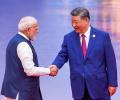
Xi's bilateral meeting with Modi was substantial and readouts from both sides gave indications of rapprochement, if not a reset of bilateral relations between India and China, notes Ambassador T P Sreenivasan.

The highlight of the successful BRICS Summit was its ability to deliver a joint statement that all members, including Iran and the United Arab Emirates, embroiled in the war in West Asia, signed.

The National Security Guard has launched Operation BRICS Kavach to prepare for possible emergencies during the high-profile event.
Chinese President Xi Jinping notably skipped a gala dinner hosted by Prime Minister Narendra Modi for BRICS leaders and other dignitaries, with sources suggesting he returned to his hotel to rest. Meanwhile, a grand cultural performance, 'BRICS Symphony - One Rhythm, Many Cultures', featuring artistes from member countries, was a highlight of the evening.
Ahead of Xi Jinping's visit, National Security Advisor Ajit Doval and Chinese Foreign Minister Wang Yi held extensive talks in Beijing on August 25 on the boundary issue and reached an eight-point consensus.

The Ministry of External Affairs (MEA) has issued a warning against 'malicious' and 'misleading' social media posts concerning the health of world leaders, specifically Chinese President Xi Jinping and South African President Cyril Ramaphosa, who attended the recent BRICS Summit in New Delhi. The warning comes amidst unverified claims about Xi's health and an official statement from Ramaphosa's office confirming his withdrawal from public engagements due to ill health.

India and China are in what experts call 'a cooperation-versus-competition situation'.

Iranian President Masoud Pezeshkian urged BRICS nations to expand trade in national currencies and build an inclusive global economic framework. He criticised "unilateral sanctions" by Western powers, stating they make emerging economies vulnerable and impact global food security. Pezeshkian emphasised BRICS' role in creating a balanced world order and highlighted Iran's geopolitical and energy capacities for cooperation.

New Delhi is gearing up to host the 18th BRICS Summit at Bharat Mandapam on September 12-13, with extensive preparations underway across key venues, roads, hotels and security zones.

The challenge for India lies in navigating complex landscape to its best advantage. The BRICS Summit will test its navigation skills, asserts former foreign secretary Shyam Saran.

New Delhi was told it had given something up; in reality it had stopped talking about it, notes Dr Abhishek Puri.

For India, the goal is not simply to host another grand diplomatic gathering. It is to prove that a diverse coalition of emerging powers can still deliver.

BRICS nations have successfully reached a consensus on a joint statement following extensive negotiations, with India playing a crucial role in bridging differences, particularly among West Asian members like Iran, Saudi Arabia, and the UAE, despite regional conflicts and geopolitical tensions.

The BRICS grouping has fully endorsed India's demand for zero-tolerance against terrorism and rejected double standards in combating the menace. Their declaration condemned terror attacks in Jammu and Kashmir and reaffirmed commitment to holding terrorists accountable under international law.

India is hosting the 18th BRICS Summit in New Delhi, bringing together numerous world leaders including presidents from China, Russia, South Africa, Iran, and Egypt, along with prime ministers and foreign ministers from other nations. The summit will feature bilateral talks and highlights the expanded BRICS grouping's growing global influence and India's significant role as a founding member and current chair.

India successfully facilitated a significant diplomatic meeting between Iranian President Masoud Pezeshkian and UAE Crown Prince Sheikh Khaled bin Mohamed bin Zayed Al Nahyan on the sidelines of the BRICS Summit in New Delhi. This interaction, a diplomatic breakthrough given ongoing West Asia conflicts, occurred as BRICS adopted a declaration urging restraint and protection of civilians in the region, highlighting the bloc's commitment to peace and stability.

The successful hosting of the 18th BRICS summit in New Delhi has provided a significant boost to the BJP, offering a timely opportunity to strengthen its narrative against the opposition ahead of crucial assembly elections next year. BJP sources highlight the BRICS grouping's strong condemnation of the Pahalgam terror attack and the consensus declaration as major diplomatic victories for the Modi government, countering criticisms of its foreign policy. The party plans to leverage these outcomes during its month-long Seva Sankalp campaign to connect with various sections of society.

Prime Minister Narendra Modi hosted a gala dinner for BRICS Summit leaders and delegates at Bharat Mandapam. The menu featured a range of Indian delicacies, including starters like 'khandvi mille' and 'khumb galouti', main courses such as 'paneer lababdar' and 'gucchi marmik', and desserts like 'shahtoot phirni'. The dinner was accompanied by a cultural performance.
BRICS leaders, in their New Delhi Declaration 2026, have called for wider access to Artificial Intelligence resources and stronger international cooperation to ensure the technology is safe, secure, inclusive, and reliable. The declaration outlines a broad technology agenda covering AI, cybersecurity, digital public infrastructure, telecom, quantum technologies, and advanced manufacturing, committing to implement the grouping's statement on 'Global Governance of Artificial Intelligence'.
South African President Cyril Ramaphosa on Friday described BRICS as an important global forum, highlighting the grouping's growing demographic and economic weight and noting that its members account for around half of the world's population and 40 percent of global GDP.

BRICS members have expressed 'serious concerns' over the unilateral imposition of trade and finance-related measures, including higher tariffs and non-tariff barriers, stating these actions distort trade and are inconsistent with WTO rules. The grouping also highlighted elevated risks to the global economic outlook due to geopolitical tensions, trade fragmentation, and protectionism.

Central Delhi has undergone a significant beautification drive, including extensive lighting, floral displays, and BRICS-themed signages, in preparation for the upcoming BRICS Leaders' Summit. The New Delhi Municipal Council (NDMC) and other civic bodies have focused on sprucing up key routes, hotels, and the summit venue, Bharat Mandapam, to welcome delegates and visitors.

The BRICS New Delhi Declaration has endorsed India's proposals for a Working Group on Sports Technology and a Sports Goods Manufacturing Conclave, aiming to enhance cooperation and innovation among member nations in the sports sector.
BRICS Sports Ministers adopted a Joint Declaration in Visakhapatnam, reaffirming their commitment to strengthen sports cooperation through dialogue and mutual respect. The meeting, held under India's 2026 Chairship, saw Union Minister Dr. Mansukh Mandaviya call for a BRICS Sporting Partnership and introduce three key initiatives: a Working Group on Sports Technology, a Sports Manufacturing Conclave in Udaipur, and Traditional and Indigenous Sports Demonstration Games in Ahmedabad in 2026.

India's proposal to link BRICS payment systems, including central-bank digital currencies (CBDCs), was notably absent from the grouping's New Delhi Declaration, despite being a key agenda item for India's chairmanship. This omission leaves the 16-year effort for trade in local currencies without a settled payment architecture, with the declaration only 'acknowledging' the work of the BRICS Payment Task Force.

The Brics proposal for a Grain Exchange, aimed at challenging the dominance of Western trading firms, faces significant operational and implementation hurdles, including settlement currency, regulatory frameworks, and limited participation from key members like India, according to experts.

This article details the quarter-century journey of BRICS, from its inception as an economic acronym by a Goldman Sachs economist to its current status as an expanded eleven-member international bloc. It highlights its growth, key historical moments, and the significance of its upcoming summit, particularly with Iran's renewed importance in discussions.

Senior Congress leader Shashi Tharoor has articulated India's position on BRICS, advocating for it to be a "non-West, but not anti-West" platform, a stance he believes is crucial for India's national interest. He highlighted the prestige of hosting the BRICS summit, India's responsibility to represent the Global South, and the significance of bilateral meetings, particularly with China and Russia. Tharoor also addressed the strained India-China relations, citing border issues and trade leverage, and discussed the challenges within BRICS, including difficulties in achieving consensus on global issues and trade imbalances, while also considering the need for diversified international relations amidst unpredictable US sanctions.

Following an all-vegetarian BRICS Summit dinner, Congress leader Rahul Gandhi stirred discussion by stating that 80% of Indians are non-vegetarian and celebrating the diversity of Indian non-vegetarian cuisine.

Iranian President Masoud Pezeshkian concluded his visit to India for the 18th BRICS Summit, announcing that Iran and the UAE agreed to move past previous tensions. This diplomatic breakthrough occurred during talks with Abu Dhabi's Crown Prince on the summit sidelines. Pezeshkian also met with PM Modi to discuss bilateral ties and West Asia developments, with Modi emphasising dialogue for regional peace. The BRICS summit adopted the New Delhi Declaration 2026, calling for global governance reforms and de-escalation in West Asia.
India's total goods trade with BRICS nations more than doubled from FY21 to FY26, reaching USD 417.5 billion, but a significant surge in imports, particularly from China and Russia, has caused India's trade deficit with the bloc to more than triple, reaching USD 226.1 billion.

Russian President Vladimir Putin has proposed a new investment platform, based on the New Development Bank (NDB), to fund projects in trade, infrastructure, logistics, and technology across BRICS nations, emphasising that the grouping's expanding economic cooperation is not 'against anyone' but aims to advance members' national interests.
