
China's deteriorating economy is a serious concern. Xi Jinping and China's new premier will have a difficult task ahead of them after the 20th party congress, notes Jayadeva Ranade, the retired senior RA&W officer and China expert.

The National People's Congress -- China's annual political gathering known as the Two Sessions -- brought leaders and lawmakers this week to set the Chinese Communist party's agenda for domestic economic and social development for the year.
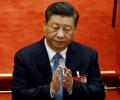
Xi Jinping, general secretary of the Chinese Communist party, attended the opening session of the National People's Congress, his country's parliament, at the Great Hall of the People in Beijing, March 5, 2022.

There is no official word either from China or from India on who will represent Beijing at the upcoming G20 summit.

The Chinese Communist Party's all important 19th Party Congress is just months away, and President Xi Jinping finds himself confronting unlikely challenges to his pre-eminent position, says former RA&W officer and China watcher Jayadeva Ranade.
The Central Committee members on Sunday elected a 25-member Political Bureau which picked the Standing Committee members to govern the country.

Chinese President Hu Jintao was re-elected as the General Secretary of the ruling Communist Party of China for a successive five-year term on Monday. Hu won the fresh mandate from the newly elected CPC's 17th Central Committee after its first plenum in Beijing on Monday morning.
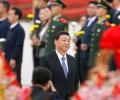
An exclusive white paper by the Jamestown Foundation claims that the powerful figures arraigned against the President include former Vice-President Zeng Qinghong and current Vice-President Wang Qishan, The Hong Kong Post reported.

India needs to be alert on how the Doklam standoff plays into the factional infighting in China's Communist Party, says Ambassador Shyam Saran, the former foreign secretary.

A visit to Tibet appears to have become the new touchstone for expressing fealty to Xi Jinping, observes Jayadeva Ranade, the retired senior RA&W officer and distinguished China expert.

The Politburo Standing Committee -- the most powerful body in China -- is unveiled, but in a break from Communist party convention, no successor to Xi Jinping is named.
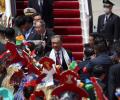
Wang Yang and Xi Jinping's visits signal the beginning of a major Chinese push to bring about a transformation of Tibet, observes Jayadeva Ranade, the distinguished China expert and retired RA&W officer.

Two elderly Chinese aerospace experts are hospitalised after a violent attack by a 'Princeling', states Jayadeva Ranade, the distinguished China expert and retired RA&W officer, highlighting the power the 'Princelings' ironically hold in the Communist People's Republic.

While Wuhan and 17 others cities in Hubei province remained the epicentre of the viral disease outbreak with most of the deaths having taken place there, the cases have started rising steadily in most of the Chinese provinces and cities, including Beijing.

With his eye on next year's Party Congress, Xi Jinping is using the CCP's centenary celebrations to publicise the benefits for China from its leadership, and boost his image and contribution to China's rise, observes Jayadeva Ranade, the distinguished China expert and retired RA&W officer.

What was the need for Xi Jinping, general secretary of the Chinese Communist Party, President of the People's Republic of China and Chairman, Central Military Commission, to don the new role of Commander in-Chief? Does this mean that the most powerful Chinese leader since Mao faces numerous threats from within the Communist Party?

'At the previous 18th party congress, Xi vowed to protect China's 'core' interests.' 'As a result, India faced a barrage of serious incidents on the borders with China -- at Depsang, Chumar, Pangong Tso and Doklam.' 'New Delhi will watch closely the political signals emanating from Beijing this week,' says China expert Srikanth Kondapalli.

It will be interesting to see whether India-China border tensions figure during the deliberations of PLA deputies to the NPC and CPPCC, notes Jayadeva Ranade, the distinguished China expert and retired RA&W officer.
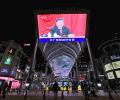
Support from the committee gives Xi an indefinite extension on the reins of power, which will surely result in hawkish and insular policies. It does not bode well for relations with the USA, or with anyone else who does not bow the knee to Beijing, for that matter.
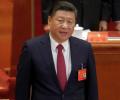
Xi's concept of "socialism with Chinese characteristics for a new era" was added to the party's Constitution

It has triggered a cause of concern for India too as many of the 700 odd Indian students studying in universities of Wuhan and Hubei provinces are still stuck up there.

Statements emanating from the recent Chinese Communist party congress suggest potentially increasing pressure on India with regard to the Dalai Lama and the Central Tibetan Administration in Dharamsala, notes former RAW officer Jayadeva Ranade.

'India need to look beyond the economic prism.' 'China had no qualms in taking the Kashmir issue to the UN Security Council last year -- not once, but thrice -- thus violating Indian sensitivities,' observes China expert Srikanth Kondapalli.

Disgraced Chinese Communist Party leader Bo Xilai sprang a surprise on the first day of his high profile trial on Thursday by defiantly going back on his earlier testimony, calling a witness a "mad dog" and describing his wife's evidence against him as "laughable".

The death toll in the tragedy in the mighty Yangtze rose to 65 as rescuers retrieved another 39 bodies till morning.

The entire gamut of China's activities is aimed at keeping India on tenterhooks, cause fatigue to its troops and keeping its security system unstable, so that it cannot play a meaningful role in international geopolitics as an effective partner of the US and Japan, observes Lieutenant General Syed Ata Hasnain (retd).
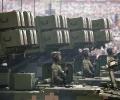
The first priority for the new Tibetan administration in Dharamsala should be to look at Tibetan recruitment in the PLA, suggests Claude Arpi.

'He still has to deal with party norms and traditions and has been careful to follow the order of seniority,' points out Claude Arpi.
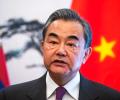
Was Wang Yi'S visit intended to remind India of 1962, asks Claude Arpi?
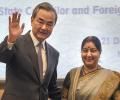
China has been trying to build lobbies of influence and mould public opinion in India since at least 2017, and large sums have been invested in the effort, reveals former RA&W officer Jayadeva Ranade.

Grieving relatives of those on board the ill-fated cruise ship that capsized in the mighty Yangtze were on Thursday barred from reaching the site as rescuers pulled out more bodies, taking the death toll to 77 amid assurances from China of "no cover up" in the probe into the tragedy.

The Chinese Communist party has not closed its door of contacts and negotiation with the Dalai Lama, a senior Communist leader wrote recently. Former RA&W officer and China expert Jayadeva Ranade explains what the thinking on Tibet is likely in Beijing.

'Significantly, Foreign Secretary Gokhale was received at very high level in Beijing.' 'It only shows China's keenness to move forward and put the relationship on a 'win-win' footing,' says Ambassador M K Bhadrakumar.

'Vijay Gokhale's appointment as foreign secretary can be regarded as a certain 'adjustment' that could make a difference to the poor climate of India-China relations,' says Ambassdor M K Bhadrakumar.

'There are reports of political dissent mounting on Xi Jinping's handling of the Wuhan fallout.'

'Xi's emphasis on enhancing conventional military deterrence capabilities, joint operations and power projection are likely to increase friction points with India as with other nations,' points out China expert Srikanth Kondapalli.
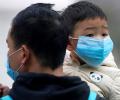
How China's all powerful Communist party bungled the response to the coronavirus crisis.

Thirty years after the massacre at Tiananmen Square, coerced collective amnesia envelops the Chinese nation about that horrific event. Claude Arpi glances back at how the student uprising could have changed the Middle Kingdom forever had the Chinese Communist party not traveled on the route of martial law.

'The title of 'core' of the leadership gives Xi Jinping greater political authority at a time when China is beset by various problems as well as a slowdown in economic growth,' points out former RA&W officer Jayadeva Ranade.
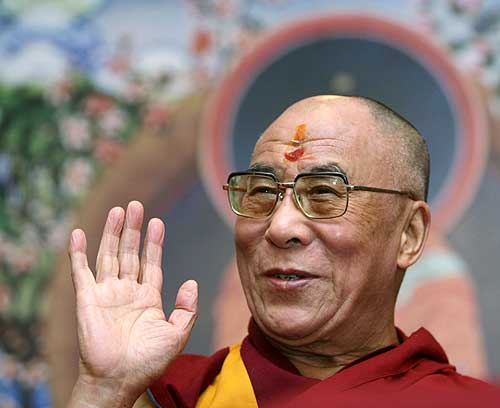
'The first time that China alleged the Dalai Lama was 'anti-national' and 'unpatriotic' was after he affirmed that Arunachal Pradesh and Tawang are part of India,' points out former RA&W official Jayadeva Ranade.
 © 2026 Rediff.com - Investor Information - Advertise with us - Disclaimer - Privacy Policy - Sitemap - Feedback - About us - Terms of use - Grievances