
Authorities in Jammu and Kashmir on Wednesday began the exercise of inspecting the lockers of doctors and medical staff in hospitals as part of enhanced security measures after the recent Delhi blast and recovery of arms and ammunition in the 'white collar' terror module, officials said.
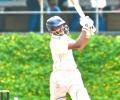
Mhatre's maiden ton, Dube blitz fire Mumbai to seven-wicket win over Vidarbha

An accidental explosion on Friday, November 14, night ripped through the Nowgam police station in Srinagar killing nine people and injuring 27 others.

In the movie, veteran star Sanjay Dutt portrays Chaudhary Aslam. The police officer was assassinated by Pakistan Tehreek-e-Taliban's Mohmand chapter who claimed responsibility for carrying out a bomb attack on his car on the Lyari Expressway on January 9, 2014, in which two other police officers, his driver, and guard were also killed.

The Union Ministry of Home Affairs also said the cause of the incident is being investigated and any other speculation into the cause of the blast was unnecessary.
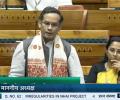
The Congress on Monday accused Prime Minister Narendra Modi of attempting to 'rewrite history' and giving a 'political colour' to the Vande Mataram debate, and asserted that no matter how much the Bharatiya Janata Party tries, it will not be able to put a single blot on the contribution of Jawaharlal Nehru.

Qualifies for India's able-bodied archery team for Asia Cup
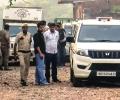
Maulvi Ishtiyaq, who has been brought to Srinagar, was staying in a rented house within the Al Falah university complex in Faridabad. It was from his home that police had recovered more than 2,500 kg of ammonium nitrate, potassium chlorate and sulphur, the officials said.

Security arrangements would be beefed up in and around the capital's Arun Jaitley Stadium for the final day of the Ranji Trophy Group D match between Delhi and Jammu and Kashmir following a high-intensity blast near the Red Fort, which is just kilometres away from the stadium in New Delhi.

The Indian Premier League (IPL) 2026 auction saw some foreign names earning big bucks, headlined by Aussie all-rounder Cameron Green
Youths with no past criminal record or separatist affiliation are now preferred for recruitment by terror handlers in Jammu and Kashmir to stay under the radar of security forces, officials in the know say.
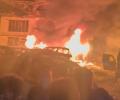
The material, part of the 360 kilograms of explosives recovered from the rented residence of arrested doctor Muzammil Ganaie, was being sampled as part of the ongoing investigation, the officials said.

The Ministry of Home Affairs (MHA) has handed over the probe into a blast near the Red Fort to the National Investigation Agency (NIA), indicating a suspected terror link. The blast claimed 12 lives.
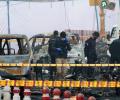
Dr Umar Nabi was allegedly driving the Hyundai i20 car that was used in the blast near the parking area of the Red Fort Metro Station on Monday, killing at least 12 people. He hails from Koil village in Pulwama, they said.
Suspected drones were observed along the International Border in Samba district of Jammu region on Monday, while armed forces downed a 'surveillance drone' in Punjab's Jalandhar district.

The Jammu and Kashmir legislative Assembly was disrupted after a BJP MLA alleged the government was neglecting some Kishtwar areas because "nationalist Hindus" reside there. The remarks were deemed communal by other members, leading to a heated debate.

The Supreme Court has given the Centre four weeks to respond to pleas seeking the restoration of statehood to the Union Territory of Jammu and Kashmir.

The Army Chief said India's political brass has the will to strengthen the country's deterrence capabilities.
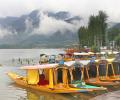
'The Pahalgam terror attacks and the conflict that followed were a big blow to local tourism.' 'And just when things were starting to go back to normal, the floods, caused by heavy rain, spoiled all chances of a bounce-back this season.'

'Tourists from long-haul markets such as the US, UK, and Western Europe are especially sensitive to such news, and short-term cancellations or postponements of planned trips can be expected.'

As many as 16 wickets fell on the opening day as visitors Hyderabad were left reeling at 88/6 after bundling out Jammu and Kashmir for 170 on the opening day of their Ranji Trophy Elite Group D match in Jammu on Sunday.
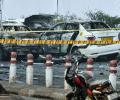
Doctors arrested in connection with the Red Fort blast allegedly raised over Rs 26 lakh to procure materials used in the explosion. The funds were used to purchase large quantities of fertilizer, a key component in Improvised Explosive Devices (IEDs).
A major breakthrough has been achieved in the Red Fort car blast case, with intelligence agencies uncovering a Rs 20 lakh fund trail linked to three doctors, Umar, Muzammil, and Shaheen.
'Why would a highly qualified doctor with a promising future choose to wage war against his own country?'

Following the Delhi blast, the Shri Mata Vaishno Devi Shrine Board has increased security measures, including deploying additional personnel and expediting verification processes.

The Uttar Pradesh Anti-Terrorism Squad (ATS) has detained a medical student from Kanpur in connection with the ongoing investigation into the recent Delhi blast. The doctor, identified as Dr Mohammad Arif, was taken into custody and his belongings seized for forensic examination.
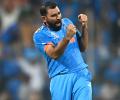
SMAT: Haryana beat Bengal to enter Super 8s, Punjab also qualify

All India Majlis-e-Ittehadul Muslimeen president Asaduddin Owaisi on Wednesday condemned a video of Red Fort suicide bomber, saying suicide is 'haram' in Islam and the killing of innocents is a 'grave sin'.
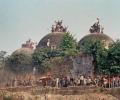
Defence Minister Rajnath Singh claimed Jawaharlal Nehru wanted to build the Babri Masjid using public funds, but Sardar Vallabhbhai Patel prevented it. He also lauded Patel's contributions and criticized Nehru's approach to national issues.
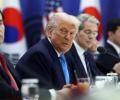
United States President Donald Trump on Wednesday lavished praise on Prime Minister Narendra Modi as the 'nicest-looking guy' while describing him as a 'father' but also calling him 'a killer' and 'tough as hell', while hinting at an imminent trade deal between the two countries.
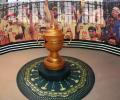
Expect some fireworks for the highly-versatile Cameron Green along with Quinton de Kock, Matheesha Pathirana, Venkatesh Iyer and Ravi Bishnoi.

A government doctor and his wife have been detained in Jammu and Kashmir for allegedly misusing their positions to mask unlawful activities, including radicalizing local women through social media.

Without urgent corrective steps, the system meant to ensure safety, dignity, and rehabilitation for children in conflict with the law will remain overburdened, under-resourced, and unable to deliver justice in time.

Delhi Police have increased security measures across the city following the recovery of suspected ammonium nitrate and arms in Faridabad, Haryana. The heightened security includes increased surveillance at border points and sensitive zones.

Police have cordoned off areas within a 200-metre radius of the red Ford EcoSport car allegedly linked to suspects behind the deadly blast in Delhi, a day after it was seized from Haryana's Faridabad district, police sources said on Thursday.

He will hold the office till February 9, 2027.
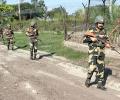
Border Security Force troops in Akhnoor, Jammu and Kashmir, have intensified their patrolling along the Chenab river, a crucial stretch of the India-Pakistan border in the Jammu sector.

The National Investigation Agency has arrested Jasir Bilal Wani in Srinagar, who was an "active co-conspirator" of suicide bomber Umar un Nabi, in connection with the car blast near the Red Fort last week that claimed 13 lives.
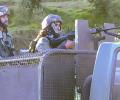
Security has been heightened in Rajouri, Jammu and Kashmir, after an exchange of fire between terrorists and the police.

Haryana DGP O P Singh visited Al Falah University in Faridabad to investigate security lapses after the discovery of a terror module linked to the university. The investigation follows a blast near the Red Fort and the busting of a 'white-collar' terror module.
 © 2026 Rediff.com - Advertise with us - Disclaimer - Privacy Policy - Sitemap - Feedback - About us - Terms of use - Grievances