
IIT Bhubaneswar and IIT (Indian School of Mines) Dhanbad have signed a Memorandum of Understanding to enhance research collaboration and academic interactions, particularly in semiconductor and basic sciences. The agreement facilitates joint research projects, doctoral student supervision, faculty and student exchanges, and shared experimental resources, aiming to advance knowledge and create lasting impact.
Researchers at the Indian Institute of Technology Bombay have developed an innovative, low-cost device capable of screening for anaemia and sickle cell disease using just a single drop of blood. This point-of-care approach measures blood smear length to detect differences in viscosity, which are indicative of these conditions. The patented device is designed for cost-effective manufacturing and ease of use, making it ideal for areas with limited access to conventional diagnostic laboratories. The technology is currently licensed to an IIT Bombay startup and is moving towards regulatory approval.

The Indian Institute of Technology (IIT) Bombay has released 'anti-discrimination guidelines' advising students, faculty, and staff against inquiring about birth, admission category, or entrance exam ranks to prevent bias. This move follows the suicide of student Sahil Wakode, whose parents alleged caste discrimination. The guidelines also prohibit hateful messages and aim to foster inclusivity on campus.

Police revealed that a 22-year-old IIT Bombay student, who died by suicide last month after being caught cheating, had submitted a written apology seeking a second chance. The Mumbai crime branch is investigating the death, with over 40 statements recorded, including those of the IIT-B director and a professor accused of harassment and caste-based discrimination by the student's parents. The professor has denied the allegations.
IIT Hyderabad and Japan's Mie University have signed MoUs to foster academic exchanges and joint research, with a strong focus on semiconductors and digital technologies. This collaboration aims to develop skilled talent and strengthen the semiconductor ecosystem in both countries.

Researchers at the Indian Institute of Technology (IIT), Guwahati, have developed an innovative nature-based wastewater treatment system utilising taro plants and an engineered "zig-zag flow" design. This low-energy, compact technology offers a promising solution for treating highly polluted swine wastewater in decentralised livestock farms, particularly in rural and resource-limited regions.

Mumbai police questioned IIT Bombay professor Suryanarayana Doolla for nearly 10 hours regarding the alleged suicide of student Sahil Wakode. Doolla denies allegations of harassment and caste-based discrimination. Wakode was found dead after being caught using ChatGPT during an exam. An FIR has been filed against Doolla, and the crime branch is investigating, having recorded statements from around 40 people.

171 IIT student deaths by suicide or other unnatural causes have been recorded between January 2006 and September 2026. Of these, 120 were recorded between 2016 and September 2026, compared with 51 in the preceding decade.

'There was a huge cultural gap. I could not understand the slang, the Mumbai lingo, and would often feel left out during conversations. Since I had studied in the Hindi medium till then, I could not understand English,' says Anup Raaj, an alumnus of IIT-B and founder of InstaPreps AI, a confidence-building platform for students, and coaching institute 7Classes.
IIT Bombay has begun replacing ceiling fans with wall-mounted fans in its hostels following the recent death by suicide of a second-year B Tech student, Sahil Wakode. This move, which has drawn criticism from an NCP (SP) spokesperson, comes after a previous student suicide in July and aims to address the broader issue of student mental health and suicide prevention on campus.

The Crime Branch has taken over the investigation into the alleged suicide of a 22-year-old IIT Bombay student, Sahil Ravindra Wakode. Wakode was found dead after being caught using a mobile phone and ChatGPT during an exam. His parents have filed a complaint alleging institutional harassment and caste-based discrimination, leading to a protest by students. A professor has been named as an accused, and the Crime Branch is expected to summon them for questioning. This marks the third suicide at IIT Bombay in seven months.
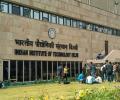
Researchers at IIT Delhi have successfully demonstrated the simultaneous transmission of quantum-entangled photons and classical data over a 50-km optical fibre link. This breakthrough addresses key challenges in integrating fragile quantum signals with existing telecommunications infrastructure, paving the way for more scalable and secure future quantum networks.

The Mumbai Police has transferred the alleged suicide case of a second-year IIT Bombay BTech student to the Crime Branch after his father filed a complaint alleging casteist slurs and harassment by Professor Suryanarayan Dulla, who was also named in an FIR.

An IIT Madras study reveals that financial cybercrime victims in India are often highly educated professionals, challenging the notion that only careless or financially unaware individuals are targeted. The research highlights that digital literacy doesn't guarantee protection, as fraudsters exploit stress and emotional vulnerabilities.

Students who want to gain hands-on research experience at the IIT Bombay can apply for the IITB Research Internship Award 2026.

The parents of IIT Bombay student Sahil Wakode, who allegedly died by suicide, are continuing their hunger strike, demanding the arrest of Professor Suryanarayana Doolla and institute director Shireesh B Kedare. They allege caste discrimination and abetment to suicide, while police investigate the case, recording statements and analyzing electronic devices.
A report by IIT-Bombay professors recommends reducing the Merchant Discount Rate (MDR) on UPI transactions from 0.40 per cent to 0.08 per cent. It suggests that banks should fund the UPI ecosystem using their net interest margins from CASA deposits, rather than relying on MDR. The report also addresses transaction costs, credit card MDR, and ATM withdrawal allowances, aiming to ensure UPI's long-term sustainability and public trust by proposing remuneration only from large merchants.

The IIT Bombay Faculty Forum has expressed strong solidarity with Professor Suryanarayana Doolla, who was invigilating an exam where a student was found using a smartphone, an incident preceding the student's death by alleged suicide.

IIT Madras has inaugurated a new state-of-the-art robotics laboratory, established with CSR support from Bechtel India. This collaboration aims to accelerate research, innovation, and industry applications in robotics and automation, specifically for the construction and infrastructure sectors, fostering advanced technological solutions and workforce development.

The parents of Sahil Wakode, an IIT Bombay student who died by suicide, are continuing their hunger strike for a second day, demanding the arrest of those they hold responsible. They allege caste discrimination and seek justice for their son, with Union Minister Ramdas Athawale assuring support.

The father of an IIT Bombay student who died by suicide has alleged that his son faced relentless caste-based mocking and torture from a professor and the administration. A police complaint has been filed, and an FIR registered against a professor for abetment of suicide and under the SC/ST Act. IIT Bombay has removed a Dean from his post following the allegations.

As many as 171 students of the Indian Institutes of Technology (IITs) died by suicide or unnatural death over the last two decades, with around 70 percent of the deaths recorded in the last 10 years, according to an IIT alumni group.
Students at IIT Bombay are demanding 'meaningful institutional reforms' and greater accountability following the death of Sahil Wakode, a second-year B Tech student. While condemning academic misconduct, students highlight systemic issues and have submitted a comprehensive set of demands to the Director, who has agreed to implement them. The protest also addresses the removal of Dean Suryanarayana Doolla during an investigation into alleged abetment to suicide and caste discrimination, emphasising the need for an independent probe.
IIT Bombay has established a 10-member high-level committee to investigate the alleged suicide of B Tech student Sahil Wakode, who was found dead after being caught using a mobile phone during an exam. Faculty member Suryanarayan Doolla, named in an FIR alleging abetment to suicide on grounds of caste discrimination, has been sent on leave.

Congress leader Rahul Gandhi spoke to the parents of Sahil Wakode, an IIT Bombay student who died by suicide, assuring them support in their quest for justice. Sahil's death is under police investigation, with allegations of caste discrimination against a faculty member who has been sent on leave. Sahil's parents plan an indefinite hunger strike.

The Delhi government has approved real-time monitoring of PM2.5 and PM10 sources in collaboration with IIT-Delhi and the procurement of 30 EV-based mechanical road sweepers to combat winter air pollution. These measures aim to strengthen ground-level dust removal and scientifically identify pollution sources throughout the year.

IIT Bombay has removed Suryanarayana Doolla, Dean of Administrative Affairs, from his post and issued a public apology following the death by suicide of 22-year-old student Sahil Wakode, who his parents allege faced caste-based discrimination.

CCTV footage purportedly showing a student leaving an exam hall at IIT Bombay has gone viral, coinciding with allegations of caste-based harassment following the suicide of second-year student Sahil Wakode. The professor named in the FIR has been sent on leave.
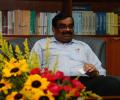
Researchers at IIT Kharagpur, in collaboration with the University of Illinois Urbana-Champaign, have developed a highly sensitive sensor technology. This innovation allows ordinary smartphone cameras to detect extremely tiny, invisible objects, potentially leading to low-cost, portable medical testing and other applications requiring the detection of minute substances.
The parents of IIT Bombay student Sahil Wakode, who allegedly died by suicide, have begun a hunger strike demanding action against those they accuse of tormenting their son due to caste discrimination. The institute has deferred mid-semester examinations and reissued an apology for an earlier statement regarding the circumstances of his death.
Researchers at IIT Delhi have successfully designed India's first working indigenous micro Graphics Processing Unit (GPU). This significant development aims to reduce the country's reliance on imported GPUs, which are crucial for AI, Machine Learning, and various embedded applications, and could help bridge the digital divide.

Researchers at IIT Indore have developed HGAST, an AI tool designed to correct gender-specific errors in translations from English to Hindi, Marathi, and Gujarati. The tool acts as a correction layer, identifying and rectifying masculine verb forms often used by AI systems when translating female speech, significantly improving accuracy for female speakers without retraining existing models.

The mother of Sahil Ravindra Wakode, a 22-year-old IIT Bombay student found dead in his hostel room, has alleged her son was "tortured" and "killed," demanding justice, while the institute stated no disciplinary action was initiated against him after he was found using a mobile phone during an exam.

Police are investigating the suicide of IIT Bombay student Sahil Wakode, who died hours after being caught allegedly copying in an exam. The probe includes examining his phone calls expressing remorse and allegations of caste discrimination made by his family against a professor. Digital evidence and CCTV footage are being analysed to reconstruct the sequence of events.

IIT Guwahati researchers have developed SH²RFSSM, a model inspired by how biological neurons communicate.

The parents of IIT Bombay student Sahil Wakode, who died by suicide, spent eight hours at the Mumbai Crime Branch office, while Union Minister Ramdas Athawale visited IIT Bombay, seeking a thorough investigation into the death and alleging potential caste discrimination.

A report by IIT Bombay suggests that the proposed Merchant Discount Rate (MDR) framework for Unified Payments Interface (UPI) transactions needs rationalisation before implementation to safeguard public trust in the digital payments system, highlighting that UPI's long-term economic benefits outweigh potential incremental income from merchant fees.

Two IIT Gandhinagar students have developed "TrustGate," an AI-based cybersecurity system designed to protect critical infrastructure like water treatment plants and power grids. The system uniquely combines network traffic and physical sensor data to detect sophisticated cyber attacks, identify affected equipment, and provide real-time alerts to operators, earning them an international award.

Mumbai Cyber Police have apprehended six individuals, including an IIT graduate and a bank manager, for allegedly defrauding a senior citizen of Rs 1.12 crore through a "digital arrest" scam. The victim was coerced into transferring funds after being threatened with family arrest by impersonators.
IIT-Kanpur has developed an AI-powered "Family Score" system to identify households needing welfare support using existing government data. This system, demonstrated in collaboration with the Andhra Pradesh government, aims to provide a faster and more cost-effective alternative to traditional surveys for assessing socio-economic conditions and ensuring targeted welfare delivery.
