Defending the law for regulating appointment procedures of the chief election commissioner and the deputies, the Centre on Thursday told the Supreme Court that it would be wrong to assume that the prime minister and the other ministers would act in "bad faith" and against "democracy" because they have a numerical majority in the selection procedure.

142 assembly seats will go to the polls on April 29 in phase 2.

The polling for the Tamil Nadu Assembly's 234 seats will take place on Thursday, April 23, 2026.

A report by the Association for Democratic Reforms (ADR) reveals that half of the newly appointed Tamil Nadu Cabinet ministers have criminal cases against them, while 20 per cent possess assets exceeding Rs 100 crore.

Out of the 294 West Bengal Assembly seats, 152 will go to the polls in the first phase on Thursday, April 23, 2026.

Crorepati Candidates: Congress (61). BJP (52). CPM (52).

A report by the Association for Democratic Reforms (ADR) reveals a significant increase in West Bengal MLAs with declared criminal cases, rising from 49% in 2021 to 65% in the latest assembly. The report also highlights a rise in the number of 'crorepati' MLAs.

Total number of 722 candidates are in the fray for 126 seats.

A new report indicates a rise in 'red alert' constituencies in the West Bengal Assembly elections, with a significant number of candidates facing criminal charges.

The pleas challenging SIR claimed that the Election Commission does not have powers under Article 326 of the Constitution, the Representation of the People Act, 1950 and the Rules made under it to carry out SIR in a larger form.
The Supreme Court has declined the Centre's request to postpone the hearing on petitions challenging the constitutional validity of the 2023 law, which excludes the CJI from the committee responsible for appointing election commissioners, stating the matter is of utmost importance.
The Allahabad High Court has criticised the Uttar Pradesh government and police for the massive pendency of criminal cases in district courts, citing insufficient staff, lack of police cooperation, and delays in forensic reports.
The Supreme Court has reserved its verdict on a petition challenging the Special Intensive Revision (SIR) of electoral rolls in Bihar, following arguments from various lawyers and the Election Commission of India.

A report by the Association for Democratic Reforms (ADR) and West Bengal Election Watch reveals that nearly 23% of candidates in the first phase of the West Bengal Assembly elections have declared criminal cases against themselves.
A report by the Association for Democratic Reforms (ADR) reveals that a significant number of candidates contesting the first phase of the 2026 West Bengal assembly elections have declared criminal cases against themselves.
A report by the Association for Democratic Reforms (ADR) reveals that a significant percentage of sitting MLAs in West Bengal, where assembly polls are scheduled, have declared criminal cases against themselves.
A new report reveals that nearly half of West Bengal's MLAs have declared criminal cases against themselves, and over half are crorepatis. The report analyses the criminal, financial, and educational backgrounds of the state's legislators based on affidavits submitted during the 2021 elections.
A new report by the Association for Democratic Reforms (ADR) reveals a significant increase in donations to national parties in India, with the BJP receiving the overwhelming majority, surpassing the combined total of all other national parties by more than tenfold.

Chief Justice of India Surya Kant has recused himself from hearing petitions challenging the constitutional validity of the 2023 law regarding the appointment of election commissioners, citing a potential conflict of interest.
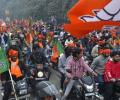
A report by the Association for Democratic Reforms (ADR) reveals that the BJP declared the highest income among national parties in FY 2024-25, while the Congress's income declined.


A report by the Association for Democratic Reforms (ADR) reveals that 102 re-elected Members of Parliament experienced an average asset growth of over 100% between 2014 and 2024. The report highlights the MPs with the highest asset increases.
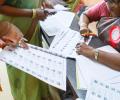
The Supreme Court of India resumed hearing petitions challenging the Special Intensive Revision of electoral rolls in Bihar, addressing the use of Aadhaar and concerns about voter deletions.
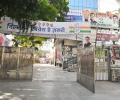
Analysis of election expenditure reports reveals Congress spent more on propaganda and social media, while BJP's overall expenses were higher in the Delhi assembly elections.

In terms of MLA salaries, Odisha is followed by Telangana (about Rs 2.7 lakh), Maharashtra (Rs 2.6 lakh), Manipur (Rs 2.5 lakh), and Uttar Pradesh (Rs 2.4 lakh).

33 candidates face cases of murder, 86 candidates face cases related to attempted murder, 42 candidates have cases related to crimes against women with two of them facing rape cases.

A report by the Association for Democratic Reforms (ADR) reveals that a significant number of registered unrecognised political parties in Bihar have not made their mandatory financial disclosures public for 2023-24.
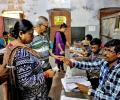
The Supreme Court has requested the Election Commission to respond to petitions challenging the Special Intensive Revision of electoral rolls in Tamil Nadu and West Bengal. The court has also asked the Madras and Calcutta High Courts to keep proceedings on similar petitions in abeyance.

The total assets of the country's sitting legislators amount to Rs 73,348 crore, which is more than the combined annual Budgets (2023-2024) of Nagaland (Rs 23,086 crore), Tripura (Rs 26,892 crore), and Meghalaya (Rs 22,022 crore), totaling around Rs 72,000 crore.

The CMs with lowest assets are West Bengal CM Mamata Banerjee with assets worth over Rs 15.38 lakh, Omar Abdullah, CM of Jammu and Kashmir, with assets worth over Rs 55.24 lakh, and Kerala CM Pinarayi Vijayan, who has assets worth Rs 1.18 crore.

The Supreme Court has directed the Bihar State Legal Service Authority to assist voters excluded from the final electoral rolls in filing appeals with the Election Commission.
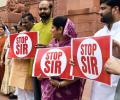
The Supreme Court has warned that it will set aside the special intensive revision (SIR) of electoral rolls in Bihar if any illegality is found. The court is reviewing the validity of the Bihar SIR and its potential impact on a similar exercise across India.

The Supreme Court has directed the Election Commission to provide details regarding the approximately 65 lakh voters removed from the draft electoral rolls in Bihar, a state preparing for elections. The court's order comes in response to a petition filed by an NGO challenging the Election Commission's Special Intensive Revision of electoral rolls.

Association for Democratic33 per cent of 4,092 sitting MLAs were non-graduates.

The Supreme Court has stated it will intervene if there is mass exclusion in the special intensive revision of electoral rolls in Bihar, emphasizing the Election Commission's role as a constitutional authority.
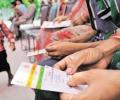
Expressing surprise over political parties not coming forward in filing objections related to 65 lakh excluded voters, the top court directed the chief electoral officer of Bihar to implead them in the court proceedings.
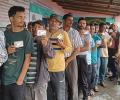
The Election Commission has assured the Supreme Court that no voter's name will be deleted from the draft electoral roll in Bihar without prior notice and a fair hearing. The EC also clarified that it is not required to share separate lists of those not included in the draft rolls.

The government rejected the Opposition's demand for a discussion on electoral roll revision in Bihar, citing that the matter is sub judice and pending before the judiciary.

Underscoring the 'presumption of genuineness' of Aadhaar and voter ID, the Supreme Court on Monday refused to stay the publication of draft electoral rolls in poll-bound Bihar and said it would once and for all decide pleas against Election Commission's special intensive revision (SIR) of electoral rolls.

A bench of Justices Surya Kant and Joymalya Bagchi is likely to take up the matter in which the EC has justified its ongoing SIR of electoral rolls in Bihar, saying it adds to the purity of the election by "weeding out ineligible persons" from the electoral rolls.
