
The Mumbai Cricket Association (MCA) has honoured the late batting great Dilip Sardesai by unveiling the 'Dilip Sardesai Gate No. 3 Board' at the Wankhede Stadium on his 86th birth anniversary.

The central government has revamped the Khelo India Scheme's funding pattern, allocating a Rs 565 crore component for states to co-share the cost of future sports infrastructure development projects over a five-year plan. This new model, part of a Rs 29,054 crore outlay, aims to increase state ownership and participation in sports development, significantly expanding the scheme's reach and athlete base.

A court in Pratapgarh, Uttar Pradesh, has sentenced five individuals to life imprisonment for the murder of a Dalit man in 2001. The verdict was delivered after the court found the accused guilty based on presented evidence.

'1991 was an exceptional period in Indian history.' 'A big 400-volt shock was administered to the system, which was required. Today, we are in a much, much better position.'

South African swimmer Chad le Clos has surpassed Emma McKeon to become the most decorated athlete in Commonwealth Games history, securing his 21st medal with a bronze in the men's 4x100 medley relay. This achievement adds to his impressive tally of seven golds, five silvers, and nine bronzes across five Games.

Political strategist-turned-politician Prashant Kishor's Jan Suraaj Party has secured its first seat in the Bihar Assembly, with Kishor winning the Bankipur bypoll in his electoral debut, stunning the BJP in its long-held bastion.

Why the industry's public position changed is difficult to say. What the developments did establish, though, is that ethanol-blended petrol has become one of the country's most politically and commercially sensitive policy issues.

Bajaj Finance, India's largest private-sector NBFC, reported a 29 per cent year-on-year increase in standalone net profit to 5,346 crore for Q1FY27, propelled by robust growth in net interest income and assets under management, which surpassed 4 trillion.

India's chief badminton coach Pullela Gopichand believes the sport's upcoming shift to a 15x3 scoring system will lead to some players being 'wiped off' due to the increased premium on speed, power, and mental strength.

Sukanya Verma quizzes you to find out just how much you know about the movies.

'Guide is my dad's most beloved film. It's also the film closest to his fans' heart.' 'The film's theme is timeless, so we felt it was the right thing to do.'

From comic-book recreations and Daredevil connections to hints about Silk and the X-Men, here are 15 details you may have missed in Spider-Man: Brand New Day.

Former France midfielder and Real Madrid manager Zinedine Zidane has been appointed as the new head coach of the French national football team, succeeding Didier Deschamps.

'We don't make films to create controversy. I believe our stories are sincere and pure. When people watch them, they connect emotionally.'
The Indian government has defended its E20 ethanol blending programme, stating that extensive testing and field experience show no evidence of abnormal engine wear, corrosion, or reduced vehicle life, despite a potential 2-6% reduction in fuel economy.

From Arun Govil and Shobana to Vivek Oberoi and Kajal Aggarwal, meet the sprawling supporting cast bringing Nitesh Tiwari's Ramayana to life.

Southampton's Utilita Bowl will host a men's Ashes Test for the first time in 2025, as the England and Wales Cricket Board (ECB) announced the concurrent scheduling of the men's and women's Ashes series against Australia, mirroring the successful 2023 format.
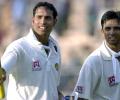
Cricket legends Harbhajan Singh, Venkatesh Prasad, Zaheer Khan, and Sourav Ganguly reminisced about India's historic 2001 Test victory against Australia at Eden Gardens.

Britain's Arthur Fery became only the fourth wildcard to reach the men's singles semifinals at a Grand Slam as his dream Wimbledon run continued with a 6-4, 7-6(4), 6-0 victory over Italian ninth seed Flavio Cobolli on Wednesday.

Tributes continued to pour in for former India captain Sourav Ganguly a day after he was inducted into the ICC Hall of Fame, with batting great Sachin Tendulkar and former all-rounder Yuvraj Singh congratulating one of India's most successful captains.

Alexander Zverev ended the fairytale Wimbledon run of Briton Arthur Fery with a 7-6(0), 6-2, 6-4 win on Friday to reach the final, where he will have an opportunity to win back-to-back Grand Slam trophies after his French Open success.

From Fahadh Faasil and Dilip Kumar to Sridevi and Shah Rukh Khan, a look at Indian actors who reportedly came close to starring in iconic Hollywood blockbusters but ultimately missed out.

Virender Sehwag paid a heartfelt tribute to former India captain Sourav Ganguly on his 54th birthday on Wednesday, recalling the famous shirt-waving celebration at Lord's that remains one of the most memorable moments in Indian cricket.

Foreign investors have largely been exiting one part of the market while domestic investors have been enthusiastically accumulating another, points out Debashis Basu.

British wildcard Arthur Fery, ranked 114th in the world, has made a remarkable run to the Wimbledon semi-finals, defeating ninth seed Flavio Cobolli and setting up a clash with French Open champion Alexander Zverev.

After a subdued start, the southwest monsoon has gathered pace since the beginning of July, narrowing the cumulative rainfall deficit from nearly 30 per cent on June 30 to around 15 per cent as of July 8.

Vaibhav Sooryavanshi, at just 15 years and 91 days, has become the youngest player to represent India in international cricket, surpassing Sachin Tendulkar's 37-year-old record. He also set a new benchmark as the youngest T20I debutant from a Full Member nation, making his debut against Ireland in Belfast.

Lenin packs enough intriguing twists to hook you, but eventually buries them beneath an all-too-familiar revenge saga.
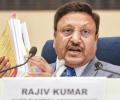
It is because dealing with a regulatory system that is largely headed by retired IAS officers then becomes relatively easy, points out A K Bhattacharya.

Streaming has globalised the entertainment industry, enabling artists like Diljit Dosanjh and Arijit Singh to reach diverse international audiences.

If Elle is to turn into its own franchise, it needs a lot more substance, notes Deepa Gahlot.

Aamir Khan hosted a star-studded event to celebrate 25 years of his iconic film Lagaan, which was released in 2001 and received an Oscar nomination.

Diamonds are a girl's best friend, and Bollywood's ladies made sure to attend the launch of House Of Titan's BeYon, a diamond jewellery brand.

The Union Home Ministry has designated 23 individuals based in Pakistan and Pakistan-occupied Jammu and Kashmir (PoJK) as terrorists under the Unlawful Activities (Prevention) Act (UAPA) for their involvement in infiltration, recruitment, logistics, financing, and operational planning targeting India.

Legendary economist and former Federal Reserve chairman Alan Greenspan has died at the age of 100 due to complications related to Parkinson's disease, his wife Andrea Mitchell confirmed.

As India awaits Vaibhav Sooryavanshi's senior debut, experts urge cricket to remember the 15-year-old is still a child, highlighting the challenges of balancing extraordinary talent, growing fame and emotional well-being.

Aamir Khan, 61, is set to marry Gauri Spratt next month, joining a list of celebrities who found love and tied the knot after turning 60, proving that age is no barrier to companionship and happiness.

Hrithik Roshan is making a significant move towards Hollywood, having signed up with the prestigious global talent agency Anonymous Content to explore international acting opportunities.

Long before Alpha, Bollywood had been retelling the Ramayana in modern settings, sometimes subtly and sometimes not so subtly.

'Even lower middle class parents in cities opt for just one child. A son is a must.'
