
An Indian firm, Bharat Forge, and US defence major Pratt & Whitney Canada have announced a collaboration to develop India's high-altitude, long-endurance (HALE) unmanned aerial vehicle (UAV). This partnership will focus on integrating advanced turboprop engines into the DRDO-designed HALE UAV, bolstering India's indigenous defence capabilities under the Aatmanirbhar Bharat initiative. The collaboration aims to enhance India's strategic self-reliance in surveillance and reconnaissance technology.
Indian firm Bharat Forge and US defence major Pratt & Whitney Canada have announced a collaboration to support the development of India's high-altitude, long-endurance (HALE) unmanned aerial vehicle. This partnership involves integrating advanced turboprop engines into a DRDO-designed UAV, bolstering India's indigenous defence capabilities under the Aatmanirbhar Bharat initiative.

Drone technology company ideaForge Technology has successfully raised Rs 500 crore through a Qualified Institutional Placement (QIP). The funding, which saw strong interest from domestic and international institutional investors, will be used to accelerate innovation, expand its product portfolio into combat drones and autonomous systems, and strengthen its working capital to meet growing demand in defence, homeland security, and civil sectors.
Drone technology company ideaForge Technology has successfully raised Rs 500 crore through a Qualified Institutional Placement (QIP). The funding, which saw strong interest from domestic and international institutional investors, will be used to accelerate innovation, expand its product portfolio into combat drones and autonomous systems, and strengthen its working capital to meet growing demand in defence, homeland security, and civil sectors.

Researchers at the Indian Institute of Technology Madras (IIT,M) have developed a novel "morphing skin" concept for aircraft wings, inspired by bird flight. This adaptive external skin dynamically reshapes in real time to prevent aerodynamic stalls, enhance lift, reduce drag, and significantly improve aircraft safety and fuel efficiency. The technology holds promise for commercial aviation, unmanned aerial vehicles, and defence applications.

In flood-ravaged Nepal, drones are playing an unprecedented role in disaster response, from airlifting bodies from inaccessible areas to delivering essential supplies and searching for trapped workers. This innovative use of UAVs is transforming humanitarian aid and rescue operations in the challenging Himalayan terrain.

A Mehsana-based startup, Prime UAV, deployed drones to assist in the evacuation of people stranded due to floods in Dholka, Ahmedabad district. The drones provided surveillance, delivered essential supplies, and supported rescue operations in inaccessible areas, complementing efforts by local administration and the Army.

Nagaland Governor Nand Kishore Yadav has advocated for increased use of technology, especially drones and geospatial systems, to enhance governance and create employment opportunities for the state's youth. During his visit to the Nagaland GIS and Remote Sensing Centre and Drone Centre of Excellence, he highlighted the broad applications of drone technology and the importance of skill development. The centre is actively training youth in various drone-related courses, aiming to meet the demand for drone pilots in the Northeast.

China has issued a Level-IV alert due to a newly formed barrier lake at the Tibet-Nepal border, warning of a high risk of breaching and flooding downstream areas. The lake, formed at the confluence of Chhochen Khola and Purepu Tsangpo rivers, has accumulated an estimated two million cubic metres of water, with inflows expected to increase, raising concerns for areas including Gyirong Port.

A drone designed to tranquilise violent elephants without close human contact has been unveiled, marking a significant advancement in using indigenous UAV technology for mitigating human-wildlife conflict.
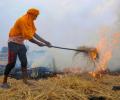
The Commission for Air Quality Management (CAQM) has directed Punjab, Haryana, Uttar Pradesh, and Rajasthan to implement drone-based surveillance to monitor and prevent stubble burning. This initiative aims to counter late-evening burning incidents that evade satellite detection, leveraging drone technology for real-time monitoring, accurate detection, and evidence collection to ensure effective enforcement against agricultural residue burning.

The autonomous, edge-native drone swarms are capable of continuing operations even when some lose connectivity, run low on battery, or return to base.

Bringing international recognition to Assam, young scientist Dr Shekhar Suman Bora has been honoured with the prestigious 'University Innovator Award' at the 2026 Texas Innovation Conference & Awards held in the United States.

Odisha-based BonV Aero has partnered with ParaZero Technologies to introduce advanced counter-drone systems to India's defence and security agencies, offering a kinetic solution to neutralise hostile drones.
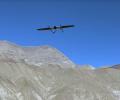
The 515 Army Base Workshop (ABW) in Bengaluru has signed multiple MoUs to strengthen indigenous drone manufacturing and ecosystem resilience, marking a significant step towards modernisation and self-reliance in unmanned systems.

Once operational, Ghatak could undertake deep-strike missions, penetrating heavily defended airspace to hit high-value targets without placing pilots at risk.
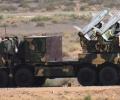
India's defence sector is on the cusp of a 'super cycle' of growth, driven by escalating geopolitical conflicts and a strong policy push towards indigenous manufacturing, with major players like BEL, HAL, and BDL poised for significant order inflows and technological advancements.
The IAF's future operational concepts could involve indigenous Tejas combat aircraft coordinating in real time with multiple Ghatak RPSAs, each carrying a different mission payload ranging from electronic warfare systems and targeting sensors to precision munitions.
The 515 Army Base Workshop in Bengaluru has signed multiple strategic MoUs to bolster indigenous drone manufacturing and ecosystem resilience, marking a significant step towards modernisation and self-reliance in unmanned systems.

AI reduces the time taken to find a target and launch a strike. This has led to a major increase in the pace of the conflict, with one report mentioning nearly 900 strikes launched on Iranian targets in the first 12 hours of an operation.
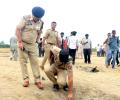
Indian Armed Forces brought down a number of these drones using kinetic and non-kinetic means.

'As result, Netanyahu 'convinced' Trump to go to war with the help of overoptimistic Israeli intelligence assessments, essentially explaining to him that they only need to bomb Iran for 3-4 days, and the regime would then collapse.' 'Rather unsurprisingly, Netanyahu is ever since blaming his own intel service for the entire operation failing.'
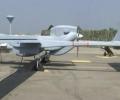
The sources declined to specify the number of drones the Navy plans to acquire but said the focus is now on manufacturing the MK-II in India through partnerships with Hindustan Aeronautics Limited (HAL) and Elcom.
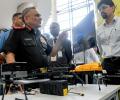
Chief of Defence Staff General Anil Chauhan emphasizes the importance of self-reliance in Unmanned Aerial Vehicles (UAVs) and Counter-Unmanned Aerial Systems (C-UAS) for India, citing recent global conflicts and Operation Sindoor as examples of their strategic importance.

India and Russia have called for an uncompromising global fight against terrorism without hidden agendas and double standards. Prime Minister Narendra Modi asserted that the menace is a direct attack on the values of humanity.
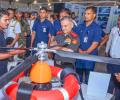
'The defence forces have come up with certain problems they face in the drone space.' 'Recently we had a meeting at which they presented the problems to many of our start-ups and faculty.' 'Some of the start-ups have started working on the problems.'

Deep-tech now forms over half of VC portfolios in India as firms like Cornerstone, Unicorn India Ventures and All in Capital back startups combining research with scalable models
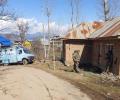
Security agencies are concerned about the increasing use of drones by terror groups in Jammu and Kashmir for surveillance and logistics, replacing human networks.

After Operation Sindoor, the Army and Navy now view the IAF as not a supporting arm, but the spearhead of India's warfighting capability, capable of decisive outcomes across domains, explains Air Commodore Nitin Sathe (retd).
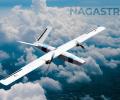
The foremost lesson for India today is to beef up its air defence to cater for multiple drone attacks. As seen in Operation Sindoor, we have come a long way, but there's room for getting better. We must develop a robust and almost impregnable air cover over ourselves, asserts IAF veteran Air Commodore Nitin Sathe (retd).
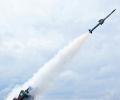
'There are only a few countries in the world that have deployed combat-ready laser systems.'

The Indian armed forces will conduct an exercise to test the capabilities of its drones and counter-drone systems. The exercise, named 'Cold Start', will involve all three services and will take place in Madhya Pradesh.
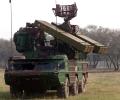
The Indian Army is conducting field trials of several cutting-edge defence systems under 'near-combat conditions', integrating electronic warfare simulations, to assess their performance rigorously, officials said on Saturday.
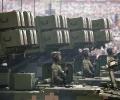
The Chinese military has conducted nuclear, biological and chemical (NBC) drills using unmanned aerial vehicles (UAVs), robotic dogs, and explosive ordnance disposal robots, official media reported. The drills, conducted by a brigade attached to the People's Liberation Army's 73rd Group Army, focused on exploring training methods that integrate technology and networked systems. Experts highlighted the increasing use of unmanned equipment in military operations, citing its ability to reduce human casualties and increase combat effectiveness. The drills also showcased the integration of Artificial Intelligence (AI) and intelligentisation, which is becoming a growing trend in defense.

Delhi is under high security with over 10,000 police personnel and hi-tech surveillance deployed for Independence Day celebrations.

The five-day event will include aerial displays by aircraft and helicopters along with a large exhibition and trade fair of aerospace and defence companies.
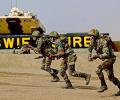
The Indian Army's broader reorganisation is inevitable as India's military doctrine adapts to the demands of the modern battlefield.
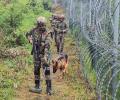
The Indian Army has enhanced security along the Line of Control (LoC) in Jammu and Kashmir's Rajouri district by deploying state-of-the-art equipment, including smart fence systems, robotic mules, and all-terrain vehicles. These upgrades aim to counter infiltration and ensure peaceful Independence Day celebrations.

The Border Security Force (BSF) remains on high alert along the International Border (IB) and has not let its guard down, BSF Inspector General, Jammu Frontier, Shashank Anand said on Tuesday. Operation Sindoor, aimed at preventing infiltration attempts, continues as Pakistan cannot be trusted, he added. Anand highlighted the BSF's robust response after the April 22 Pahalgam terror attack, including destroying multiple terror launch pads and thwarting infiltration attempts.
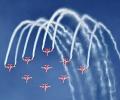
'At Aero India 2025, be prepared to be inspired, awed, and educated,' says Air Commodore Rohith Vijayadev, Air Officer Commanding Yelahanka. 'Aero India 2025 promises to be more than just an air show; it is a celebration of innovation, collaboration, and India's growing leadership in global defence and aviation,' notes Air Commodore Nitin Sathe (retd).
