

After Operation Sindoor, the Army and Navy now view the IAF as not a supporting arm, but the spearhead of India's warfighting capability, capable of decisive outcomes across domains, explains Air Commodore Nitin Sathe (retd).
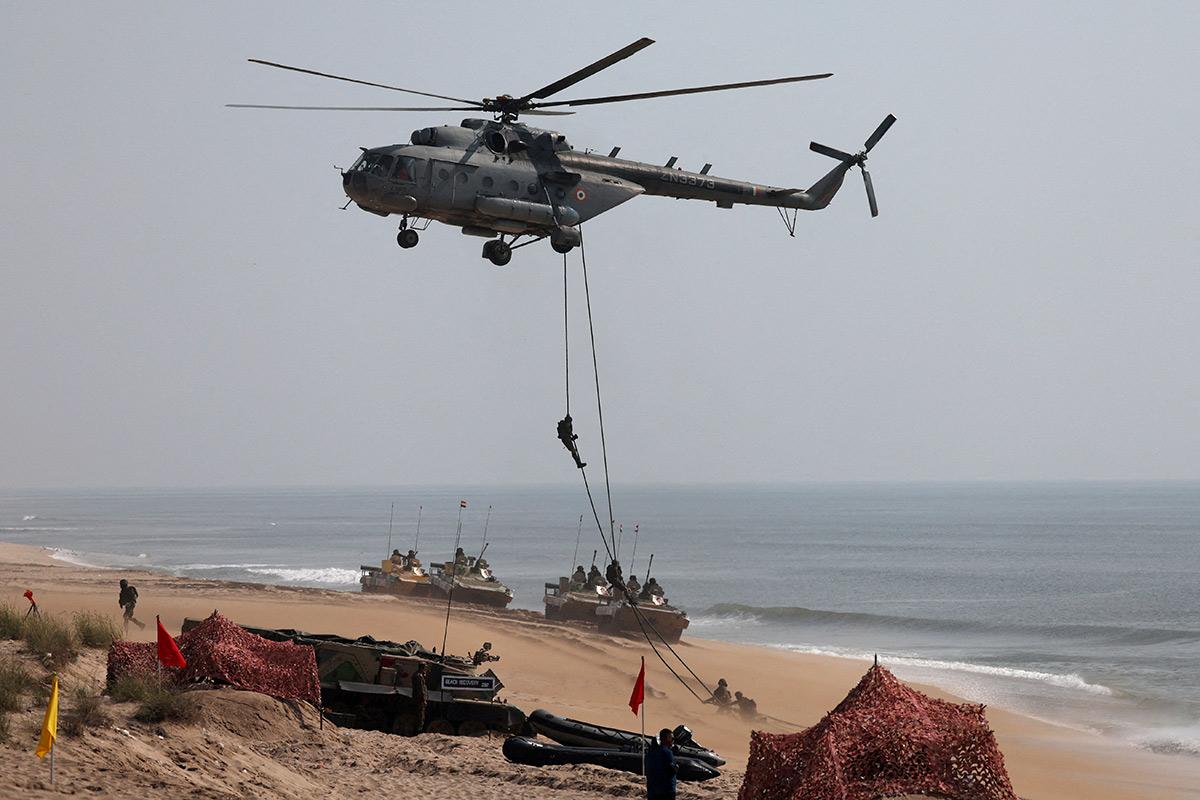
Going back a few decades -- when I was there and doing that -- I am reminded of the so-called joint exercises we participated in as young pilots.
Back then, the Indian Air Force was often seen as a 'support service', expected to pitch in to assist the Army and the Navy in their respective warfighting concepts.
Naturally, we too began to think of ourselves in that limited way -- as a helping hand rather than a decisive arm of combat power.
I remember, as a young attack helicopter pilot, being tasked to attend what was called a joint exercise planning conference.
The room was full of senior officers, all earnestly answering the army commander's questions while we juniors sat at the back, quietly observing the proceedings.
It was evident that the general was not entirely satisfied with how the planning was shaping up.
Then, quite suddenly, he turned around and asked in a commanding voice, 'Who is the attack helicopter representative here?'
I stood up. The general, a perceptive man, seemed to sense how 'joint' the planning really was. 'Tell me', he said, 'what would be your role and tasks in this operation?'
That moment gave the young me an unexpected opportunity to point out -- politely but clearly -- that what we were calling a joint plan was, in fact, little more than a collection of separate service plans loosely stitched together.
I explained how the Air Force, if involved meaningfully at the planning stage, could make the overall operation far more effective.
The general listened intently, and to his credit, he agreed. He asked all of us to sit together and rework the plan -- jointly, this time.
That incident stayed with me. For many years afterward -- well into the first decade of this century -- we continued to speak of 'jointmanship' without truly achieving integration in spirit.
Even at our tri-service training institutions, efforts at integrated planning remained half-hearted. The intent was there, but the system wasn't yet ready for genuine jointness;
Often, in jest, we would talk about this integration as 'jointed' operations than joint operations!
The change seems to have happened now. A little late than never.
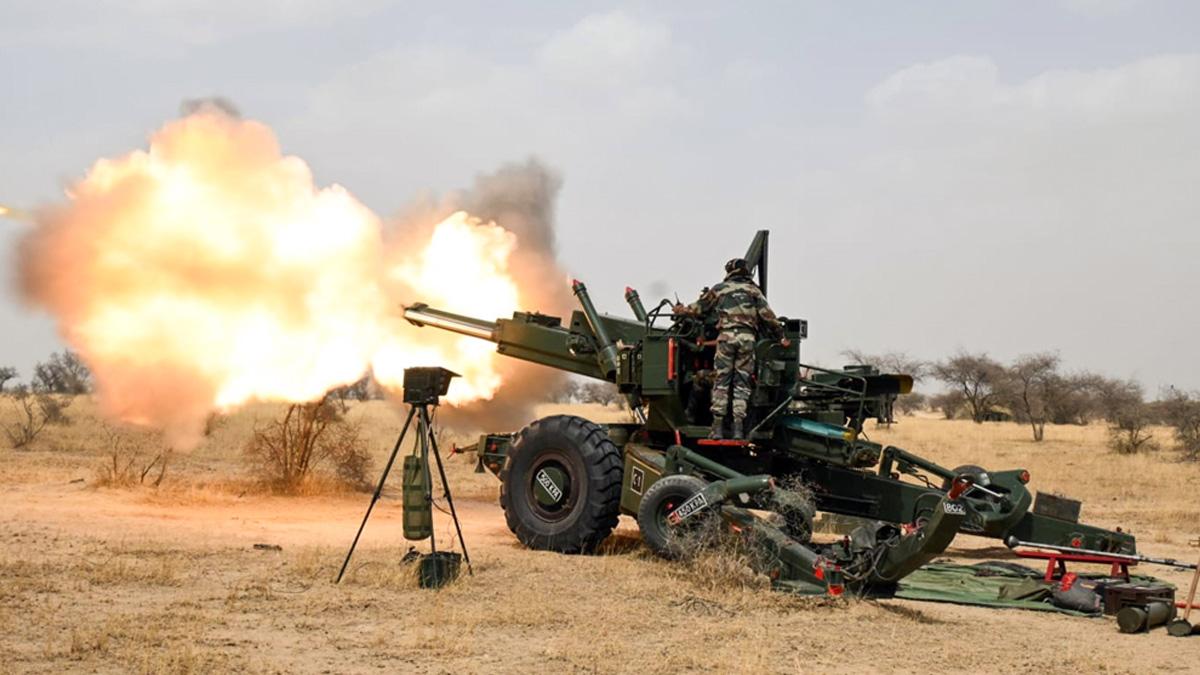
Especially after Operation Sindoor, and with a shift in our national strategic outlook from reactive to proactive and multi-domain operations, the role and mindset within the IAF have evolved dramatically.
And most welcomingly, the Army and the Navy now view the IAF as not a supporting arm, but the spearhead of India's warfighting capability, capable of decisive outcomes across domains.
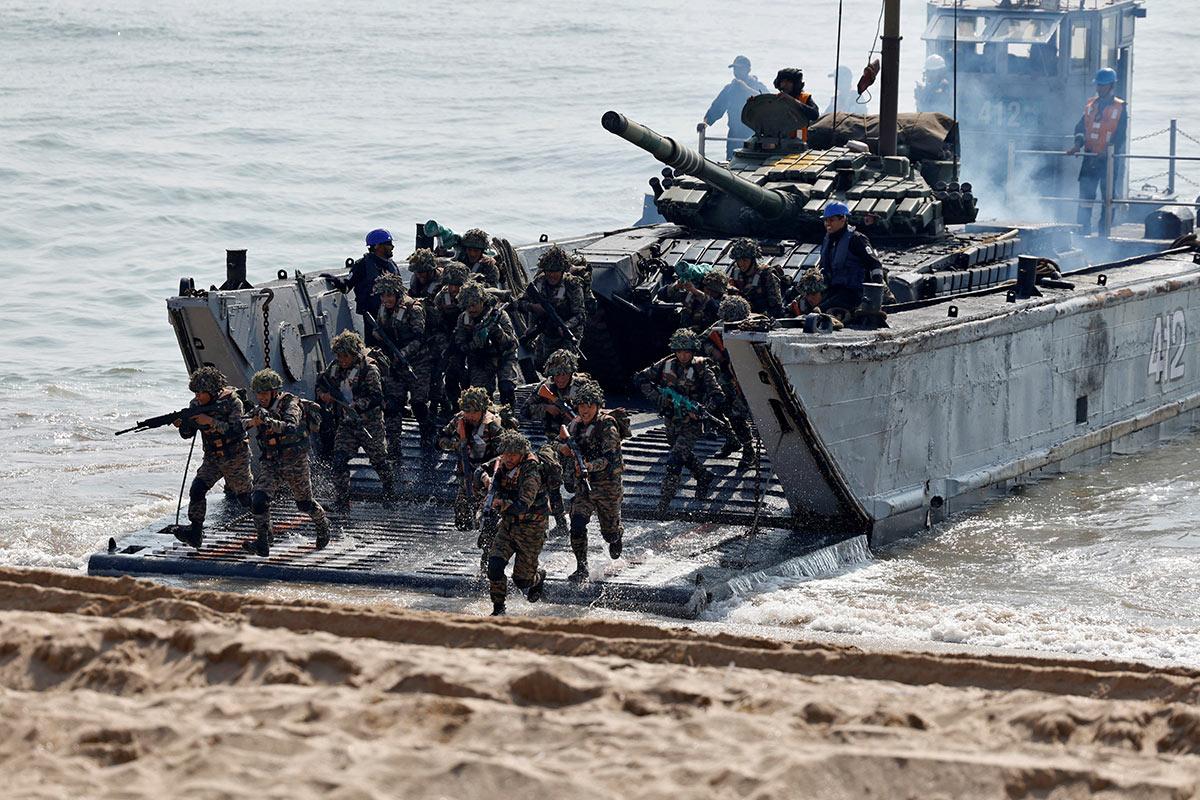
Exercises like the just concluded Trishul 2025 now reflect this transformation -- where the Air Force doesn't just support operations; but leads and integrates them in concert with the other two services.
If one analyses the joint exercises carried out in the past few years, we see how this much needed integration has become better.
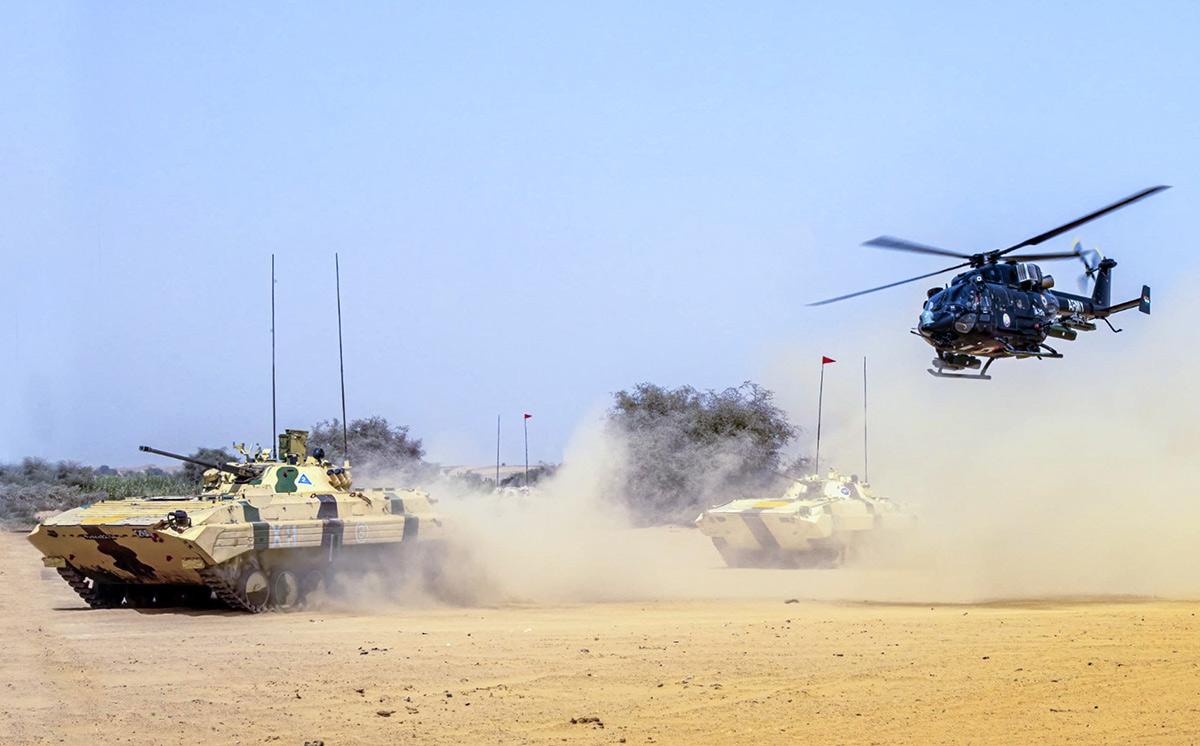
Trishul or TSE-2025 as it is called, was conducted in the creek and desert sectors of Rajasthan and Gujarat, and this includes the maritime zones in the north Arabian Sea.
This part of the exercise was led by the Navy's Western Command based at Mumbai, in coordination with the Army's Southern Command at Pune and the IAF's South-Western Air Command based at Gandhinagar.
The fact that the exercise is being held in varied operational theatres involving the sea, western borders as well as creek areas underlines that the Indian armed forces needs to operate in varied theatres.
The key objectives obviously would be to enhance interoperability across the three mediums of land, sea and air; validate the unified command structures, control and communication apparatus across the three services as well as the capability to carry out joint Intelligence, Surveillance and Reconnaissance (JISR) as well as Electronic Warfare (EW) and Cyber Operations.
It will also test and validate integrated air defence operations -- a weak link till recently in conduct of our joint operations.
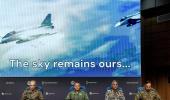
This is not just a drill -- it is also a signal to our adversaries (and to domestic defence watchers) that the Indian armed forces are moving towards a more unified fighting structure and operating across geography, domains and services in a coordinated way.
This is not to be misunderstood as a precursor to getting our theatre command concept into place -- that is still a long way to go.
The exercise also lays emphasis on a self-reliant India (Atmanirbharta) by showcasing indigenous systems in a joint environment.
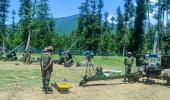
The exercise saw the IAF with its fighters and support aircraft along with air defence systems working alongside the Army and Naval assets.
The exercise will undoubtedly yield valuable lessons for each of the three services on how best to employ their assets in future joint operations.
As the debriefs unfold in the Joint Operations Rooms (JORs), every service will analyse what worked, what didn't, and how integration can be made more seamless the next time.
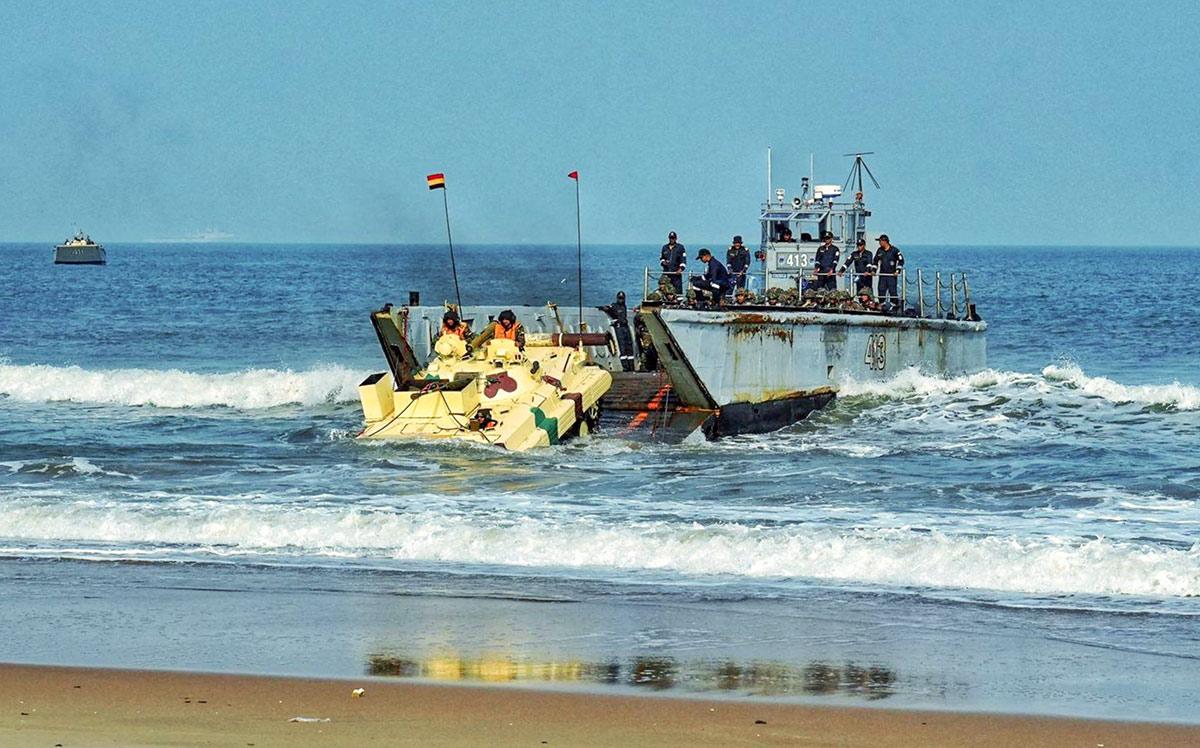
Having seen many such cycles of learning during my years in uniform, I know that each exercise -- no matter how complex or exhausting -- leaves us stronger, wiser, and better prepared, provided we are truthful and forget our turf's while we face each other in debriefs.
Honest reflections and shared experiences help build the trust, understanding, and synergy that form the backbone of a truly integrated and resilient national defence.
The IAF, besides its usual role, was seen operating in close coordination with its sister services.
They will, of course, help in maintaining control of the air (air superiority) over the area to ensure that the operations carried out by the Army and Navy progress unhindered and their objectives achieved.
Logistical mobility over varied terrain is a complex exercise which will be practiced by the transport and helicopter fleets available with all the services.
A need has always been felt to have integrated logistics for all the three services, and this exercise would give us valuable lessons for the same.
An important aspect of the exercise, no doubt, was coordinated intelligence gathering to enhance battlefield visibility.
Platforms like the P-8i, AWACS and the recently commissioned indigenous battlefield surveillance system (BSS) for the army called Sanjay will work hand in hand providing much-needed data to each other for enhanced transparency of the battlefield.
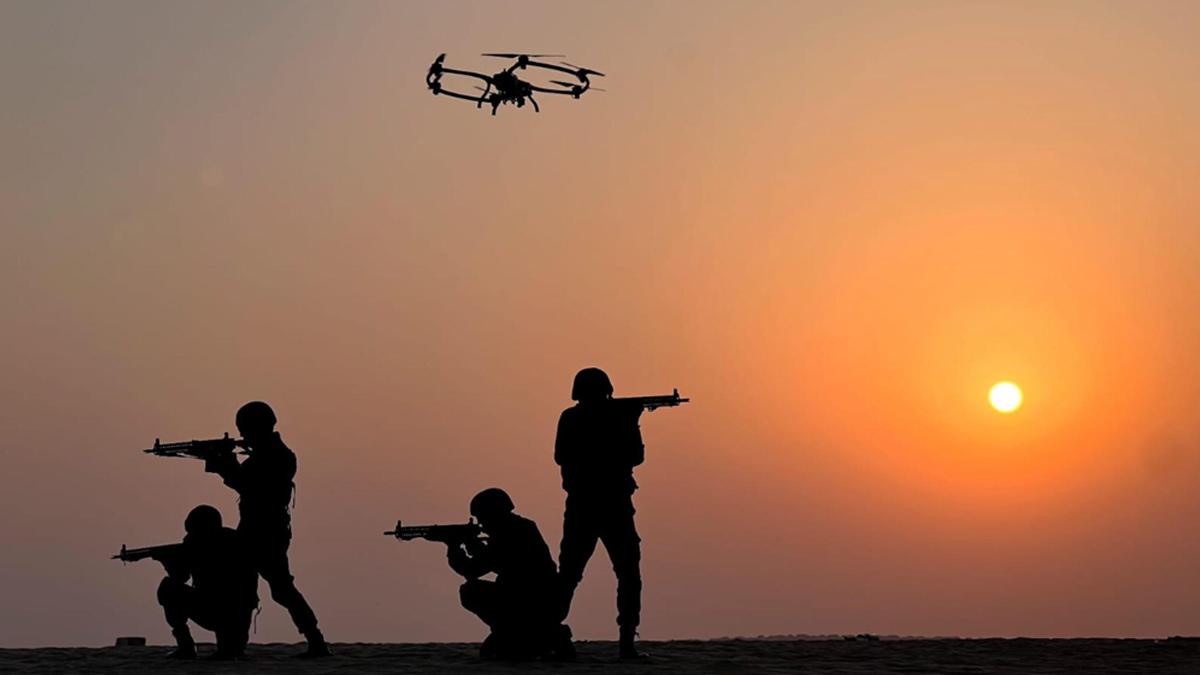
UAVs, which have recently come of age, will be used in large numbers for intelligence gathering as well as offensive tasks and fresh SOPs for joint operations will be drawn up.
Operation Sindoor saw extensive use of the anti-UAV shield which ensured that more than 400 enemy drones were destroyed before they could pose a threat to us.
This is a new area of operations for our armed forces and fresh lessons will be surely drawn from this exercise.
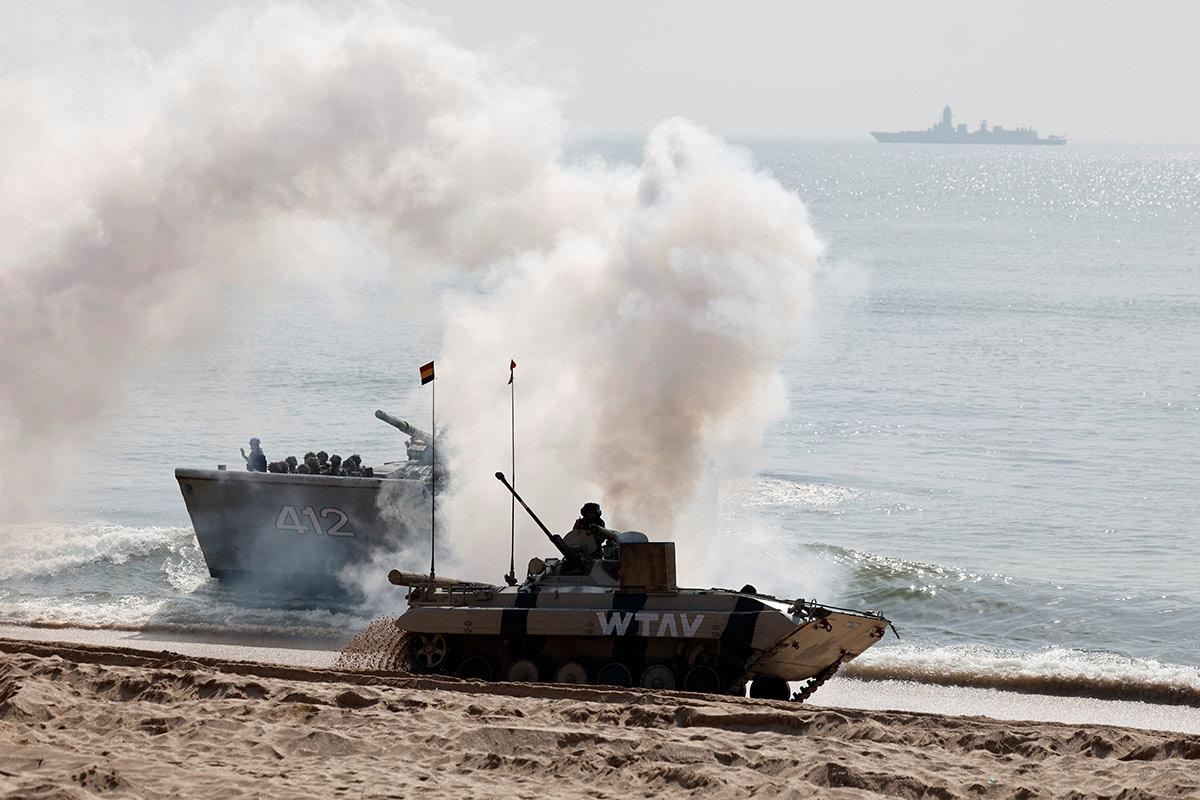
New generation aircraft like the IAF's Rafale, Tejas and the Prachand helicopters, the Army's T-90s and Arjun tanks, and the Navy's INS Jalashwa -- the indigenous landing platform dock -- were tested in this environment and SOPs recalibrated so as to sharpen our operational readiness, endurance and cooperation between the services.
Artificial Intelligence, without doubt, will be used at all levels of command -- this is an area where all the three services need to upgrade their skills.
We saw the use of long-range vectors (Brahmos and other missiles) during Sindoor for the first time -- the armed forces sharpened their abilities in war-like conditions and emerged victorious. There would still be grey areas to be ironed out during this exercise.
In large-scale exercises like Trishul, our adversaries are usually informed well in advance.
The recent curtailment of Pakistani air traffic over the central and southern regions -- reportedly to avoid any risk during the drills -- is telling.
Such reactions demonstrate that exercises serve as powerful instruments of strategic signaling -- they compel the adversary to heighten alert levels and redeploy assets, thereby revealing aspects of their dispositions and readiness.
In short, well-publicised drills do more than test our own systems -- they also prompt responses that can yield valuable intelligence about an opponent's plans and priorities.
From my own experience, such large-scale exercises do far more than test machinery or systems -- they connect people and ideas.
Within the IAF, aircrew move across bases, interact with new units, and work closely with colleagues they may have only known by reputation.
These interactions, both professional and personal, build understanding and camaraderie that no manual or briefing can achieve.
The same holds true across the three services, where familiarity with each other's operating styles and concepts of warfighting is invaluable in building true jointness.
Such exercises also have a wider ripple effect. The civil administration, border security organisations, and even the public gain a clearer picture of how coordination unfolds when the nation's defence machinery is mobilised.
At the unit level, formations get to practice their war plans in realistic settings while understanding how this dovetail into the larger strategies conceived at higher headquarters.
Such exposure brings home an important lesson -- that preparedness is not just about readiness to fight, but also about learning to think, plan, and operate together.
As I watch the scale and sophistication of these exercises grow, I can't help but reflect on how far we've come since the days when 'jointness' was just a concept we spoke about in seminars.
Operation Sindoor changed that. It has shown us that integration is not merely desirable -- it is paramount and indispensable.
Yet, real integration goes beyond intent; it demands overcoming formidable challenges.
The logistical complexity of moving men, machines, and materials across varied terrain still tests our systems.
The effort to seamlessly integrate indigenous technology with older, imported platforms often exposes gaps in compatibility.
The growing reliance on digital networks introduces an entirely new dimension -- that of cybersecurity, where even a minor breach can have strategic consequences.
Add to that the ever-present constraints of budgets, infrastructure, and the environmental sensitivities of regions like Sir Creek, and it becomes clear that the journey toward full-spectrum readiness is ongoing.
Still, what gives me confidence is the mindset shift I now see. These challenges are no longer viewed as limitations but as problems to be solved -- collectively, creatively, and confidently.
Operation Sindoor was our wake-up call; exercises like Trishul 2025 are our rehearsal for the wars of tomorrow -- multi-domain, technology-driven, and unforgiving to the unprepared.
The way ahead lies in integration -- not just of systems and strategies, but of minds, missions, and the spirit that binds the Indian Armed Forces together.
A helicopter pilot who served the Indian Air Force for 35 years, IAF Veteran Air Commodore Nitin Sathe is a frequent contributor to Rediff.
You can read his earlier articles here.
Photographs curated by Manisha Kotian/Rediff
Feature Presentation: Rajesh Alva/Rediff



 © 2026