
The Supreme Court declined to intervene in allegations of harassment against women dog feeders, stating it's a law and order issue. The court is hearing arguments in the stray dogs case and addressed concerns about unregulated breeding and exotic imports.
The Supreme Court clarified that it has not ordered the removal of all stray dogs, but rather that they should be treated according to Animal Birth Control (ABC) Rules. The court heard arguments on the issue, addressing concerns about rodent populations, hospital safety, and the implementation of existing regulations.

The Supreme Court has directed the removal of all cattle and other stray animals from highways and expressways, citing safety concerns and frequent accidents.
The Supreme Court has directed authorities to relocate stray dogs from institutional areas like schools and hospitals to designated shelters due to a rise in dog bite cases. The court also addressed the issue of stray animals on highways.

The Supreme Court has directed chief secretaries of states and Union Territories (excluding West Bengal and Telangana) to appear on November 3 to explain the lack of compliance affidavits in the stray dogs case.
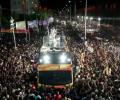
The Supreme Court has questioned the Madras High Court's decision to form a special investigation team (SIT) to investigate the Karur stampede, which resulted in 41 deaths. The court raised concerns about the High Court's handling of the matter, particularly regarding the formation of the SIT and adverse remarks made against actor Vijay's political party.

A timeline of the key events in the 2006 Mumbai train blasts case, culminating in the acquittal of all 12 accused by the Bombay High Court.

The Supreme Court of India has emphasized the importance of aggressive sterilization programs to control the growing population of stray dogs, balancing animal rights with public safety concerns.
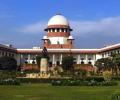
The Supreme Court has asked 'dog lovers' and NGOs opposing the permanent relocation of stray dogs in Delhi-NCR to deposit funds to be heard in the matter. The funds will be used for stray dog infrastructure.

The Supreme Court on Friday said a 'blanket direction' to pick up stray dogs in Delhi-NCR and place them in shelters without evaluating the existing infrastructure might lead to a 'catch-22 situation' as the directive might be impossible to comply with.

Its August 11 direction, which prohibits the release of stray dogs from dog shelters, shall be kept in abeyance for the time being, the apex court said.

A two-judge bench of the top court had on August 11 directed authorities in Delhi-National Capital Region (NCR) to start picking up stray dogs from all localities "at the earliest" and relocate the animals to dog shelters.
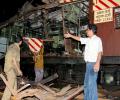
The Bombay High Court has repeatedly flagged the 'copy-paste' culture in confessional and witness statements in chargesheets, calling it a 'dangerous' trend. This issue was highlighted again after the acquittal of the 2006 Mumbai train blasts accused, with the court noting similarities in their confessional statements.

The Bombay High Court acquitted all 12 accused in the 2006 Mumbai train blasts case, citing a failure by the prosecution to prove their guilt and raising serious concerns about the investigation and evidence presented.
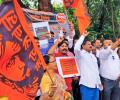
The Bombay high court on Friday constituted a three-judge special bench to hear the pleas challenging the constitutional validity of the law providing Maratha reservation following a Supreme Court directive.
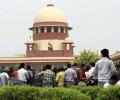
Four special benches will start functioning in the Supreme Court from next week to hear criminal appeals, direct and indirect tax and land acquisition matters and motor accident claim cases, Chief Justice of India Justice D Y Chandrachud said on Wednesday.
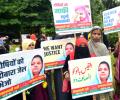
The Supreme Court on Wednesday agreed to constitute a special bench to hear a plea against the remission of sentence of 11 convicts in the Bilkis Bano gangrape case, which also involves the killing of seven members of her family during the 2002 Gujarat riots.

The high court also instructed both the Mamata government and the Centre to submit detailed reports on the situation. The matter is scheduled for further hearing on April 17.
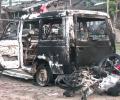
The situation in these violence-hit places remained tense on Saturday morning, but no untoward incident was reported, officials said.
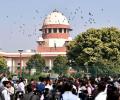
The Supreme Court of India has stayed a Lokpal order that allowed complaints to be filed against a sitting high court judge. The court termed the order "something very, very disturbing" and a concern for the independence of the judiciary. The bench issued notices to the Centre, the Lokpal registrar, and the complainant, directing them to keep the identity of the judge confidential. The court will hear the matter again on March 18.
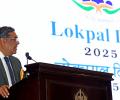
The Supreme Court of India will examine the jurisdiction of the Lokpal, India's anti-corruption ombudsman, in entertaining complaints against sitting high court judges. The court is considering a suo motu proceeding initiated over the Lokpal's January 27 order on the issue. The case involves two complaints filed against a sitting additional judge of a high court, alleging that he influenced a judge of the subordinate judiciary and a judge of the same high court set to deal with a suit filed against the complainant by a private company.
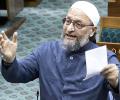
The Supreme Court on Thursday agreed to consider a plea of All India Majlis-e-Ittehadul Muslimeen (AIMIM) chief Asaduddin Owaisi seeking the implementation of the 1991 places of worship law, which asks to maintain the religious character of a place as it existed on August 15, 1947.

The Supreme Court has adjourned pleas challenging the appointments of the chief election commissioner (CEC) and election commissioners (ECs) under the 2023 law. The court indicated the matter would be listed after the Holi festival break due to a paucity of time. Petitioners, including the NGO Association for Democratic Reforms, argued for an urgent hearing, emphasizing the importance of the issue and the potential impact on democratic processes. The appointment of the new CEC and ECs under the 2023 law, which excludes the Chief Justice of India from the selection panel, has been a point of contention, with petitioners alleging it undermines the independence of the election commission.
The Mathura Shahi Masjid Eidgah Committee has approached the Supreme Court, requesting the court to prevent the central government from filing a response to a petition challenging the Places of Worship Act's constitutional validity. The committee accuses the BJP-led government of intentionally delaying its response. The court had previously issued a notice to the government in March 2021, but the government has yet to submit its reply despite numerous opportunities. The committee argues that the government's delay is intended to obstruct those opposing the challenge to the Places of Worship Act from filing their own responses. The petition also states that the pleas challenging the law's validity are scheduled for hearing on February 17, and closing the government's right to respond would serve justice. The Supreme Court previously issued a ruling in December 2022 that stopped courts from entertaining new lawsuits or issuing interim or final orders regarding the reclaiming of religious places, particularly mosques and dargahs. The ruling halted proceedings in 18 lawsuits filed by Hindu groups seeking surveys to confirm the original religious character of 10 mosques, including the Gyanvapi Masjid in Varanasi, the Shahi Idgah Masjid in Mathura, and the Shahi Jama Masjid in Sambhal. This decision was made in response to six petitions, including one filed by lawyer Ashwini Upadhyay, challenging various provisions of the Places of Worship Act. The 1991 law prohibits the conversion of places of worship and guarantees the preservation of their existing religious character as it stood on August 15, 1947. Notably, the dispute regarding the Ram Janmabhoomi-Babri Masjid in Ayodhya was excluded from this law. There are also several cross-petitions advocating for a strict enforcement of the 1991 law to uphold communal harmony and maintain the current status of mosques that Hindu groups seek to reclaim, claiming they were temples before being destroyed by invaders.
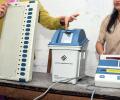
The Supreme Court of India has sought a response from the Election Commission of India (ECI) regarding pleas seeking verification of burnt memory and symbol loading units in Electronic Voting Machines (EVMs). The court directed the ECI to refrain from erasing or reloading data during the verification process and to explain the procedure adopted for verification. The bench also expressed concerns over the high cost of verification and directed the ECI to reduce the fee. The court's directive comes following its previous judgement where it allowed aggrieved candidates to seek verification of EVMs.

The Supreme Court of India expressed concern about the "criminalization of politics" and questioned how convicted individuals can return to Parliament. The court sought the assistance of the attorney general on this issue, highlighting the apparent conflict of interest and the need for clarity on the Representation of People Act's provisions. The court also raised concerns about the slow pace of trials against lawmakers, with a significant number of cases pending. The issue has been referred to a larger bench for consideration.

The Supreme Court on Monday ordered an SIT investigation into the alleged torture of a woman in police custody following her arrest over protests against the rape and murder of a doctor at R G Kar Medical College and Hospital in Kolkata.
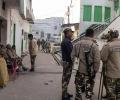
A four-member team from the Archaeological Survey of India (ASI) conducted a survey of the recently-discovered Shri Kartik Mahadev temple, five pilgrimage sites, and 19 wells in Sambhal, Uttar Pradesh, India. The survey followed the discovery of three damaged idols inside a well of the Bhasma Shankar temple, which was reopened after being shut for 46 years. The Shri Kartik Mahadev temple, also known as the Bhasma Shankar temple, was reopened on December 13 after authorities found the covered structure during an anti-encroachment drive. The temple houses an idol of Lord Hanuman and a Shivling and had remained locked since 1978. The district administration has requested carbon dating of the temple, including the well, from the ASI. Meanwhile, the Supreme Court has restrained courts across India from entertaining new lawsuits or passing any orders in pending ones seeking to reclaim religious places, especially mosques and dargahs, until further notice. This action halts proceedings in approximately 18 lawsuits filed by Hindu parties seeking surveys to determine the original religious character of 10 mosques, including the Gyanvapi at Varanasi, the Shahi Idgah Masjid at Mathura, and the Shahi Jama Masjid at Sambhal, where four individuals died in clashes. The Supreme Court will examine the legality, scope, and boundaries of the Places of Worship (Special Provisions) Act, 1991, which prohibits the conversion of places of worship and ensures the preservation of their religious character as it existed on August 15, 1947.
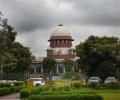
Commencing hearing on pleas challenging the constitutionality of the Places of Worship Act, 1991, the Supreme Court asked the Centre to reply to cross-pleas against or seeking implementation of statute.

The Lucknow bench of the court said the persons concerned may file their responses to the notices within 15 days and directed the state authorities to consider the said replies and a pass reasoned order on those.

The Supreme Court on Wednesday expunged the observations made by a single judge bench of the Punjab and Haryana high court against the apex court in a contempt case, saying they were "scandalous" and "unwarranted".
The bench said that multiple local factors made it difficult for the top court to "frame uniform or standard guideline for trial courts across the length and breadth of this country" and it left the issue of ensuring speedy trial to the high courts as they have the power of superintendence over the trial courts.

Such gaming zones and recreational facilities have come up without the necessary approvals from competent authorities, the bench of Justices Biren Vaishnav and Devan Desai observed.

A bench comprising Justices Sanjiv Khanna, M M Sundresh and Bela M Trivedi will hear the plea of jailed JMM leader at 10.30 am on Friday.

The game zone had fire safety equipment but action taken to control the fire was not sufficient, leading to the tragedy on Saturday, a senior police officer said on Sunday, a day after the tragedy.

The move came hours after Justice Khanna had told Singhvi that Kejriwal's petition against his arrest would be heard by a three-judge bench during the day.
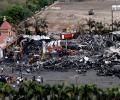
The Gujarat high court on Monday said it does not have faith in the state machinery which gets into action only after innocent lives are lost, as it pulled up the Rajkot civic body over the purported lapses in functioning of the game zone facility where a massive fire killed 27 persons.

The arrest, the first of a sitting chief minister, came hours after the Delhi high court refused to grant protection to the AAP national convenor from any coercive action by the agency.

West Bengal Chief Minister Mamata Banerjee on Thursday termed the cancellation of over 25,000 school jobs as 'gross injustice' and alleged that it was a ploy by the Bharatiya Janata Party to stop these job losers from being deployed in poll duty.

The Supreme Court on Friday refused to interfere with a plea of former Jharkhand Chief Minister Hemant Soren challenging his arrest by the Enforcement Directorate in money laundering case.
 © 2026 Rediff.com - Investor Information - Advertise with us - Disclaimer - Privacy Policy - Sitemap - Feedback - About us - Terms of use - Grievances