
The Supreme Court on Tuesday called on the Union government to enact a legal framework recognising paternity leave as a component of social security, stressing that caregiving responsibilities must be shared between both parents.

The Supreme Court of India has struck down a law limiting maternity leave for adoptive mothers based on the child's age, affirming that adoption is part of reproductive autonomy.
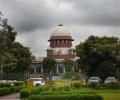
The Supreme Court has directed all states and Union territories to provide comprehensive information on acid attack cases, including case status, victim details, and rehabilitation measures.

The Supreme Court of India has stated that the time has come for a Uniform Civil Code (UCC), while hearing a plea challenging the Shariat law of 1937. The court suggested that the legislature should address the issue of discrimination against Muslim women.

The Supreme Court has directed the establishment of independent appellate tribunals, led by former high court judges, to address appeals related to voter list exclusions in West Bengal, while also cautioning against undermining judicial officers involved in the process.

The Supreme Court of India has emphasized the need to sensitize male teachers and students about menstruation to eliminate stigma and ensure the effective use of menstrual hygiene facilities in schools.

The Supreme Court of India has ruled that stem cell therapies for Autism Spectrum Disorder (ASD) can only be offered within approved and monitored clinical trial settings, deeming any other use unethical and potentially malpractice.

Private schools failing to provide these facilities risk de-recognition

The Supreme Court has agreed to examine whether a law banning married couples facing secondary infertility from using surrogacy to have a second child amounts to a restriction by the State on the reproductive choices of citizens.

The Supreme Court on Friday sought response from the Centre and others on a plea alleging that female sanitation workers at the Maharashi Dayanand University in Haryana were asked to prove through pictures of their private parts that they were menstruating.

The Supreme Court of India has expressed concern over the increasing tendency to label failed relationships as rape, emphasizing the need to distinguish between genuine sexual violence and consensual acts within a relationship.

The Supreme Court of India has appealed to women, particularly Hindu women without sons, daughters, or husbands, to make wills to avoid potential property disputes, highlighting the increasing number of women with self-acquired property.
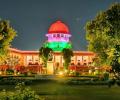
A bench comprising Justices B V Nagarathna and R Mahadevan was hearing Seeman's plea challenging a Madras high court order refusing to quash the case against him.
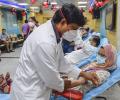
The Supreme Court reserved its judgement on a plea regarding insurance coverage for doctors and health workers who died battling Covid-19 in private clinics and non-recognized hospitals. The court emphasized the importance of supporting doctors and ensuring valid claims are settled.
The Supreme Court has observed that it would move cautiously while examining challenges to provisions of the Hindu Succession Act, 1956, and that it would be wary of shattering the Hindu social structure and its basic tenets that have been in existence for thousands of years.
The Supreme Court has sought the Centre's response on a plea seeking the implementation of the 2023 Nari Shakti Vandan Act, which reserves one-third of seats for women in the Lok Sabha and state assemblies.
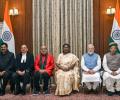
The Supreme Court's opinion on the presidential reference can impact on any number of cases if and when governors, if not the President, take a literary view of the Supreme Court's 'ppinion' on their 'discretionary powers' without reference to the rider on 'reasonable time', points out N Sathiya Moorthy.
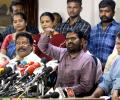
The Supreme Court has suggested Tamil film director and politician Seeman tender an unconditional apology to an actor who accused him of rape in 2011. The court is hearing Seeman's plea to quash the case against him.
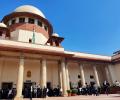
The Supreme Court has issued a directive mandating the complete disposal of leftover food inside its court complex to prevent animal bites, following concerns about stray dogs roaming the premises.

Chief Justice of India assures to look into a plea regarding stray dogs after a previous order mandated relocation of strays in Delhi-NCR.
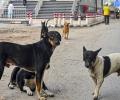
The Supreme Court will hear a suo motu case regarding the relocation of stray dogs in Delhi-NCR following widespread protests against an earlier order. A new three-judge bench will review the matter, focusing on the implementation of animal birth control rules and the creation of adequate shelters.

'The directives to enhance last-mile funding, consider revival funds, and systemic reforms across the sector are expected to revive stalled projects, improve accountability, and accelerate the delivery of affordable and mid-income housing.'

The Supreme Court of India dissolved a marriage, instructing the couple to prioritize their child's well-being and set aside personal differences.

The SC said every day, hundreds of dog bites were being reported in the city and on its outskirts, leading to rabies and ultimately, children and the aged were falling prey to the dreadful disease.

The Supreme Court stated that in a continuing marriage, neither husband nor wife can claim independence from their partner, emphasizing that marriage signifies the union of two souls.

The Supreme Court has expressed concerns over student suicides at IIT Kharagpur and Sharda University, directing expedited investigations into the incidents. The court questioned the institutions' handling of mental health issues and compliance with previous directives.
The Supreme Court has ordered the removal of all stray dogs from Delhi-NCR streets following concerns about rabies and dog bite incidents, particularly those involving children. The court criticized animal lovers and activists, questioning their ability to compensate for the loss of life due to rabies.

The Supreme Court has directed the Centre to explore providing insurance covers to defence cadets who suffer injuries or disabilities during training, emphasizing the need to support these 'braveheart cadets'.

The Supreme Court has directed the Delhi government and civic bodies to address the 'extremely grim' stray dog menace by picking up strays and housing them in shelters for sterilization and immunization. The court also warned against obstructing authorities and ordered the creation of a helpline for reporting dog bite cases.

The Supreme Court on Friday refused to entertain a plea by HDFC Bank CEO and MD Sashidhar Jagdishan challenging an FIR of cheating and fraud registered against him on a complaint by the Lilavati Kirtilal Mehta Medical Trust, which runs the prominent Lilavati Hospital in Mumbai. A bench of Justices P S Narasimha and R Mahadevan noted that the matter was already listed for hearing on July 14 before the Bombay high court.

The Supreme Court on Monday dismissed the pleas of telecom majors Vodafone, Airtel and Tata Teleservices seeking the waiver of adjusted gross revenue (AGR) dues. A bench comprising Justices J B Pardiwala and R Mahadevan called the pleas "misconceived".

A two-judge bench of the top court had on August 11 directed authorities in Delhi-National Capital Region (NCR) to start picking up stray dogs from all localities "at the earliest" and relocate the animals to dog shelters.
The Supreme Court has directed authorities in Delhi-NCR to relocate stray dogs to shelters, emphasizing public safety and addressing concerns about dog bites, particularly among vulnerable populations.
The Supreme Court has deleted its critical observation against Allahabad High Court judge Prashant Kumar, clarifying that it did not intend to embarrass or cast aspersions on him. The decision follows a request from Chief Justice B R Gavai to reconsider the matter.

The Supreme Court's order to remove stray dogs from Delhi-NCR localities has sparked mixed reactions, with RWAs welcoming the move and animal rights activists raising concerns about implementation and potential harm.

'Day by day we expose how soulless we have become as a society. Every day is a disappointment.'
A five-judge Constitution bench of the Supreme Court is scheduled to consider the Presidential reference on whether timelines could be imposed by judicial orders for the exercise of discretion by the President while dealing with bills passed by state assemblies.
A Constitution bench comprising Chief Justice B R Gavai and Justices Surya Kant, Vikram Nath, P S Narasimha and A S Chandurkar, would fix the timelines on July 29 and commence hearing on the presidential reference in mid-August.

The Supreme Court of India has directed changes in digital know your customer (KYC) guidelines for persons with disability and acid attack survivors, citing the right to digital access as an intrinsic component of the right to life under Article 21 of the Constitution. The court found that existing KYC procedures, which require visual tasks such as head movements and facial positioning, pose significant challenges for these groups, preventing them from accessing essential services like bank accounts and welfare schemes. The court emphasized the importance of bridging the digital divide and ensuring universal accessibility to digital services for all citizens.
The Supreme Court of India has reprimanded the Rajasthan government over the alarming rise in student suicides in Kota. The court expressed its deep concern over the situation, questioning the state's efforts to address the crisis. The court also ordered an FIR to be filed in the case of a 22-year-old IIT Kharagpur student who died by suicide in his hostel room, citing a delay in reporting the incident to the police.
 © 2026 Rediff.com - Advertise with us - Disclaimer - Privacy Policy - Sitemap - Feedback - About us - Terms of use - Grievances