
The Supreme Court of India has directed its registry to call for a report from IIT Kharagpur and Kota, Rajasthan, after the suicides of a student and a NEET aspirant came to light. The court is seeking to ascertain whether FIRs were registered in both cases, highlighting the disturbing pattern of student suicides in educational institutions. The court has also previously ordered the formation of a national task force to address mental health concerns and prevent suicides in higher educational institutions.

Tamil Nadu Chief Minister M K Stalin has welcomed the Supreme Court's ruling that state governors must give assent to bills passed by state assemblies, calling it a 'historic' victory for all state governments in India. The court's decision came after the Governor of Tamil Nadu, R N Ravi, withheld assent to several bills passed by the state legislature. The court found that the governor's actions were in violation of the Indian Constitution, which mandates that governors must act on the advice of the council of ministers. The ruling is seen as a significant step towards strengthening the federal structure of India.

Tamil Nadu Governor R N Ravi has sparked controversy by asking students at a government-aided college in Madurai to chant "Jai Shri Ram". The State Platform for Common School System-Tamil Nadu (SPCSS-TN) has demanded his removal, alleging that he violated his oath of office and secular principles. The group claims Ravi's actions were against the Constitution, which outlines India as a secular country and emphasizes the importance of upholding secular values in education. The incident follows a recent Supreme Court ruling that overruled Ravi's decision to withhold 10 Bills passed by the Tamil Nadu government, highlighting ongoing tensions between the Governor and the state administration.

The Supreme Court of India has ruled that courts have the authority to determine the appropriate interest rate in cases involving share valuation, considering the specific facts of each case. The decision came in a 52-year-old legal battle between private parties and the Rajasthan government over the valuation of shares transferred to the state government. The court also modified the interest rate applicable to delayed payments, awarding 6 percent per annum simple interest from July 8, 1975, until the date of decree, and 9 percent per annum simple interest from the date of decree until realization of the payment.

The Supreme Court of India has ruled that Tamil Nadu Governor R.N. Ravi can no longer serve as chancellor of state-run universities, a decision welcomed by the ruling DMK party. The court's judgment stems from a long-standing dispute between the state government and the governor over the assent of 10 bills passed by the Tamil Nadu Assembly. The DMK alleges that the governor had obstructed the smooth functioning of universities by delaying appointments and other critical matters. The judgment paves the way for the Tamil Nadu government to appoint new chancellors for its universities, effectively removing the governor's influence in higher education.

The Supreme Court of India has taken a strong stance against child trafficking rackets, canceling the bail granted to 13 accused and criticizing the Uttar Pradesh government for its inaction. The court expressed concern over the rising number of trafficking cases and the changing patterns of the crime. It also directed the state to ensure trafficked children are admitted to schools and receive support for their education.
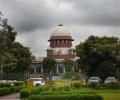
A bench comprising justices J B Pardiwala and R Mahadevan on April 8 gave a huge relief to the Dravida Munnetra Kazhagam-led Tamil Nadu government and cleared 10 state bills which were stalled and reserved by Governor R N Ravi for President's consideration, and also set a timeline for all governors to act on the bills passed by state assemblies.

President Droupadi Murmu has exercised powers under Article 143(1) used in rarity to know from the Supreme Court whether timelines could be imposed by judicial orders for exercise of discretion by President while dealing with the bills passed by state assemblies.

The Supreme Court of India has agreed to hear on May 6 the pleas of the Kerala government against the governor over the delay in approving bills passed by the state assembly. The court will consider whether the issues raised in the Kerala petition are covered by a recent judgment on a similar plea by Tamil Nadu, which set timelines for governors and the President on granting assent to bills.

The Supreme Court of India has ruled that governors cannot indefinitely delay giving assent to bills passed by state legislatures, setting a timeline of one to three months for their actions. The court said the governor must act "as soon as possible" and that failure to comply with the timeline will make their inaction subject to judicial review. The ruling comes as several opposition-ruled states have accused governors of delaying assent to bills passed by their assemblies.
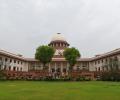
A Governor does not possess any discretion in exercise of functions under Article 200 of the Constitution in respect to any bill presented to them and must mandatorily abide by the advice tendered by the council of ministers, the Supreme Court has held.

Unless Governor Ravi or the Union of India moves in appeal, seeking a hearing by a constitutional Bench, this is where it all will have to end, observes N Sathiya Moorthy.

In a landmark verdict, the Supreme court fixed a timeline for Governor to act on bills passed by the state legislature as it pulled up Tamil Nadu Governor R N Ravi for reserving 10 bills for President's consideration, saying it was against the constitutional provisions.

Four days after the top court cleared 10 bills, which were stalled and reserved by Tamil Nadu Governor R N Ravi for the president's consideration, and set a timeline for all governors to act on the bills passed by the state assemblies, the judgement running into 415 pages was uploaded on the apex court's website at 10.54 pm on Friday.
The Supreme Court of India has formed a National Task Force (NTF) to address the growing concern of student suicides in higher educational institutions. The court took note of the recurring cases and directed Delhi Police to register FIRs on the complaints of families of two students who died by suicide at IIT Delhi in 2023. The NTF, chaired by former apex court judge Justice S Ravindra Bhat, will prepare a comprehensive report, including the identification of causes leading to suicides, analysis of existing regulations, and recommendations for strengthening protections. The NTF will also have the authority to conduct surprise inspections of higher educational institutions and make further recommendations to ensure a holistic approach to addressing mental health concerns and eliminating suicides.
The Supreme Court of India has ruled that courts should not hesitate to deny liberty to accused individuals in order to ensure a corruption-free society. The court's statement came while upholding the dismissal of an anticipatory bail plea in a corruption case against a public official. The court highlighted the dangers of corruption and emphasized that the presumption of innocence alone cannot be the sole consideration for granting bail in such cases.

A bench of Justices P S Narasimha and R Mahadevan asked the LG's office to not hold elections for the post of chairman of the Standing Committee till it hears the plea of Mayor Shelly Oberoi against the September 27 Standing Committee polls.
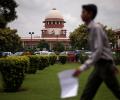
The Tamil Nadu government has argued in the Supreme Court that Governor R N Ravi's repeated withholding of assent to bills passed by the state legislative assembly would lead to the failure of the democratic system in India. The top court has questioned the delay by the Governor in granting assent to several bills passed by the state assembly and asked why governors should wait for parties to move the court with their grievances. The court has also said that the Governor cannot refer bills passed by the legislature and re-adopted by it for presidential assent.

The Supreme Court raised concerns about a potential stalemate in Tamil Nadu due to the Governor's delay in assenting to bills passed by the state assembly. The court questioned the Governor's actions, noting that he should have communicated his concerns about the bills' constitutionality to the state government. The case focuses on the delicate balance of power between the state government and the Governor, highlighting the importance of open communication and transparency in the legislative process.
The Supreme Court of India has expressed concern over the protracted trials in heinous offences related to Maoist activities, stating that indefinite incarceration violates the right to liberty under Article 21 of the Constitution. Two separate benches of the court granted relief to two accused, citing the delayed trials. One bench expedited the trial of a man accused of transporting ammunition for a banned organization, while the other granted bail to a man accused of transporting materials for Naxal activities. The court emphasized the importance of speedy trials and suggested the establishment of special courts to handle Maoist-related cases, aiming to expedite proceedings. The court also criticized the practice of examining an excessive number of witnesses, which can lead to indefinite delays in the conclusion of trials.

A bench comprising Justices J B Pardiwala and R Mahadevan said, "He (the governor) seems to have adopted his own procedure. He says, 'I withhold assent, but I will not ask you to reconsider the bill'. It does not make sense to keep withholding assent and not send it to the legislature, thereby frustrating the provision of Article 200."

The Supreme Court of India has directed all high courts, state governments, and union territories to ensure the availability of separate toilet facilities for men, women, persons with disabilities (PwDs), and transgender persons in all court premises and tribunals across the country. The court stressed the importance of public health and the right to privacy, stating that adequate public toilets protect women and transgender persons. The court also expressed concern about the condition of public toilets near toll plazas on national highways and emphasized the need for proper sanitation facilities in court premises for judges, advocates, litigants, and staff members. This decision highlights the importance of access to basic amenities in ensuring a fair and dignified justice system.

The Supreme Court of India has ruled that religious conversions undertaken solely to avail reservation benefits without genuine belief in the adopted religion amount to "fraud on the Constitution". The court upheld a Madras High Court decision denying a scheduled caste certificate to a woman who converted to Christianity but later claimed to be a Hindu to secure employment benefits.
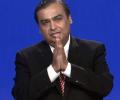
The Supreme Court on Monday dismissed a plea filed by Sebi against a Securities Appellate Tribunal order which set aside the penalty imposed by the market regulator on RIL chairman Mukesh Ambani and two other entities in a case related to alleged manipulative trading in shares of the erstwhile Reliance Petroleum Ltd (RPL) in November 2007. A bench of Justices J B Pardiwala and R Mahadevan said it was not inclined to interfere with the order passed by SAT.

The lawyer said Tharoor made a reference to an article published in the Caravan magazine six years before the statement was made.
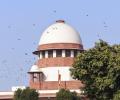
Justices N Kotiswar Singh and R Mahadevan were on Tuesday elevated as judges of the Supreme Court.

The Opposition had dubbed the directives issued by the three states as divisive and discriminatory against Muslims, and the apex court's order effectively ensured that the Yatra was held without their orders being enforced.

In a power tussle between the top two leaders, Panneerselvam was expelled by a general council of the AIADMK in July 2022. Later, Palaniswami was elected as the top leader of the main opposition party.

The Supreme Court came down heavily on the Centre on Tuesday for failing to take any decision for years on the pension payable to retired regular captains of the Army in accordance with the One Rank One Pension (OROP) scheme and imposed a fine of Rs 2 lakh on it.

In a further setback to deposed All India Anna Dravida Munnetra Kazhagam leader O Panneerselvam, the Madras high court on Friday dismissed his appeals against the 2022 general council meet of the party, which among others had elected his rival Edappadi K Palaniswami as interim chief, besides expelling OPS and his aides.

The Madras High Court has suggested to the Tamil Nadu government to ensure common burial/ cremation grounds throughout the state for members of all communities.

Also, the RSS was asked to ensure strict discipline and make sure there is no provocation or incitement on their part during the march.

A vacation bench of the Madras high court on Friday admitted a public interest litigation plea to stop forcible conversion of students in schools and ordered notice to the Tamil Nadu government, returnable in four weeks.
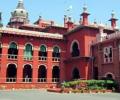
A division bench of Justices R Mahadevan and S Ananthi made an oral observation to this effect when a PIL petition from city-based advocate B Jagannath came up for hearing, on Thursday.

ustice R Mahadevan passed the interim order on a plea moved by the Chennai-based Tamil Nadu Chemists & Druggists Association seeking a direction to authorities concerned to block the links of websites that selling medicines online.

The petitioner had contended that Sasikala was made general secretary by the AIADMK general council in violation of Rule 20 of the party by-laws.

Srinivasan had moved the court yesterday seeking anticipatory bail in connection with an idol theft case.

A look at pictures from the funeral.

The state government had issued the order with the avowed objective of having a casteless society, the bench said.

 © 2026 Rediff.com - Advertise with us - Disclaimer - Privacy Policy - Sitemap - Feedback - About us - Terms of use - Grievances