
American Indologist Wendy Doniger, the author of "The Hindus: An Alternative History", whose copies will now be withdrawn by the Penguin Books India following a court-backed settlement with a Delhi-based voluntary group, has come up with an official response.
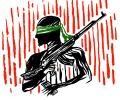
The nine meetings offer an interesting window into Shafi Armar's efforts to try and group together what after all were excitable keyboard warriors into an actual terror group, capable of handling weapons, organising recruits, cooking homegrown explosives, selecting safe training areas, safe houses and finally, committing strikes against Indian targets.

'There is hardly any boy who thinks he can jump from a high rise building and bash up 50 people. I really wanted people to believe it. That was the starting of my ****up.'

'There is no harm in children studying the Vedas; it is part of Indian culture and history... The aim is not to saffronise education,' Shiksha Bachao Andolan chief Dinanath Batra tells Vicky Nanjappa/Rediff.com

Amitabh Bachchan's birthday bash. Don 3's movie details. Mahesh Babu's Bollywood debut. The latest Bollywood masala...

There are several books that Aakar Patel wishes were being written but aren't. Fortunately, there's plenty coming up this year that he's eagerly awaiting.
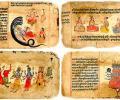
'Is there any harm in studying the history of India? This is not a regressive stand. The Vedas and Upanishads should be included in our textbooks,' says Dinanath Batra.

"A writer must be like a sponge. I absorb everything from different parts of life."
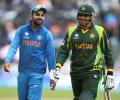
What does Pakistan mean for a young Indian? Devanik Saha attempts an answer.

The court case in India against Wendy Doniger's book The Hindus was in a way initiated in Atlanta, Georgia, by a group of Indian-American businessmen including Dhiru Shah, who have been fighting against several controversial books on Hinduism by Western thinkers and professors in recent years.

'For over a decade, the United States has been shaping the contours of Hinduism. It has been doing this from the perspective of upper caste and conservative interests,' Professor Shefali Chandra tells Rediff.com's Arthur J Pais.
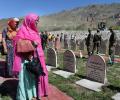
'The death certificate which I once read even states the date, 6 August, but I know that already.' 'Every year, we observe paath at the local gurdwara for which we need to take leave from school. The leave form always says 'attending father's death anniversary'. 'I always dread this day -- the long walk from my desk to the teacher's table with my diary in hand and in it a handwritten note dripped with sadness despite its curt language.' 'What generally follows is pity on my teacher's face, a deep sigh of sympathy and a sad pat on the back.' A moving excerpt from Gurmehar Kaur's memoir Small Acts Of Freedom.

An army of 'book fairies' are anonymously dropping off some delightful books in public places across the world.

Excerpts from How to be a Productivity Ninja: Worry Less, Achieve More and Love What You Do!

India's billionaires are pledging a decent amount of their wealth for the welfare of society.

Faced with a situation where the spouse's transferable job keeps taking the family to different locations, thus jeopardising their own careers, many women simply fall off their career track and resign themselves to relocation every time their husband gets transferred, says Sudha Menon.

'Pakistan has a big role to play in fomenting trouble, but we need to ask ourselves why ordinary Kashmiris are coming out in large numbers to attend the funerals of terrorists.'

'If you want to live a happy life, you have to help the downtrodden. You have to understand that you have been given a position which is a confluence of your own capability and the grace of God. You must use that position to exemplify to others what has to be followed.'

Accept imperfection. Be prepared for choppy waters. Be open to change.

From Aurangzeb to Sangh Parivar, the year 2016 offers plenty of hope in historical and modern literature.

As a parent, there can be nothing worse than hearing your child diagnosed with cancer. When Emraan Hashmi's four-year-old bundle of joy, Ayaan, was diagnosed with cancer in early 2014, it shattered his universe and that of his wife, Parveen.

Most adult Indians should have access to bank deposits, credit and remittance facilities as well as insurance and mutual fund products in the next decade, and technology will play a big role in this transformation, says Tamal Bandyopadhyay.

India has a tradition of rich narrative and storytelling and hence it's a natural market for self publishing, believes Jon P Fine, Amazon's director (author and publishing relations).
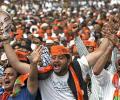
If people respect our culture and interests, why should anyone become more regressive? Education will not be saffronised. Just the correct picture will be portrayed and facts not distorted.' Dr Dinanath Batra, who successfully litigated to have Penguin withdraw copies of Wendy Doniger's book on Hinduism, tells Rediff.com's Vicky Nanjappa what India will be like if the BJP under Narendra Modi forms the next government.
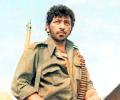
'He was the only new face in a sea of superstars and slowly talk started in the unit that perhaps Ramesh had made a mistake by casting him.'

'Through the use of technology, the GSTN will tip the balance in favour of compliance rather than tax evasion, lowering the barriers for entry into the tax payment system while making it much harder to cheat on payments,' says Nandan Nilekani.

Former Delhi police commissioner Neeraj Kumar is one of the few Indian police officers to speak to Dawood Ibrahim at length after the fugitive gangster fled India. A gripping excerpt from his new book, Dial D For Don: Inside Stories Of CBI Missions.
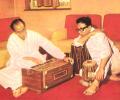
'When it came to S D Burman, a Guide song was completely different from a Tere Mere Sapne song which was completely different from a Sharmilee song. Except for their quality, there is nothing to link them together.' 'Lata was his ultimate voice. He felt there was nobody like Lata. "Give me a harmonium, give me Lata and I will make music," he said.'

Aishwarya Rai confirmed in her September 27, 2002, interview to The Times Of India: 'Salman and I broke up last March, but he isn't able to come to terms with it.'

Anwesha Bhattacharya-Arya writes an open letter to the President on the sorry state of affairs in India.

'How can Hindus protest efforts to ban an edition of the Gita in parts of Russia, and force a publisher to withdraw an academic critique of Hinduism, all in the same breath? It makes the Hindu community seem petty, self-serving, and hypocritical. Episodes like this allow Hinduism to be "owned" by the most conservative, intolerant, extremist voices. These people do not speak for me, and they certainly don't represent the form of Hinduism I practice and love," Princeton University's Hindu chaplain Vineet Chander tells Rediff.com's Arthur J Pais.

Shatranj Ke Khilari was Satyajit Ray's first Hindi film. The Master set the Premchand story against the backdrop of the First War of Independence in 1857. Bijoya Ray, his wife, reveals fascinating glimpses behind the making of the epic in this exclusive excerpt from her memoir.

'The book was NOT banned. There were NO book burnings. There were NO riots. The author was NOT sent death-threats. On the contrary, the plaintiffs pursued due process. The case is a textbook example of how to proceed with civilised, democratic dissent,' says Rajeev Srinivasan.

Salim-Javed's speciality was conjuring the kind of violence that played on your mind rather than the sort that played out only in front of your eyes.
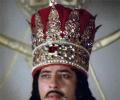
Shatranj Ke Khilari was Satyajit Ray's first Hindi film. The Master set the Premchand story against the backdrop of the First War of Independence in 1857. Bijoya Ray, his wife, reveals fascinating glimpses behind the making of the epic in this exclusive excerpt from her memoir.
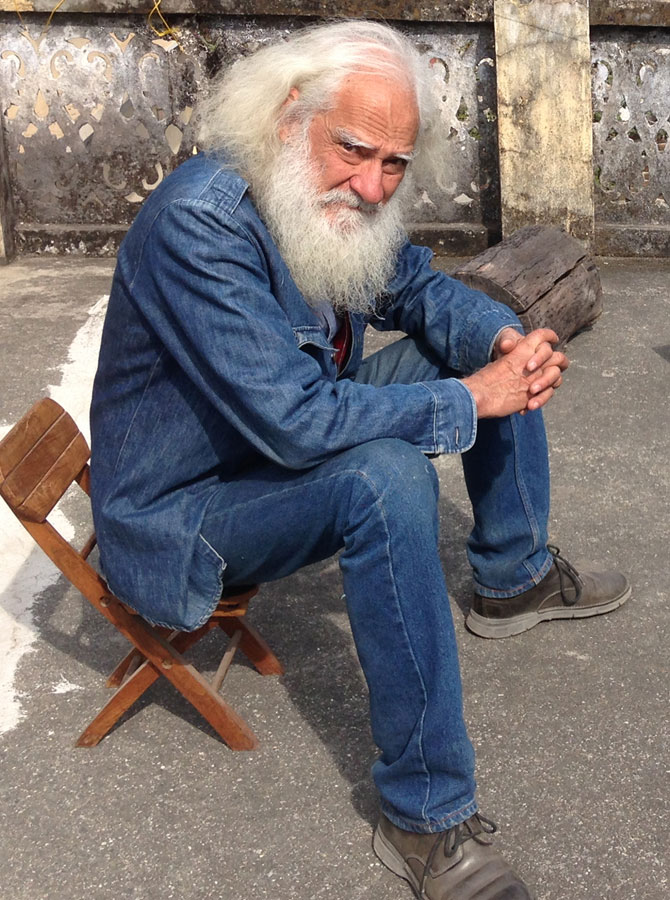
'Not allowing people to speak or listen is the biggest act of anti-nationalism,' says Arvind Krishna Mehrotra, one of India's finest poets.


'If the State does want to come after you, in India, it can do pretty much anything. And often it isn't as though the orders are coming from the President or prime minister, no, the systems have been built in a way -- or we have allowed them to be built in a way -- that almost encourages crushing of liberties.'
