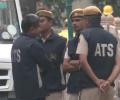
After a thorough investigation, the state's ATS held the duo who were working under the direction of ISIS modules based in Pakistan and were active on social media through fake IDs, said Sharma, who also holds home portfolio.
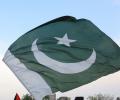
Pakistan on Saturday brought in a Constitutional amendment to create a new post of chief of defence forces to ensure greater coordination and unified command among the three services.
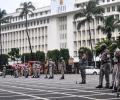
The Maharashtra Police are drafting a drone-use policy to strengthen security and surveillance in key cities, including Mumbai, as part of preparations against unconventional terror threats, a senior official said on Wednesday.

Poonam, a 38-year-old woman who came to India from Pakistan in 2004, has been granted Indian citizenship under the Citizenship Amendment Act (CAA). She had been living in Rampur on a long-term visa and expressed joy at finally being recognized as an Indian citizen.

New data reveals a significant drop in UK net migration, with Indian students and workers topping the list of those leaving the country.

Pakistan military chief directly intervened to salvage the home series involving Sri Lanka following the suicide attack in Islamabad, the country's interior ministry said on Thursday.

Sri Lankan players currently touring Pakistan for a three-match ODI series want to return home due to security concerns following a deadly suicide attack in Islamabad but PCB chief Mohsin Naqvi claimed that the rubber will continue, albeit with a rejigged schedule.

From emotional showdowns to the ultimate happily-ever-afters, we recap 10 times Bollywood showed us couples fighting their gharwale for their love.

Bangladesh's deposed prime minister Sheikh Hasina was sentenced to death in absentia by a special tribunal for crimes against humanity committed during protests against her government.
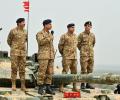
'Can a nuclear-armed nation sustain itself indefinitely under overt military rule without catastrophic consequences for itself and the region? History suggests otherwise.'

Indian Army's Director General Military Operations Lt Gen Rajiv Ghai claims Pakistan lost over 100 military personnel along the Line of Control during Operation Sindoor and at least 12 aircraft during the conflict in May.

The defence ministry is likely to take up the proposal by the Indian Air Force for approval at a defence acquisition council meeting planned to be held on October 23, sources said.

Gujarat Police arrested an Indian national accused of running an international cyber slavery network operated by Chinese gangs from Myanmar and Cambodia. The accused allegedly supplied Indian workers to scam compounds where they were forced to commit cybercrimes.
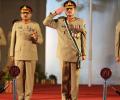
Vice Admiral K Swaminathan highlights concerns over Pakistan's arms procurement and China's growing assertiveness in the Indian Ocean Region.
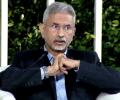
On President Putin's two-day trip to India, Jaishankar said for a "big" and "rising" country like India, it is important to maintain good cooperation with as many important players as possible in the world in line with freedom of choice.
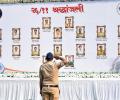
'They came to our bedrooms, woke people who were sleeping, and shot them. For what? For what?'

The accused had links with six persons, arrested on November 3 from Morbi, Surendranagar, Surat and Amreli districts, for allegedly routing Rs 200 crore to Dubai-based cybercriminals using nearly 100 mule accounts, the release said.

Singh, who worked in a factory in Alwar, was known locally as a 'Siddh Purush' and often participated in religious events. This allowed him to build rapport with defence personnel and civilians alike, the officials said.

Residents of Zehri tehsil in Khuzdar district have accused the Pakistani military of carrying out indiscriminate air and drone strikes that have killed civilians, including women and children, amid a siege that has continued for over a month.

The Directorate of Revenue Intelligence (DRI) seized 28 containers of Pakistani-origin cosmetics and dry dates worth approximately Rs 12 crore at Nhava Sheva port in Navi Mumbai. Two individuals have been arrested for violating the ban on importing goods from Pakistan.
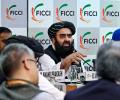
Afghan Acting Foreign Minister Amir Khan Muttaqi met Federation of Indian Chambers of Commerce and Industry (FICCI) members on Monday to discuss opportunities in his country, especially in the mining sector. The Taliban, who now control Afghanistan, is seeking to repair its ties with New Delhi, and is hopeful of Indian public and private sectors increasing investments in the mining and power sector, and greater trade and commerce.
A senior Pakistani minister has admitted that the country failed to capitalize on the China-Pakistan Economic Corridor (CPEC), citing attempts by the previous government to undermine Chinese investments, leading to investor flight.

A journalist in Karachi was killed by activists of an extremist Islamist group after making pro-Israel comments. Four suspects have been arrested.

An Indian Sikh woman who traveled to Pakistan as part of a pilgrimage has converted to Islam and married a Pakistani man she met online. Her disappearance is being investigated in India.

The ICC, which punishes slow over rates and dissent, must protect cricket's core values. Pretending to be violent in front of millions sets a bad example for young fans. Cricket deserves better. Fans deserve better. The world deserves better than seeing the sport used for such shameful displays.

In a key revelation, former Central Intelligence Agency (CIA) officer John Kiriakou has said that Al Qaeda founder Osama bin Laden, who was the most wanted terrorist for the United States after the terrorist attacks of September 11, 2001, had escaped from the Tora Bora hills in Afghanistan in the guise of a woman.
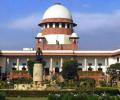
The Supreme Court of India has ruled that using terms like "miyan-tiyan" and "Pakistani" does not constitute an offence of hurting religious sentiments, though the court acknowledged that such language is in "poor taste". The court discharged a man who had been accused of using these terms against an Urdu translator in Jharkhand.
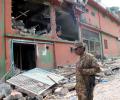
'If destroyed runways and burnt-out hangers look like victory, as the prime minister claimed, Pakistan is welcome to enjoy it.'

The Maharashtra Anti-Terrorism Squad (ATS) has questioned a teacher in Thane regarding his connection to a Pune-based software engineer arrested for alleged links with Al Qaeda and other banned outfits.
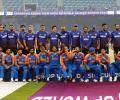
BCCI gets SL, Afghan support on Asia Cup trophy fiasco but Naqvi refuses to budge
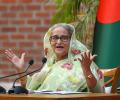
Sheikh Hasina, sentenced to death in absentia in Bangladesh, denounces the tribunal as biased and rigged, claiming the verdict reveals the murderous intent of extremist figures within the interim government.

Union Home Minister Amit Shah on Friday said the victory of the Bharatiya Janata Party-led National Democratic Alliance in the Bihar polls was a mandate against infiltrators in the country because citizens will never favour those parties that support such illegal immigrants.
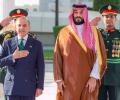
'Saudi-Pak defence pact is to anchor the defence and security of Saudi Arabia and not Pakistan, per se, with Islamabad being the junior partner.'

Pakistan and the Afghan Taliban have resumed peace talks in Istanbul, aiming to address cross-border terrorism and prevent further escalation. The talks follow recent clashes and a temporary ceasefire, with Pakistan demanding that Afghan soil not be used for terrorism.

Nobel laureate Malala Yousafzai reveals her mental health struggles after a marijuana session triggered flashbacks of her attack by the Taliban. She discusses anxiety, panic attacks, and her journey to seek therapy.

Afghan Foreign Minister Amir Khan Muttaqi stated that Afghanistan achieved its objectives in the border skirmish against Pakistan and stopped the attack following requests from Gulf countries like Saudi Arabia and Qatar. He emphasized dialogue and diplomacy as the preferred methods for resolving issues.

Rauf's reaction spread like wildfire, and videos of his gesture went viral on social media.

'We have a great leader coming, the prime minister of Pakistan and the field marshal.'

After the national anthems, players from both sides lined up and high-fived each other before they moved into their designated half.

Former Indian envoys criticize the death sentence handed down to ousted Bangladeshi Prime Minister Sheikh Hasina, expressing concerns about political polarization and stability in Bangladesh.
