
'If this region destabilises, then we are not far away. This region should not destabilise.'

'The unexpected turn of events and assertion of sovereignty by the Taliban has baffled the Pakistan security establishment.'

Afghans have deep self-respect and are the last people to put up with humiliation. Is it any surprise that relations between Afghanistan and Pakistan have touched an all-time low and the two countries are now at war? asks M R Narayan Swamy.

Assam Chief Minister Himanta Biswa Sarma has accused Congress leader Gaurav Gogoi of being a key player in an anti-India network and his wife of being a Pakistani agent, leaving it to the 'people's court' to decide on Gogoi's activities against the country.

The Balochistan Liberation Army (BLA) has released videos and images highlighting the involvement of female fighters in its ongoing campaign in Balochistan.
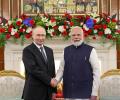
Luckily for us, a Russia that is desperate to stay relevant in an emerging multipolar world finds in India a reliable geostrategic partner. The Russian proximity to India also keeps China from exploiting its economic dominance vis a vis Russia, points out Colonel Anil A Athale (retd).
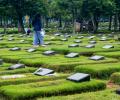
As many as 2,493 graves were identified as belonging to foreign terrorists who were killed in counter-insurgency operations.
These individuals often lacked identification to conceal their networks and maintain Pakistan's plausible deniability.
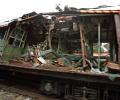
The blame must be shared by the investigating agencies, the government of the day and the nation at large, points out Colonel Anil A Athale (retd).

BLA fighters reportedly took positions across the city, seizing control of the Levies and police stations, the deputy commissioner's office, a government guest house, and local bank branches.

Rahul Gandhi accuses PM Modi of prioritizing his image over national security after the Pahalgam attack, challenging him to refute Trump's claims of brokering a ceasefire between India and Pakistan.

India has strongly condemned Pakistan's recent drone attacks on Indian cities and civilian infrastructure, calling it a "deranged fantasy" and a desperate attempt to deceive the world. Foreign Secretary Vikram Misri also accused Pakistan of attacking religious sites, including a gurdwara in Amritsar, in an attempt to give a communal color to the situation. Misri criticized Pakistan's "blatantly farcical denial" of the attacks and said the country is resorting to disinformation tactics.
The real heroes of Operation Sindoor were not the armed forces or political leadership, but the ordinary citizens of India who refused to fall into the trap of communal provocation, asserts Colonel Anil A Athale (retd).
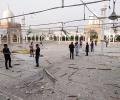
'The Pakistani State has to realise that the pigeons have come home to roost.'
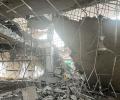
'India won't take anything from Pakistan lying down.'
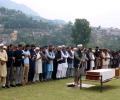
In trying to portray a globally sanctioned terrorist as a 'common man', Pakistan was exposed when its top official publically outed crucial details about Hafiz Abdul Rauf, including his national identity number which matched details in the database of the United States sanction list of terrorists.
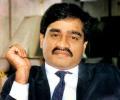
'The Pakistan establishment keeps him well protected.'

'There's a lot of sense in what Prime Minister Modi did, but the Indian government has to be really prepared for a really sharp escalation spiral.'

'The Pakistani government's growing fear of Dr Mahrang's rising popularity is evident.' 'Her defiance is inspiring.'
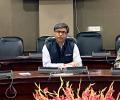
The sources said Misri reiterated the government's stand that the decision to stop military actions was taken at a bilateral level, as some opposition members questioned US President Donald Trump's repeated assertions about his administration's role in stopping the conflict.
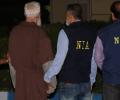
Tahawwur Hussain Rana, a Canadian national accused of involvement in the 2008 Mumbai terror attacks, has been extradited to India from the United States. Rana's interrogation is expected to shed light on the role of Pakistani state actors in the attacks, which claimed 166 lives. Indian authorities are particularly interested in his travels across India in the days leading up to the attacks, including visits to Hapur, Agra, Delhi, Kochi, Ahmedabad, and Mumbai. Rana's extradition follows a lengthy legal battle, with the US Supreme Court ultimately denying his application to challenge it. Rana is known to be associated with Pakistani-American terrorist David Coleman Headley, one of the main conspirators of the 26/11 attacks. The investigation into the Mumbai attacks has implicated senior members of terror outfits Lashkar-e-Taiba (LeT) and Harkat-ul Jihadi Islami (HuJI), as well as officials from Pakistan's Inter-Services Intelligence (ISI).
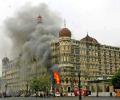
Tahawwur Rana, accused of involvement in the 2008 Mumbai terror attacks, is expected to be extradited to India from the United States soon. The US Supreme Court denied his last-ditch effort to stop his extradition, moving him closer to being handed over to Indian authorities. Rana's extradition is expected to help probe agencies expose the role of Pakistani state actors behind the attacks and shed new light on the investigation. He is associated with Pakistani-American terrorist David Coleman Headley, one of the main conspirators of the 26/11 attacks.
Meanwhile, a precautionary blackout has been enforfced in the multiple areas amid the esclating tensions between India and Pakistan.
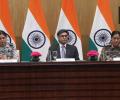
Colonel Sofiya Qureshi revealed that 300 to 400 drones were deployed across 36 locations, with several being shot down by Indian forces using both kinetic and non-kinetic methods.

'If they aim to remain aligned with the public sentiment, as any democratic government should, then they must respond. Why else would the prime minister have cut short his visit to Saudi Arabia? And why would he have instructed the home minister himself to travel to Srinagar to assess the situation firsthand? This suggests that something is indeed being planned. I am quite certain of that, although the exact form it will take remains to be seen.'
Tahawwur Hussain Rana, a key accused in the 26/11 Mumbai terror attacks, was brought to India on Thursday after being "successfully extradited " from the US, the National Investigation Agency (NIA) said. The 64-year-old Canadian citizen of Pakistani origin landed in Delhi in a special plane on Thursday evening, ending days of speculation of when and how he will be extradited, officials said. The NIA said in a statement that it had secured the successful extradition after years of sustained and concerted efforts to bring to justice the key conspirator behind the 2008 mayhem that claimed 166 lives. Rana is accused of conspiring with David Coleman Headley alias Daood Gilani, and operatives of designated terrorist organisations Lashkar-e-Taiba (LeT) and Harkat-ul-Jihadi Islami (HUJI) along with other Pakistan-based co-conspirators, to carry out the the three-day terror siege of India's financial capital.

Tahawwur Hussain Rana, a Pakistan-born Canadian national and close associate of David Coleman Headley, is set to be extradited to India from the US. Rana was involved in the planning and execution of the 2008 Mumbai terror attacks, which killed 166 people, including six Americans. He assisted Headley in obtaining a visa for India, established a front company in Mumbai, and helped in reconnaissance of targets in Mumbai and New Delhi. Rana was convicted in the US for providing material support to Lashkar-e-Taiba (LeT) and sentenced to 14 years in prison. His extradition to India will allow authorities to question him about his involvement in the Mumbai attacks and potentially uncover new information about the role of Pakistani state actors.
'Neither are Baloch insurgents capable of breaking up Pakistan, nor has Pakistan learned any lessons from the 1971 debacle that led to the country's dismemberment.'
'No military offensive by Pakistan will end the insurgency in Balochistan without simultaneous, concerted efforts toward political dialogue to de-escalate tensions.'
'When so many young Baloch men and women are willingly volunteering as fighters and even suicide bombers.'
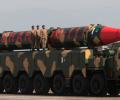
Asserting that Pakistan developing sophisticated missile technology will give it the capability to strike targets well beyond South Asia, including in the United States, a top White House official said on Thursday that the Asian country's actions are an emerging threat to the United States.

'The struggle of insurgents and pro-independence political activists is fuelled by a deep conviction that not only is a free Balochistan possible, but they also believe that Pakistan will inevitably break apart, leading to Balochistan's independence.'

It is only the Indian approach of holding on to multiple realities and contradictory ideas simultaneously that is likely to deliver peace and progress. Binary logic is out of sync with reality, notes R Jagannathan.

The government of Pakistan's Punjab province has decided to disassociate itself from the case against Jamaat-ud-Dawa chief and Lashkar-e-Tayiba founder Hafiz Muhammad Saeed, the suspected mastermind behind the terror attack on Mumbai, and filed a plea for its withdrawal.On Monday, the provincial government informed Pakistan's Supreme Court that it has challenged the release of Saeed due to certain 'confidential evidence' against him.

Scores of churches and homes belonging to Christians in Jaranwala tehsil of Faisalabad district, some 130 km from the provincial capital, were burnt down on Wednesday by a mob enraged over reports that two Christians had desecrated the Quran.

'The last thing he would want is new tensions with India.'

Why don't I hear sharp European condemnation of these practices which have been going on for multiple decades? he asked in response to a question.
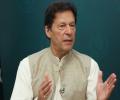
Tehreek-i-Labbaik Pakistan chief Saad Hussain Rizvi was on Thursday released from the jail, weeks after Prime Minister Imran Khan-led government entered into a 'secret agreement' with the radical Islamist party which was involved in recent deadly clashes with the police.

'It is a testing time for our foreign policy which may involve a certain element of taking risks, assessing costs, and expecting failures,' asserts Commodore Venugopal Menon (retd).

It would be realistic to see India's position on the DGMOs joint statement more as 'engagement, different from dialogue', where our subsequent options could be decided depending on the realities of the situation on the ground, notes Rana Banerji, who headed the Pakistan desk at the Research and Analysis Wing, India's external intelligence agency.

Pak had realised in 2018 that Hurriyat Conference, the separatist conglomerate created by Inter-Services Intelligence, won't be able to deliver any more
 © 2026 Rediff.com - Investor Information - Advertise with us - Disclaimer - Privacy Policy - Sitemap - Feedback - About us - Terms of use - Grievances