Should India engage Pakistan's generals directly, bypassing Imran? Ambassador G Parthasarathy, India's former high commissioner to Pakistan, ponders Delhi's diplomatic dilemma.
The Pakistani election on July 25 has a strong Indian flavour and connection, says Vivek Shukla.

Police on Thursday night stormed a youth convention of Pakistan Tehreek-e-Insaf in Islamabad and arrested scores of party workers, prompting party chief Imran Khan to announce nationwide protests on Friday, ahead of his rally next week seeking Prime Minister Nawaz Sharif ouster from power.

If the parliamentary representation of radical Islamic parties goes up dramatically in 2018, what will this do to Pakistan's army?
'I like him as a person, and as a politician.'

Kashmir has a deep resonance inside Pakistan and the tense situation in the Valley acts as bait and encourages radical elements 'to wage jihad to liberate fellow Muslims', says former Pakistan foreign minister Khurshid Mahmud Kasuri.

'The army has been open about its determination to keep the PML-Nawaz out of power at all costs.' 'Both the military and the higher judiciary have indicated a preference for Imran Khan's Pakistan Tehrik e Insaaf,' says Rana Banerji, who headed the Pakistan Desk at the Research and Analysis Wing, India's external intelligence agency.

Pakistan Prime Minister Nawaz Sharif on Wednesday hit back at his Indian counterpart Narendra Modi, saying poverty cannot be eradicated by "driving tanks on farmlands" and once again needled India by calling Hizbul commander Burhan Wani the "valiant son of Kashmir".

The meeting between Prime Minister Nawaz Sharif and his Indian counterpart Narendra Modi drew mixed reactions in Pakistan, with most of the political parties accusing Sharif of failing to highlight Kashmir but the media was generally positive.

A tense standoff continued in Pakistan on Saturday as overnight talks between the government and protesters demanding Prime Minister Nawaz Sharif's resignation made little headway in breaking the political logjam.

As Pakistan celebrated its Independence Day on Thursday, the fear of violence loomed large with the capital turned into a fortress ahead of two massive anti-government rallies, demanding the resignation of Prime Minister Nawaz Sharif and fresh elections.

Kalashnikov-wielding terrorists in police uniforms on Wednesday gunned down 47 Shia Ismaili Muslims, including 16 women, shooting them in the head as they attacked their bus in Pakistan's volatile Karachi city in the latest sectarian violence claimed by the dreaded Islamic State terror group.
Senior Pakistani TV journalist Hamid Mir, who faced threats from Taliban and other terror groups, was on Saturday shot at in Karachi by 4 unidentified motorcycle-borne gunmen near a bridge on way to his office.

The court delivered the verdict after postponing it for four times in the Avenfield corruption case -- pertaining to the ownership of four flats in the posh Avenfield House in London.

It said the prime minister of Pakistan has neither chosen to condemn the heinous act nor condoled with the bereaved families.

Amid Pakistan Army's mediation efforts, protesters have stepped up pressure on the embattled government with cleric Tahir-ul-Qadri setting yet another deadline of 24 hours for Prime Minister Nawaz Sharif to quit.

Legendary Pakistani philanthropist Abdul Sattar Edhi, who had dedicated his life to humanity and serving the poor, died in Karachi from renal failure. He was 92.

Cricketer-turned-politician Imran Khan on Friday night said he told Prime Minister Narendra Modi to expect sabotage by "vested interests", but stressed that talks between India and Pakistan should go on "uninterrupted".

'That is not a democratic ideal obviously, but it is a practical reality.' 'It is a consistent feature of politicians in Pakistan that their rhetoric on the army softens the closer they get to the seat of power.'

Pakistan Opposition leader Imran Khan's supporters chanting 'Go Nawaz go' on Monday cut off the city from the rest of the country by blocking all major roads during their anti-Government protests even as negotiators from the two sides met to defuse the crisis and make the dialogue process more result-oriented.
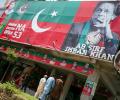
'He will be constrained if and when he tries to set the foreign policy agenda that is not to the liking of the army.'

Prime Minister Narendra Modi seems to have secured a rare concession from Pakistan that 'terrorism' and not the issue of Kashmir be the central theme of the India-Pakistan dialogue.

Cops revealed that the staffer Mehmood Akhtar was sharing sensitive defence documents and deployment details of the BSF along the Indo-Pak border to the ISI.

'The only quality required in this tenure is to be the military's yes man and that he has the capacity to do so.'

'It seems that the BJP in its desire to catapult Modi onto the international stage, knowing the image deficit due to visa denials, has caused unhappiness in Tamil Nadu, uncertainty in Bangladesh and a churning in Pakistan that Sharif may or may not be able to control,' says Ambassador K C Singh.

Last year, Maryam Nawaz accompanied her father to Washington, but played a role beyond being the dutiful daughter. She was 'discovered' by the White House, and was hosted by Michelle Obama.

The 'surgical strikes' by India have made the army in Pakistan look unprepared. To prove itself the army will need to hit back: It could be in Kashmir or outside

Abbasi will run the government until Sharif's brother Shehbaz is elected as member of parliament

'Pakistan should evolve a common narrative. The country should have common position in combating all kinds of terrorism and not fight selectively.' 'The main motive was revenge, of course. But the Nobel Prize to Malala Yousufzai also contributed to the Taliban's anger' Bestselling Pakistani author and foreign policy expert Ahmed Rashid speaks exclusively on the Peshawar school attack with Sheela Bhatt/Rediff.com.

'It has a natural inclination to foster as much competition among civilian politicians as possible.'

How does the country's civilian government reclaim legitimacy after the names of many Pakistanis, including the family members of PM Nawaz Sharif, figured in the leaked documents.

Pakistan's powerful army chief has stepped in to mediate between the embattled government and the protesters seeking resignation of Prime Minister Nawaz Sharif, bringing the military back into the centre stage and signaling a possible end to the high-political drama.
In a golden moment in Pakistan's chequered 66-year political history, President Asif Ali Zardari on Sunday left the presidency after successfully completing his five-year term, paving the way for India-born Mamnoon Hussain to take over.

Confrontation between Pakistan government and the opposition escalated on Wednesday with Prime Minister Nawaz Sharif rejecting demands for his resignation and Imran Khan calling off the dialogue with his regime until he quits.
Facing his toughest test since becoming Pakistan's prime minister, a defiant Nawaz Sharif on Wednesday brushed aside the demand of protesters asking him to quit saying the country has survived "difficult times" and the current political crisis too shall pass.
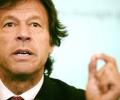
Opposition leader Imran Khan's political party on Monday decided to withdraw its lawmakers from the National Assembly and all provincial assemblies except Khyber Pakhtunkhwa, piling pressure on beleaguered Prime Minister Nawaz Sharif to quit, even as efforts by the ruling PML-N to reach out to anti-government protesters failed.

The 5-day political stand-off between the Pakistan government and anti-Sharif protestors intensified on Monday as efforts by the ruling PML-N to reach out to Opposition leader Imran Khan and cleric Tahir-ul Qadri failed with both the leaders remaining adamant on the ouster of the embattled prime minister.

Determined to oust Pakistan Prime Minister Nawaz Sharif, tens of thousands of protesters on Friday marched towards the capital in two separate convoys as clashes erupted with opposition leader Imran Khan claiming that ruling PML-N activists fired at his vehicle.

Describing the protests as a "mutiny against Pakistan", the government on Tuesday turned to Parliament for support as demonstrators continued to put pressure on a defiant Nawaz Sharif to quit as prime minister.

Pakistan opposition leader Imran Khan on Sunday warned the Nawaz Sharif government that thousands of his supporters could enter the high-security Red Zone in Islamabad if the Prime Minister refused to quit, even as popular cleric Tahir-ul Qadri issued a 48-hour ultimatum demanding the same.
 © 2026 Rediff.com - Advertise with us - Disclaimer - Privacy Policy - Sitemap - Feedback - About us - Terms of use - Grievances